
Vujosevic: Drugs have become available to everyone, many boundaries have shifted
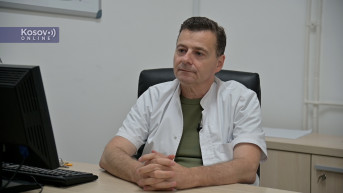
Many boundaries have shifted when it comes to drug use. Drugs have become accessible to everyone regardless of where they live, and young people are trying psychoactive substances at increasingly younger ages, warned Dr. Aleksandar Vujosevic, a psychiatrist at the Special Hospital for Addiction Diseases in Belgrade.
“The urban-rural divide, as well as differences between municipalities within cities where drug use used to be more widespread, no longer exist. In Belgrade, it was once typical for drugs to be used in central municipalities, but that is a thing of the past. The social climate and ongoing changes have made drugs accessible to everyone, of course, if they want them,” Dr. Vujosevic told Kosovo Online.
He points out that the age at which young people first encounter drugs is gradually decreasing year by year.
“Today, it is no longer unusual to see children as young as 14 who have tried their first psychoactive substance. Toward the end of high school, so-called club drugs or psychostimulants, such as speed or amphetamines, usually come into play,” Dr. Vujosevic said.
The Special Hospital for Addiction Diseases in Belgrade treats all forms of addiction in individuals aged 16 and older.
“We must not forget alcohol, which is most often the first substance people try. It is difficult to talk about addiction among very young people. In such cases, we are more likely talking about experimentation and first experiences with psychoactive substances. The earlier someone tries drugs or enters the world of any addiction, the greater the likelihood that they will develop an addictive personality,” our interlocutor explained.
In addition to shifting boundaries, the way drugs are distributed has also changed, with more substances now being obtained through social media or the internet.
“Everyone adapts to the times, unfortunately including drug dealers. There are websites on the internet, the so-called darknet and other similar platforms through which drugs can be obtained in various ways. Traditional dealers still exist in large numbers, but new forms of distributing psychoactive substances are also available and make procurement easier. This can also be viewed from another angle. There are new drugs that have not yet been classified as psychoactive substances and are not even prohibited. The positive aspect is that an alert system has been established, and anything identified as potentially belonging to the group of psychoactive substances is placed on a monitoring list and its distribution is sanctioned,” Dr. Vujosevic said.
The exact number of drug users in Serbia is unknown, but it is estimated to be around 300,000.
Vujosevic explains that there is a significant difference between the number of people who have tried psychoactive substances and the number of addicts, as many people experiment with drugs without developing addiction.
“The figure of around 300,000 refers to people who use psychoactive substances in a problematic way. For a long time, the main social problem regarding psychoactive substances was opiates – heroin and similar substances. There are between 30,000 and 40,000 opiate addicts in Serbia. A good treatment system has been established, primarily through substitution therapy, and these individuals are now largely within the healthcare system rather than on the streets, which is a positive development. In addition to treating addiction, this also allows us to monitor their overall health,” the psychiatrist noted.
He also points out that the number of heroin users has declined, which, he says, has been a trend for years.
“That is good news, but what is not good is the growing use of other psychoactive substances, particularly psychostimulants. These include traditional substances such as cocaine, ecstasy, and amphetamines, as well as so-called new drugs, which are substances designed to produce effects similar to those of established drugs. They are cheaper and more accessible,” our interlocutor warned.
As for the situation in the region, he says there are not many differences, since global trends eventually reach this part of the world as well.
“The situation is similar in Serbia, Montenegro, Bosnia and Herzegovina, and Croatia. Certain trends that first appeared in Western Europe have also reached us. For example, the decline in heroin use appeared here a few years later. We lag behind by several years, both in positive and negative developments. Eventually, those trends even out,” Dr. Vujosevic added.
According to him, prevention is the most important tool for reducing the number of drug users.
“As with any illness, including addiction, prevention is the most important factor. Prevention today is particularly challenging because young people acquire knowledge and experiences through the internet and social media. Prevention programs must be aligned with today's generation. We cannot remain in the past while they live in the present century, because they will not understand us. We must engage with them through platforms and spaces that are accessible to young people. It is also important to reduce the distribution of psychoactive substances as much as possible, although that depends on other sectors of the state as well,” Dr. Vujosevic concluded.

0 comments