
The economic perspective in the shadow of daily politics: How do Kurti's statements on war affect foreign investments in the region?
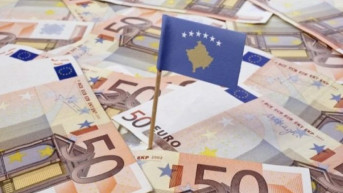
Prime Minister of Kosovo Albin Kurti does not miss an opportunity to mention war when appearing in foreign media. However, while portraying Kosovo as an insecure territory at risk of war in the north, Kurti simultaneously calls on foreign investors to invest. How they perceive such uncoordinated approaches and how it all affects the region is explained by economic experts from Belgrade and Pristina for Kosovo Online. They assess that economic development must be a priority and move out of the shadow of daily politics.
According to the assessment of the Central Bank of Kosovo, in the third quarter of 2023, foreign direct investments in Kosovo fell by 17.5 percent or around 236.7 million euros. Experts warn that 2024 will also be full of challenges, and Kurti's statements about a possible war allegedly threatening from Serbia certainly do not help.
Assistant Director of the Sector for Strategic Analysis, Services, and Internationalization at the Chamber of Commerce and Industry of Serbia, Bojan Stanic, believes that the economies of both sides suffer due to the decisions and rhetoric of the Kosovo authorities. However, he emphasizes that the market in Kosovo is far more vulnerable, considering it is much less developed and economically less powerful than Serbia.
Stanic emphasizes to Kosovo Online that due to "ill-considered political statements," investors from European countries often choose to invest in countries like India rather than in the region, despite being geographically less accessible. However, he believes that investors have not lost interest in the Western Balkans, pointing out that nearly 50 percent of all foreign direct investments coming to the region are related to projects in Serbia.
"Serbia leads primarily due to its physical characteristics; it has the largest market in terms of population and territory. On the other hand, it has a very good geographical position, despite not having access to the sea, because all European corridors pass through its territory. The third aspect is, of course, the financial and technical support of the government for investors deciding to invest here, as well as the trade agreements we have with countries such as EU members, the region, the Eurasian Union, Turkey, the recently signed agreement with China, which should be fully implemented from January 1 next year, and, of course, the agreements being negotiated with South Korea, Egypt, UAE," Stanic stated.
Kosovo Prime Minister Albin Kurti often speaks about the threats of war and potential attacks from Serbia, and Stanic points out that such rhetoric repels investors, even though these statements are mostly a part of daily politics rather than reality.
"Undoubtedly, the atmosphere in Kosovo negatively affects the arrival of foreign investors, considering that many investors do not delve into how much these statements are just a part of daily politics or represent a deeper risk. Therefore, such statements pose a significant problem for potential investors," he explained.
He adds that many investors are hesitant about whether to invest or not, and then, considering the overall geopolitical situation in Europe, they further doubt the ability of regional governments to maintain stability, primarily political stability, which, he indicates, is a prerequisite for broader macroeconomic stability.
Top of Form
He notices that it has become "popular" in some places today to talk about the potential outbreak of war to achieve political goals, even though all of this comes at the expense of economic potential. Time, Stanic warns, is passing, and "other players are entering the market."
"Nowadays, many companies within the EU are turning to India, which is a distant market but more stable in the long run for them, due to cheap labor, raw materials, and all other production factors. You have a situation where such statements contribute to this. They absolutely need to be thoughtful and cannot be uttered rashly because they leave very long-term consequences on the economy," Stanic assessed.
He notes that the atmosphere in Kosovo and the rhetoric of Pristina have a much less significant impact on the Serbian economy than on the Kosovo one, and he adds that the departure of people, or potential consumers, from the territory of Kosovo also influences investor interest.
"Political statements and the atmosphere in Kosovo affect Kosovo and Metohija more simply because the market is much smaller and its economic power is incomparably weaker compared to Serbia. On the other hand, the potential is lost over time because the number of people living there decreases, primarily consumers. This also happens, of course, in Serbia, but somehow, considering that the Kosovo market is much less developed and much less attractive to foreign investors, then such statements simply do more harm economically to the population of Kosovo and Metohija," Stanic said.
Ljubodrag Savic, a professor at the Faculty of Economics in Belgrade, believes that investments are important to Kurti, but currently, it is more important for him to expel as many Serbs as possible from Kosovo. He notes for Kosovo Online that investors have the opportunity to choose and eliminate any destination they have doubts about, and they do so.
"That is probably clear to Mr. Kurti; he certainly knows that, but from our perspective, it is like that, probably different from his. At this moment, he has only one goal, and that is for Kosovo to become independent, recognized by Serbia if possible. In pursuit of this goal, he does not hesitate to take any action, that's how I understand it. Of course, investments are important to him, but I think that at this moment, his top priority is actually to achieve the goal of having Kosovo with as few Serbs as possible. They probably cannot expel everyone, and they will take all measures in that regard, but whether some investor chooses another destination is not important to him at this moment. What matters to him is to accomplish this goal, counting on compensating for it later when, as they say, Kosovo becomes a free independent state," Savic noted.
While such rhetoric from Pristina harms Kosovo's economy, the fact remains that Serbia leads in terms of the number of direct foreign investments. Savic explains that Serbia is the country in this part of Europe that is building the most highways, and that is one of the key factors for both domestic and foreign investors to decide on an investment.
"You can provide capital, you can provide labor, especially today. Even if it's not available locally, it will come from Asia or other destinations. It might even be more disciplined and cheaper, but you cannot do anything without infrastructure. So, that is one of those crucial factors that influence the arrival of investors," Savic says.
Our interviewee also considers Serbia's relatively cheap Russian gas, fairly qualified and inexpensive labor force, and the readiness of the state as significant advantages over the Western Balkans.
"Serbia passed the Investment Law in 2014, for the first time since World War II, which equalizes domestic and foreign investors. I remember a sentence that President Vucic said a few years ago at some summit: 'We are fighting for the arrival of foreign investors, our biggest competition is from the Western Balkan countries.' He then said, 'Whatever they offer you in any of these countries, come to us, and we will create better conditions for you.' Therefore, a fairly good climate for foreign investors has been created, and they are welcome, primarily by the government, but also by local communities. So, it's a general environment with multiple factors that favor foreign investments, which is why they ultimately come to Serbia," Savic concludes.
Commenting on the statements of Prime Minister Albin Kurti, former President of the Chamber of Commerce of Kosovo, Safet Gerxhaliu, says that the entire Western Balkans is under some "dark agenda of the political daily press" and that we are more focused on politics than economic perspective. He assesses for Kosovo Online that this is not only a problem of Kosovo but of the Western Balkans in general.
"I would be the happiest today if I could tell you that we have a large number of foreign investors who have come to Kosovo and that we have the opportunity for export growth, but, simply put, few understand that the common denominator of all problems in these areas, including Kosovo, is political stability. As long as we have this discourse and such statements, and as long as there is no solution between Serbia and Kosovo, investors will certainly not come here; instead, they will flee," our interlocutor says.
On the other hand, he adds, that the fact that the dialogue between Belgrade and Pristina has not yielded the expected results and that Kosovo is under so-called European measures, affects Kosovo's image very negatively.
"When you analyze these statements, 'there will be a war today, there will be a war tomorrow, this will happen, that will happen,' I believe that directly, indirectly, and peripherally affects the fact that foreign investors simply leave these areas, mostly from Kosovo. When you listen to the authorities, they will say that we have had more than 764 million foreign investments, but the problem is that nobody wants to tell the truth - that these are mostly investments from our diaspora who have bought apartments or real estate, and there is no growth in production, no significant exports from that. Therefore, I think the dialogue between Kosovo and Serbia is irreplaceable, I think everyone must know the truth - the sooner it is done and the sooner that agreement is reached, the sooner a new perspective will open up," Gerxhaliu says.
He assesses that there is a lack of dialogue in Kosovo, both between the Government and the opposition and between higher-level authorities and local self-government. As he says, there is no social pact that existed before, that addressed problems to some extent, and we must understand "that dialogue has no alternative."
"We talk about dialogue in both internal and external jargon. Among all these relevant actors in Kosovo, as well as cooperation with European Union countries, cooperation with the US... Agreements or some sort of alignment of measures is more than necessary, and unfortunately, there is none of that in Kosovo. I would be the happiest person today if I could list five foreign investors who have invested only five or 10 million each, who have created 20 or 30 jobs each, but there are none. Therefore, I think we must understand that we cannot live off a political agenda, politicizing everything. Economic development has no alternative, and it simply must be the priority of all priorities, which will not happen without political stability," Gerxhaliu believes.
When asked whether such statements by Prime Minister Kurti affected Serbia and the region, he assessed that "It takes two to tango," and that the discourse of such conversations has become very dangerous.
"Look at the current situation in Bosnia and also in Montenegro, and we have elections in Macedonia as well, and in that context, I believe that the way of dialogue between Serbia and Kosovo affects other countries. Moreover, precisely because of such dialogues or conversations that are filled with nationalism, hatred, and somewhat devoid of hope for the people, the Western Balkans is emptying more and more every day. Perhaps one of the key reasons we have become countries people flee from. Another aspect is that people have realized that life doesn't have a second half, so no one wants to be a victim of anyone's or the interests of others. Therefore, I believe that dialogue must be the strongest weapon for bringing together common interests, to promote the Western Balkans as a region of the future," the analyst from Pristina assesses.
He recalls that there are many agreements such as the Berlin Process, and agreements from Vienna and Ohrid, but the problem lies in the fact that the implementation of these agreements somehow hinders a better life in these areas.
"In this context, I believe that politicians in these regions must understand one thing: Europe seeks the entire Western Balkans, not individual states. And then the question arises of how Europe will welcome the states of the Western Balkans if they have such problems among themselves. The sooner we realize the importance of solving these problems, the faster we will accelerate the step towards convergence, because ultimately, the fate of approaching Europe is not in the hands of Europe but in our hands, and for that, sacrifice, compromise, hard work, and the rule of law and justice are needed," Gerxhaliu says.


0 comments