
Economy before status: How much is Grenell’s position both American and realistic?
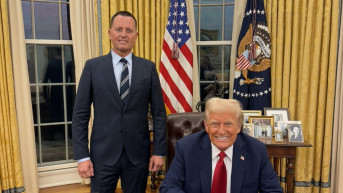
If you ask officials in Pristina, mutual recognition should be at the core of normalizing relations with Belgrade. Belgrade treats such an outcome as Pristina’s dream and an absurd demand, while, according to Richard Grenell, U.S. President Donald Trump’s Special Envoy for Special Missions, the idea of mutual recognition is “ridiculous.” He sees economic development as the driver for resolving problems.
Written by: Dusica Radeka Djordjevic
“This is my personal opinion—the idea of mutual recognition is ridiculous. Why are we having this political dialogue where ‘you must love me and I must love you’? I think we should aim for economic development and jobs for young people in Kosovo. But politicians focus on this mutual recognition instead of jobs,” said Grenell, who during Trump’s first term served as his envoy for the Belgrade–Pristina dialogue.
In his view, political solutions and progress are achieved through economic development, when people have jobs, hope, and a future.
Between Washington’s official policy on mutual recognition between Serbia and Kosovo and Grenell’s personal stance, sources for Kosovo Online caution against drawing an equal sign—but they also note that Grenell is very close to President Trump. Some also believe his words may serve as a sort of litmus test.
Lack of Trust
Edward Joseph, Senior Fellow at the Johns Hopkins School of Advanced International Studies, sees things differently from Trump’s Special Envoy. While not disputing that economic development is important to President Trump, he told Kosovo Online that it is also essential to understand that economic development and trade are no substitute for resolving political issues, and that political issues remain the main obstacle to economic growth.
“Two excellent examples,” he said, “are Ukraine and Russia, and China and Taiwan. Before the February 2022 invasion, Russia was one of Ukraine’s main trading partners, and China remains Taiwan’s main trading partner. Yet in both cases, there is no trust.
“We see that you can have a high level of trade and a very low level of trust. In the Balkans, this lack of trust and these tensions are a problem for economic development and foreign investment. So there is no simple solution in saying: ‘We can just have economic development and trade, and then we don’t have to worry about these difficult political issues,’” Joseph argued.
He added that the failure of the Open Balkan initiative is further proof, noting that in his opinion it has achieved almost nothing.
Commenting on Grenell’s view that the idea of mutual recognition between Serbia and Kosovo is ridiculous, Joseph expressed a different position.
“Mutual recognition between Serbia and Kosovo cannot be ridiculous. That is not just my opinion. It cannot be ridiculous because President Trump himself, in his first term, wrote to the President of Serbia and the Prime Minister of Kosovo and stated that normalization should be based on mutual recognition. This is in writing from President Trump himself,” Joseph said.
Asked whether Grenell’s views reflect the current policy of Trump’s administration, Joseph pointed to the U.S. State Department’s statement on the recent meeting between Serbian Foreign Minister Marko Djuric and Secretary of State Marco Rubio in Washington as a good indicator.
“In it, the first emphasis is on reducing tensions, including between Kosovo and Serbia and in Bosnia and Herzegovina, and only later in the statement does Secretary Rubio mention laying the foundation for economic development and prosperity. But the first emphasis is on reducing tensions—in other words, a political emphasis, not an economic one. The economic emphasis comes second in Rubio’s remarks,” Joseph noted.
Mutual Recognition as an Empty Phrase
Stefan Surlic, Assistant Professor at the Faculty of Political Sciences in Belgrade, believes that Grenell’s personal opinion—that the idea of mutual recognition is ridiculous—cannot be equated with official U.S. foreign policy. However, he believes that those involved in the Belgrade–Pristina dialogue will consult Grenell, as a former envoy for the talks.
“Given his extensive diplomatic experience in talks with both Belgrade and Pristina, Grenell is aware that in Belgrade there is no political option that would officially support the idea of recognizing Kosovo, and on the other hand, he knows that in Pristina it is not on the table to recognize Serbia as an independent state. So some sort of recognition agreement is a completely superfluous topic and an empty phrase with no real meaning,” Surlic told Kosovo Online.
He noted that Grenell’s thesis—that political solutions are created through economic development—continues the policy pursued by Donald Trump: “Let’s have economic cooperation, and then over years, perhaps decades, relations may normalize and the status issues between Serbs and Albanians will become irrelevant.”
“I assume this strategy will be present in Donald Trump’s administration. However, all the messages we’ve heard so far have not promised any radical shift or change in U.S. foreign policy. It is still in their interest that Kosovo’s independence be firmly supported internationally, without discordant tones—whether to give more support to the Serbian side, the Belgrade position, or to change the current policy of actively lobbying for Kosovo’s independence,” Surlic said.
Possible Shift in U.S. Policy
Petar Donic, Associate at the New Third Way, believes there are indicators that, given the current frozen situation with Kosovo, a significant change in U.S. policy toward the region could occur.
Trump’s policy, he explained to Kosovo Online, has a revisionist and reformist element in the broader sense.
“They are now trying to bring new issues to the forefront and create a new reality. On the other hand, Trump has mentioned the frozen conflict between Serbia and Kosovo several times as something in which he mediated. The indication is that they would become more actively involved here as the mandate progresses. Trump won the election under the narrative of being a peacemaker, so any situation where he can mediate a lasting agreement will be of interest to him,” Donic said.
He pointed out that there has been a noticeable shift in the dynamics of U.S. policy toward the region, returning to the priorities of Trump’s first term, where economic policy took center stage, and that in the past six months to a year, there have been significant Serbian diplomatic activities directed toward the U.S.
“Relatively recently, Serbian Foreign Minister Marko Djuric and Ambassador to the U.S. Dragan Sutanovac met with Marco Rubio and a large number of senior U.S. officials. This may suggest that, given the current frozen situation with Kosovo, there could be a significant change in U.S. policy toward the region,” Donic opined.
“Testing the Waters”
Regarding Grenell’s statement on mutual recognition, Donic said that “there is weight” behind Grenell’s words, even when he says it is just his personal opinion.
“Grenell is very close to Trump. He is one of his ‘super-loyalists,’ someone who has always stood by him and who has held a very special position. So when he says something, there is value behind it,” he emphasized.
He noted, however, that sometimes a statement presented as personal may in fact be “testing the waters” to gauge the reactions of all parties on an issue.
Donic observed that in the interview where he discussed Belgrade–Pristina relations, Grenell was critical of the current Kosovo government.
“He assessed that the Kosovo authorities are currently not ready to ‘do business’ and that this is not just an American assessment, but a Western one in general. They want to create major economic activity in the region that would completely neutralize political issues, because, as he put it, ‘while we deal with politics, we are not doing business, life is passing by, and both sides are in a worse position,’” Donic said.
In his view, this signals a return to the first-term Trump policy in which economic improvement is the backbone of foreign policy in the region. All current choices for ambassadors and special envoys, he added, suggest that this direction will continue.
No Clear U.S. Institutional Position
Avni Mazreku, Professor of European Law from Pristina, believes that at this moment there is no clear position from official U.S. institutions on the Kosovo–Serbia dialogue process or on the specific issue of mutual recognition.
Mazreku said Grenell’s stance on mutual recognition is his personal opinion, though it could also represent a U.S. position as a “hypothetical view.”
He stated that Trump’s administration’s approach to European problems, as well as to those in the Middle East and Far East, differs from that of the previous administration.
“It involves what he announced in the election campaign—addressing issues from an economic perspective, using economic mechanisms to resolve political problems. In the previous U.S. administration, we saw a different approach, with tendencies to directly resolve current problems. For Trump, the economic approach comes first, followed by the resolution of political issues,” Mazreku told Kosovo Online.


0 comments