
Elections in North Macedonia: Between the dreams of the EU and pan-Albanian aspirations of Albin Kurti
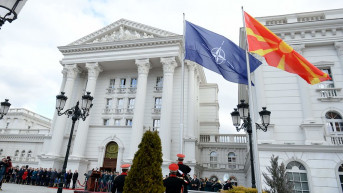
The Speaker of the Parliament, Jovan Mitreski, has called for elections for the President of North Macedonia and for members of the Legislative Council, which will be held on April 24th and May 8th. For Kosovo Online's interlocutors, these elections will not only show the direction in which the country will continue to develop but also how much the pan-Albanian plans of Albin Kurti's Self-Determination Movement will be realized in practice.
After declaring the elections, Mitreski stated that North Macedonia had shown the capacity to organize democratic elections in line with European values and principles at a level that, as he emphasized, befits a democratic state, a NATO member, on the path to full membership in the European Union.
"The past electoral cycles have set standards that we must build upon, but we must not allow ourselves to regress. Voting in elections, or the opportunity for citizens to express their opinions through voting, is the pinnacle of democracy," Mitreski emphasized.
Srdjan Graovac from the Center for Social Stability assesses that the results of the elections in North Macedonia are somewhat predictable when it comes to Macedonian parties because the battle will be between the two traditionally largest parties: VMRO-DPMNE and SDSM.
"However strange it may sound, at this moment it is less important, although they will win the most votes. More important is which Albanian parties will win the dominant position and which of these two parties they will lean towards. This will also determine the formation of the future government," Graovac emphasizes.
Graovac says that the first option is the DUI, the ruling party of the current Prime Minister in the technical mandate, Talat Xhaferi, while Albin Kurti is trying to form an opposition bloc through which he would not only take over power in North Macedonia but also impose himself as a pan-Albanian leader.
"Kurti is trying to assert himself as someone who is a pan-Albanian leader, the most recognizable leader among all Albanians. His officials have announced that they will support the Albanian opposition in Macedonia, opponents of those in power, DUI, and traditionally stronger options in the Albanian political scene. He has decided to enter the race when it comes to Albanian political parties and to support the opposition to ensure that they take the dominant position among the Albanians and be the ones to enter power in North Macedonia. This will strengthen the influence of the Self-Determination Movement in this country," Graovac says.
According to him, Kurti openly advocates the ideas of the Prizren League and "Greater Albania," which will be, he claims, the key message to Albanian voters.
"Let's not forget that this is a time of great global upheaval, and many politicians believe this is their moment to solve their problems. We see this from the Middle East to Eastern Europe. Hot spots, or potential hot spots, are emerging worldwide. It would not surprise me if Kurti considers this may be his moment to advocate the idea of Greater Albania and bring up the issue of Greater Albania. However, I think there is currently no will among major powers to support such a project," Graovac emphasizes.
Graovac highlights that by playing this "card," Kurti in the North Macedonia elections would simultaneously attempt to oust Edi Rama's dominant role among Albanians in the Balkans.
"In the struggle for dominance among Albanians between Rama and Kurti, Xhaferi leans more toward Rama. It seems to me that Xhaferi will not be someone who will facilitate Kurti's attempt to have a share in controlling the government in Macedonia. On the contrary, he will try to suppress that option," Graovac believes.He stresses that an additional complicating factor for Kurti will be his conflict with the international community due to pressure on Serbs in Kosovo.
Speaking about the rivalry between Kurti and Rama, Graovac says Kurti has undisputed leadership among Albanians in Kosovo, while Edi Rama has it in Albania, as shown by the 2021 election results in which the Self-Determination Movement unsuccessfully participated.
Hence, according to him, the "battle" is fought for the support of Albanians in southern Serbia, parts of Montenegro and Greece, as well as western North Macedonia.
"I am not even sure if Kurti will overpower Edi Rama in that aspect. I think this idea currently has no chance of success because it lacks the support of major powers, primarily the West, which supports the Albanian factor but does not support the creation of Greater Albania. Generally, they are not interested in creating large states in the Balkans," Graovac assesses.
However, Vladimir Bozinovski, a Professor of political science and Program Director at the Institute for Political Research in Skopje, does not believe that the pan-Balkan plan of the Self-Determination Movement will infiltrate during the elections and he says that it is all about an attempt by ethnic Albanian parties in North Macedonia to gain greater legitimacy through the support of Albin Kurti or Edi Rama.
"It is more about our politicians seeking legitimacy than Albin Kurti trying to impose influence here. We have the case where the DUI party seeks support from Albanian President Edi Rama and receives it, and now opposition parties seek indirect support for greater legitimacy in front of their voters through holding meetings and obtaining support from Kosovo Prime Minister Albin Kurti. So, it comes down to the support that ethnic Albanian parties think they need greater legitimacy, not that Rama or Kurti are trying to exert influence in Macedonia," Bozinovski says for Kosovo Online.
Commenting on the pan-Balkan concept of the Self-Determination Movement, Bozinovski assesses it as an attempt by this party and Albin Kurti to assert themselves or connect with certain events in Albania, but primarily in North Macedonia.
"Honestly, I don't see it as the plan of Self-Determination; I see it more as a plan for Self-Determination to assert itself or connect with certain events in Albania, but primarily in Macedonia. Certain structures, as a perception, are pushing this forward, but I don't believe in such a thing," Bozinovski says.
He doubts that such a project could infiltrate during the pre-election campaign in North Macedonia.
"I don't believe it can infiltrate, but you know, often here, parties and leaders of Albanians who originate from Macedonia seek a certain, I wouldn't call it support, but legitimacy toward voters through certain connections they have with Albanian politicians from Albania or Kosovo. So, our politicians here seek legitimacy more by meeting with Edi Rama or Albin Kurti than Rama or Kurti trying to have any influence in Macedonia," Bozinovski claims.
When asked if the pan-Balkan affinities of the Self-Determination Movement and Albin Kurti are aided by the fact that an Albanian, Talat Xhaferi, heads the technical Government of North Macedonia, this expert says that Xhaferi's appointment was the result of political bargaining.
"The fact that Talat Xhaferi – an Albanian – is at the helm of the government is the result of an agreement between Ali Ahmeti and Zoran Zaev. In order for Zoran Zaev to form the Government in 2020, in a situation where they had an equal number of MPs with VMRO DPMNE, it was clear that he would have to accept all the demands that the DUI party would set. One of those demands was that Talat Xhaferi be the Prime Minister," Bozinovski concludes.
Political analyst Visar Ymeri from Pristina does not believe in the pan-Balkan intentions of Albin Kurti and the Self-Determination Movement.
Visar Ymeri, assesses for Kosovo Online that the citizens of North Macedonia in these elections are deciding whether or not to continue on the European path because this country has shown that coexistence is possible even after armed conflicts.
"These elections are very important for North Macedonia because it is a story about the future of the state. It's being decided whether North Macedonia will continue on the path to the European Union or whether that will change with a nationalist or chauvinistic regime. If North Macedonia's European path is interrupted, it will be a big problem not only for this country but for the entire region," Ymeri assesses.
He emphasizes that it is not realistic to expect the Self-Determination Movement to participate in the elections or for Albin Kurti to have any role in those elections.
"Of course, there are some members of Self-Determination who come from North Macedonia and have some political ambitions, and maybe some of them will participate. But, I don't believe Kurti will have any role in those elections," Ymeri says.
He points out that it is already certain that among Albanian parties, the leader of the Democratic Union for Integration (DUI), Ali Ahmeti, has the best chance. He cites the division within one of the larger Albanian parties – the Alliance for Albanians, as the reason.
"Some want to go with the opposition, while others don't want to form pre-election coalitions with anyone," Ymeri says.
Commenting on how much greater success Albanian parties will achieve due to the fact that, for the first time in the country's history, an Albanian, Xhaferi, leads the technical government, Ymeri emphasizes that it is the biggest gain for North Macedonia.
"When viewed through democratic eyes, especially from the perspective of Europe and the United States, it looks very good. A society that was in armed conflict in 2000 has come to the point where an Albanian can become prime minister, even if only with a technical mandate. But, I think it is also a good message for all peoples in the region to start thinking, to start looking at politics through different eyes, not just ethnic or national ones, but also through civic eyes. I think North Macedonia is an example of how this can be seen through civic eyes. In the end, it's not so important whether the prime minister is Albanian or Macedonian, but whether they work for North Macedonia or not," Ymeri emphasizes.
When asked how the future government should look, Ymeri says he would like it to be similar to the one North Macedonia has had so far.
"I would like a government similar to the one North Macedonia has already had. I think the Social Democratic Party has done a very good job since Zoran Zaev first became prime minister, and then Kovacevski. Macedonia is now one of the best multi-ethnic democracies in the region. I would like them to continue like that and for other countries to be so tolerant toward others and to together, in coexistence, build their countries," Ymeri concludes.
Milutin Stancic, longtime Director of the Office for the Development and Improvement of Education in the Language Communities in the Government of North Macedonia and founder of the Serbian cultural organization SPONA in Skopje, assesses that the elections in this country will mainly demonstrate to whom the international community will be favorable, which is why pre-election maneuvering is visible in both the Albanian and Macedonian blocs.
"After the official announcement of the elections on February 14, various political maneuvers, including coalitions based on calculations, may occur, which could be negotiated between the leadership of VMRO-DPMNE and the bloc of opposition Albanian parties. However, such coalition-building would be more realistic after the elections, of course, depending on the achieved results. This is not yet recognized," Stancic says.
He explains that the divisions within the Albanian, as well as other minority communities in North Macedonia, are the result of an electoral model that does not verify the actual strength of each ethnic group.
"Despite three decades of independence, North Macedonia still does not have a true picture and understanding of the strength and how many votes a party secures because by joining the majority coalition, they have a winning combination to enter the Assembly. Thus, their real political power is not known," Stancic assesses.
He points out that there are two key dilemmas in these elections in North Macedonia: whether voters will support SDSM to continue with the planned reforms and whether the leading Albanian party DUI will be ousted after 20 years in power.
"VMRO does not capitalize on valid disappointment among the people; there is no such support base. The left is gaining strength, and the party ZNAM led by Martin Dimitrijevski, the mayor of Kumanovo, is growing, but it is questionable how much power and capability they have to make a difference, especially since the electoral model makes it very difficult for smaller parties in six electoral units without coalitions with major parties," he assesses.
Stancic also mentions that there is additional uncertainty about which way the Alliance for Albanians will lean.
"Despite announcements by the leaders of that party, which is formally a part of the ruling bloc, that they will enter the elections for change in coalition with Albanian opposition parties, the situation is changing since Arben Taravari was removed by the Central Assembly of the Alliance for Albanians. A new leader will be elected in about ten days at the party congress, and the position expressed at the assembly led by Ziadin Sela is that the Alliance will run independently in the upcoming elections," Stancic says.
According to him, the Self-Determination Movement of Albin Kurti cannot participate directly in the elections, but there are public announcements that they will still be involved in the electoral race.
"Ali Ahmeti, the leader of the ruling Democratic Union for Integration in the Republic of North Macedonia, assessed the party grouping of the Albanian opposition corpus by including the Self-Determination Movement of Albin Kurti from Kosovo as unacceptable interference in the Macedonian political scene," Stancic says.
He recalls that according to a previous agreement, the coalition bloc of the European Alliance will consist of Alternativa, Besa Movement, the Democratic Movement, and Self-Determination from Kosovo.
Stancic says that three Serbian parties will also participate in the elections in North Macedonia, but they are divided on several grounds, and electoral success will be achieved by the one that has entered the "right coalition".
"This is an anomaly of the electoral model without guaranteed models for ethnic communities. Without a single electoral unit, after so many years, it is still, in my opinion, a sensitive process and anomaly in the democratic processes of this country," Stancic concludes.


0 comments