
Entry bans to Kosovo - for security or political reasons, what is alarming Pristina?
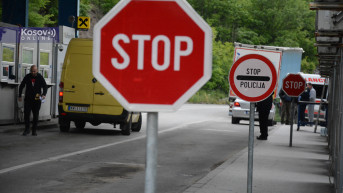
This year marks a full decade since the agreement from the Belgrade-Pristina dialogue on official visits, which was supposed to facilitate the normalization of relations between the two sides. Instead of the encouragement expected in 2014, it seems that Pristina is increasingly motivated each year to expand the list of those banned from entering Kosovo.
Entry has been repeatedly denied to the Director of the Office for Kosovo and Metohija, Petar Petkovic, the Head of the Missing Persons Commission, Veljko Odalovic, ministers of the Serbian Government, and at one point, even Prime Minister Ana Brnabic...
It's not only public officials who are unwelcome. In December 2022, Patriarch Porfirije, who wanted to be with the Serbs in Kosovo before Christmas, was turned back from Merdare crossing. In January of this year, a Tanjug journalist was returned from the same crossing. Previously, the "blacklist" included a journalist from RTS, humanitarian Arnaud Gouillon, Milorad Arlov, the President of the Banja Luka Committee for Aid to the Serbs in Kosovo...
Pristina sometimes does not provide explanations for entry bans, and sometimes the explanation is that a particular person is considered a threat to public order or internal security.
Regarding permits denied by Belgrade, the latest involved Minister of Internal Affairs Xhelal Svecla in early January of this year, who wanted to visit Presevo, Bujanovac, and Medvedja. The previous denial was for Kosovo's Deputy Prime Minister Besnik Bislimi in 2022, whose visit was initially approved but, according to the police explanation, he had to return to Kosovo for security reasons.
The announcement from Serbian President Aleksandar Vucic at the beginning of this year that he would visit Kosovo immediately met with disapproval in certain Kosovo circles, and university professor Nexhmedin Spahiu told Kosovo Online that the ban on entry for Serbian President Aleksandar Vucic would be an unacceptable matter. According to Spahiu's assessment, it is not normal that there is no normal flow of movement for official persons, even though there is an agreement between the two sides on this.
"In general, it's not a good thing, especially for President Vucic's visit to Kosovo. If negotiations continue to address the many issues affecting Kosovo-Serbia relations, then banning President Vucic's entry is entirely unacceptable," he said.
Another issue, he says, is that sometimes the opportunity for visits is abused.
Spahiu also commented on Serbia not approving a visit by Kosovo's Minister of Internal Affairs, Xhelal Svecla, to Presevo, Bujanovac, and Medvedja in early January.
"I cannot understand what the Minister of Internal Affairs of Kosovo was seeking in the 'Presevo Valley,' unless there are family ties. If it were the Minister of Culture or Foreign Affairs, then it would be understandable. Why the Minister of Internal Affairs in this case? There are many cases where the ban is indeed entirely unacceptable. Why this is being done, you should ask leaders in Belgrade and Pristina because, in my opinion, it is simply incomprehensible, and I don't understand it," Spahiu noted.
Legal expert Milan Antonijevic believes that the mutual bans on visits by officials from Serbia and Kosovo are purely political and do not involve any security risks. According to him, these bans harm the Serbs in Kosovo because they feel insecure and unable to have politicians and public figures from Belgrade with them in moments that pose no security threats whatsoever.
He suggests that the normalization of relations, including visits, should occur in 2024.
"The bans are still political; I really don't see any security risks there. We all reacted when the Patriarch was banned from coming to Kosovo, but later his enthronement took place without any security or other problems. This shows that a change in policy is possible in a short period, and Kosovo authorities do not follow the practices they used before, whether it's related to the Office for Kosovo and Metohija, public figures, or someone from political life," Antonijevic says for Kosovo Online.
Although an agreement on visits by officials was reached in the Belgrade-Pristina dialogue as early as 2014, which is not respected in practice, Antonijevic says that even the most significant agreement regarding the formation of the Community of Serb-majority Municipalities is not being respected.
"Agreements from previous years, including that from 2014, are not being respected, just like the one concerning the most significant issue, which is the formation of the Community of Serb-majority Municipalities, and consequently, neither are other agreements that are not as significant for the Serbian community in the north, such as visits by politicians or negotiators. It is necessary as a prerequisite to gaining trust. That word somehow hasn't been seen in the relations between Belgrade and Pristina, and it is gained through contacts, the ability to say the toughest things at the negotiating table, to discuss incidents, the endangerment of Serbs in Kosovo, property rights, and everything that matters most. I think that the barrier that exists must be lifted, to the joy of both the Serbian and Albanian populations, who deserve to live in a region with no security risks and no further signs of conflict," Antonijevic said.
One of those on Pristina's "blacklist" is Arnaud Gouillon, the Director of the Office for Cooperation with the Diaspora and the Serbs in the Region. He says for Kosovo Online that he is pleased to be among the people banned from entering Kosovo because, as he believes, it signifies that he works in the interest of Serbia and the Serbs.
"Serbian Patriarch Porfirije and President of the Republic of Serbia Aleksandar Vucic have been denied entry to Kosovo several times. Not because they pose a security risk to the Albanians or peace in Kosovo and Metohija, but because they offer tremendous support to the Serbs and do good things for Serbia and the Serbs. I was also banned from entering Kosovo and Metohija five years ago, and it was an arbitrary decision. To tell you the truth, I prefer being in that group with the patriarch and the president because they are the political and spiritual leaders of the Serbs, rather than being in the group with those who can enter Kosovo, walk around Mitrovica, Pristina, or Prizren, and send politically motivated messages against Serbia. If you receive such a ban, it is in a way a confirmation that you are doing good for Serbia and the Serbs," Gouillon said.
President of Serbia Aleksandar Vucic announced earlier this year that he had requested to visit Kosovo to address the Serbs, which had immediately received negative comments in Pristina. A few days before that, Kosovo authorities banned a Tanjug news agency journalist from entering Kosovo to report on Patriarch Porfirije's visit. On the other hand, Serbia did not approve a visit by Kosovo's Minister of Internal Affairs Xhelal Svecla to Presevo, Bujanovac, and Medvedja.
Gouillon says he wouldn't look reciprocally at what Pristina does compared to Belgrade's measures.
"According to international public law and the Constitution of Serbia, Kosovo is part of the Republic of Serbia. Serbia is an internationally recognized state that has the right and authority to ban entry into its territory based on laws. On the other hand, Pristina, as a territory that politically and arbitrarily denies entry to many people, does not respect human rights and freedom of movement. This is not the case here; we have laws, we have a Constitution, we have security structures that know how to treat those who pose a security threat to our country. Even those who criticize Serbia in the international media have the opportunity to enter the Republic of Serbia. Unfortunately, this is not the case in Kosovo, where they prohibit entry to journalists, humanitarians, and anyone who speaks the truth about the violation of basic human rights for the Serbs and non-Albanians in Kosovo and Metohija," Gouillon emphasized, who is also the founder of the humanitarian organization "Solidarity for Kosovo".
He stresses that when he was banned from entering five years ago, he received no valid explanation for that measure.
"The decision stated that I was banned from entering Kosovo because I was on the list of persons banned from entering Kosovo. I have been suing them for five years, and they keep sending me from one court to another. Of course, it's a political decision, without foundation, which apparently continues and will continue, but I am confident that it will be repealed sooner or later, and that there will be freedom again for everyone in Kosovo. Primarily for the Serbs who have been living in enclaves for 25 years, but also for all those who help them and wholeheartedly support them outside Kosovo," Gouillon concluded.
In general, the agreement on visits from 2014 stipulates that the parties will inform each other about the visits of their officials, and it "prescribes" the exact steps of this procedure. As stated in the agreement, the institution sending the request sends a notification directly to the liaison officer of the host country, with a copy of the request sent to the liaison officer of the country making the visit request. Upon receiving the notification, the liaison officer is required to immediately confirm receipt.
"If there is no response within a specified period, the visit is considered approved. If objections are raised within a certain period, they must be addressed directly to the liaison officer of the country that sent the notification. A copy of the objection is sent to the EU (both to the EU Delegation in Belgrade and the Office of the EU Special Representative in Pristina), which will mediate if necessary," the agreement states.
Notifications for the president, prime minister, deputy prime ministers, president of the assembly, and ministers of internal and foreign affairs and defense must be sent at least 72 hours in advance. For all other ministers, deputy speakers of the assembly, directors of government offices and security agencies, presidents of the Constitutional and Supreme Court, public prosecutors, as well as others with physical security, for example, religious leaders, the notification must be sent at least 48 hours in advance.
The agreement also stipulates that each party will appoint one official who will have regular and simplified access to the other party, and for whom the parties will provide only logistical information to facilitate visit preparation. These individuals are, in principle, the main negotiators.

comments