
Ceko: Without mutual trust, it is difficult to move toward Europe together
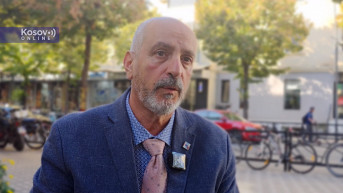
Enriko Ceko, Head of Business Administration and Information Technology at the Canadian Institute of Technology in Tirana, said that economic growth in the Western Balkan countries could increase by 10 to 15 percent if the European Union reduces trade and non-tariff barriers.
“Referring to the statement by the International Monetary Fund (IMF), which specifically said that reducing trade and non-tariff barriers could accelerate economic growth in the Western Balkan countries by 10 to 15 percent, this would be possible thanks to the impact of removing these barriers imposed by the European Union,” Ceko told Kosovo Online.
According to him, removing non-tariff barriers would greatly help increase GDP, as trade volumes and productivity would rise, with countries in the region producing more.
“Increased productivity would boost national GDP, as well as the combined GDP of all the countries. We are talking about countries with a total population of 17 to 18 million. Taken together, they form a consolidated, stable territorial, political and economic area with many natural resources that are valuable to the European Union,” Ceko said.
He noted that if trade and non-tariff barriers were eliminated, another problem would remain: how capable Europe is of absorbing goods from the region and whether it is prepared to finance infrastructure projects in the Western Balkans.
“One problem would remain. Given that the Western Balkans would increase its trade volume, how capable is Europe of absorbing products and services from the region? How willing is Europe to finance infrastructure projects involving railways, roads, telecommunications systems, digitalization and wireless technology networks? In other words, how ready is the EU to help the Western Balkan countries, given that this supply chain requires these investments and the countries in the region do not have the funds to carry them out from their state budgets?” Ceko said.
He pointed to the paradox that the Western Balkan countries, which want to integrate into the European Union, have not first integrated with one another, and said they must increase social and political investment to build mutual trust.
“If we look at the volume of trade between the Western Balkans and other countries, 50 to 60 percent is with European Union countries. More precisely, in 2025, 54 percent of the region's total trade was with the EU, while trade between the Western Balkan countries themselves accounted for only 12 percent. So there is a paradox here: these countries want to integrate into the European Union, but they are still not integrated with one another in terms of their economies, trade or investment. What we lack as countries in the region is mutual trust. We must increase social and political investment to build trust in one another. If we do not trust one another, it is very difficult for us to move toward Europe together,” Ceko said.



0 comments