
The European proposal speeds up Kosovo's entry into the Open Balkan
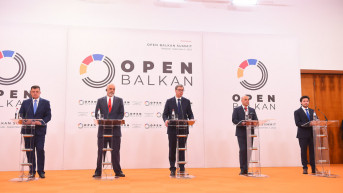
The European proposal on the normalization of relations between Belgrade and Pristina envisages the intensification of cooperation in the economy, and experts in the political and economic situation in the region believe that this plan will bring Kosovo closer to the Open Balkan initiative, which the political elite in Pristina resolutely rejected in the previous period.
Serbian President Aleksandar Vucic and Kosovo Prime Minister Albin Kurti discussed the European proposal on Monday in Brussels, after which the content of the 11-item agreement was published on the website of the European Foreign Service, on which the two sides should continue discussions.
Item 6 of the European proposal states that, although this agreement represents an important normalization step, both sides will continue the dialogue process led by the EU with new momentum.
"The parties agree to increase future cooperation in the fields of economy, science and technology, transport and communications, judicial and police relations, post and telecommunications, health, culture, religion, sports, environmental protection, missing, displaced persons, and other similar areas through the conclusion of special agreements," the European proposal reads.
The details will be agreed upon in additional agreements made possible by the EU-led dialogue.
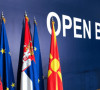
The Open Balkan initiative was launched by the leaders of Serbia, Albania, and North Macedonia in order to ensure the free flow of people, goods, and services between the member countries in order to strengthen regional cooperation and economic relations. Montenegro and Bosnia and Herzegovina are showing interest in joining, but Pristina has not wanted it so far, despite the fact that Edi Rama has repeatedly suggested it to them.
The new round of dialogue between Serbia and Kosovo and the proposal offered by the European Union in perspective open up opportunities for economic cooperation between the two sides to be realized through the regional initiative Open Balkan. Idro Seferi, a journalist and analyst from Kosovo, agrees with this position, stating that both the European agreement and the Open Balkan initiative offer good neighborly relations and regional cooperation.
"Certainly, if the agreement is accepted, I don’t see any more reasons to oppose the Open Balkan, given that bilateral relations would be much better, and therefore the possibilities for such projects to develop will be much greater," Seferi assesses.
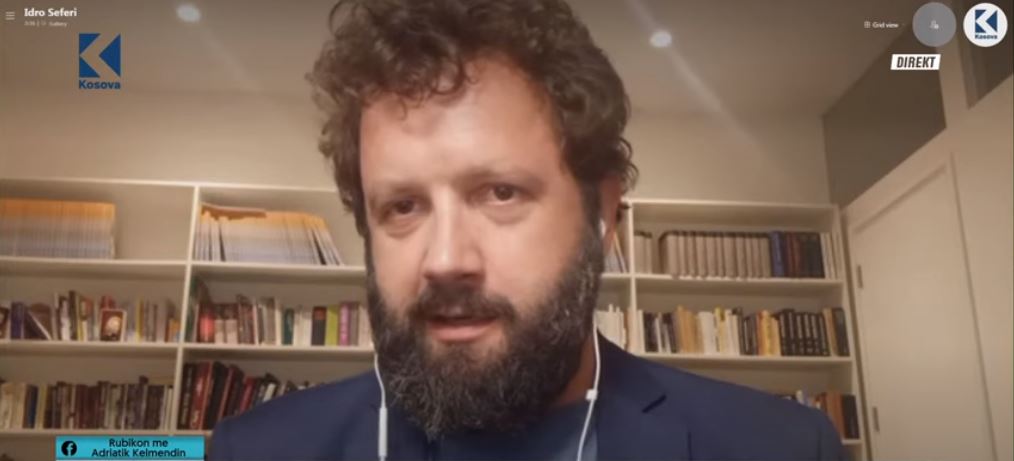
He believes that a renewed invitation to Pristina to join the Open Balkan would be a sign of the realization of the agreement between the two parties.
"I think that after a few months, the invitation to join Pristina in the Open Balkan would be a sign of the implementation of the agreement and that it is okay to move towards it. I think that will have to wait a few months to have explanations of how the implementation of all these things that are expected will take place, and only then regional cooperation," Seferi told Kosovo Online.
Seferi points out that the issue of the current situation between Belgrade and Pristina if it goes in the spirit of reducing the problem, will have a crucial impact on the creation of a common regional market and the joining of Kosovo to the Open Balkan.
"A part of the public in Pristina believes that nothing is lost with this project, but new opportunities are opened because this initiative is supported by the international community and the US and that it is good for Kosovo because it would allow the export of domestic goods and products to neighboring countries without restrictions, as well as for people to move more easily," Seferi said.
However, Seferi states that there are many opponents in Kosovo because the Initiative was seen at the beginning "as a Serbian idea".
"They reject that project because Kosovo, Montenegro, and Bosnia and Herzegovina were not at the beginning of all this. They did not want to give the project a chance because then it would seem that bilateral relations are not important," Seferi said.
As far as Albania is concerned, Seferi says, the initiative has been almost completely accepted due to the fact that Prime Minister Edi Rama is one of the signatories and promoters of the idea as an opportunity for development and progress, both for the country and the entire region.
"Certainly, such ideas are not new in Europe and can be functional in the region as well, but the question arises as to how many countries want and have that agenda, that is, regional cooperation as a priority," Seferi concludes.
President of the Libertarian Club Libek and editor of the Talas portal, Milos Nikolic, expressed the hope that the European plan would bring the decision-makers in Pristina closer to regional economic integration through the Open Balkan initiative.

"This proposal, both in its letter and in its spirit, refers to normalization through the deepening of regional cooperation. There is no faster normalization than the economic normalization of relations between people and economies. As they say, capital is the biggest coward, because it is the first to flee from instability, so capital often collapses ways of cooperation that are burdened by high politics," Nikolic says.
The normalization of relations through economic integration, explains Nikolic, also means that people in the region can move freely, get employed, and study, protected by agreed rules that are responsibly implemented.
"This can also be the most structurally sustainable form of normalization because it leads to the creation of healthy incentives for growth, progress, and development, which is very much needed by our entire region," Nikolic points out.
He emphasizes that Kosovo can only benefit from joining the Open Balkan initiative.
"I don't see any reasonable economic reason why someone today would have a problem with the creation of a common regional market through faster integration. Whoever has a problem with this actually has a problem with European integration, as well as with the very concept of the European Union, which is based on the four freedoms of movement of people, goods, services, and capital," he states.
A regional market composed of all our economies would become a more attractive destination for foreign direct investments, Nikolic concludes.
According to him, the common market could potentially be a bridge towards faster integration with the European single market of our entire region.
"The objections that we have heard from Pristina so far were mostly political and they had little to do with economic logic. I believe that this year we will all together attend the integration of the remaining economies of the Western Balkans to the Open Balkan initiative because today there is no doubt that this initiative is good for everyone," Nikolic is convinced.
When it comes to regional initiatives, the Director of the Albanian Center for Economic Research, Zef Preci, gives priority to the Berlin process, which, he says, can initiate mechanisms that would bring the countries of the region closer together, which, he claims, is not the case with the Open Balkan.
"He was more able to record problems than he was able to provide their solution, as can the Berlin process, which at the same time has funds, has a structure, can initiate processes, and whose essence is the rapprochement of countries, with each other and at the same time with the European Union," Preci believes.
He does not even believe that the Open Balkan will be realized in the form in which the signatories, President of Serbia Aleksandar Vucic, and Prime Ministers of Albania and North Macedonia, Edi Rama, and Zoran Zaev, envisioned it, but that talks in Brussels and the Franco-German proposal will contribute to the re-actualization of the initiative. on the normalization of relations between Belgrade and Pristina.
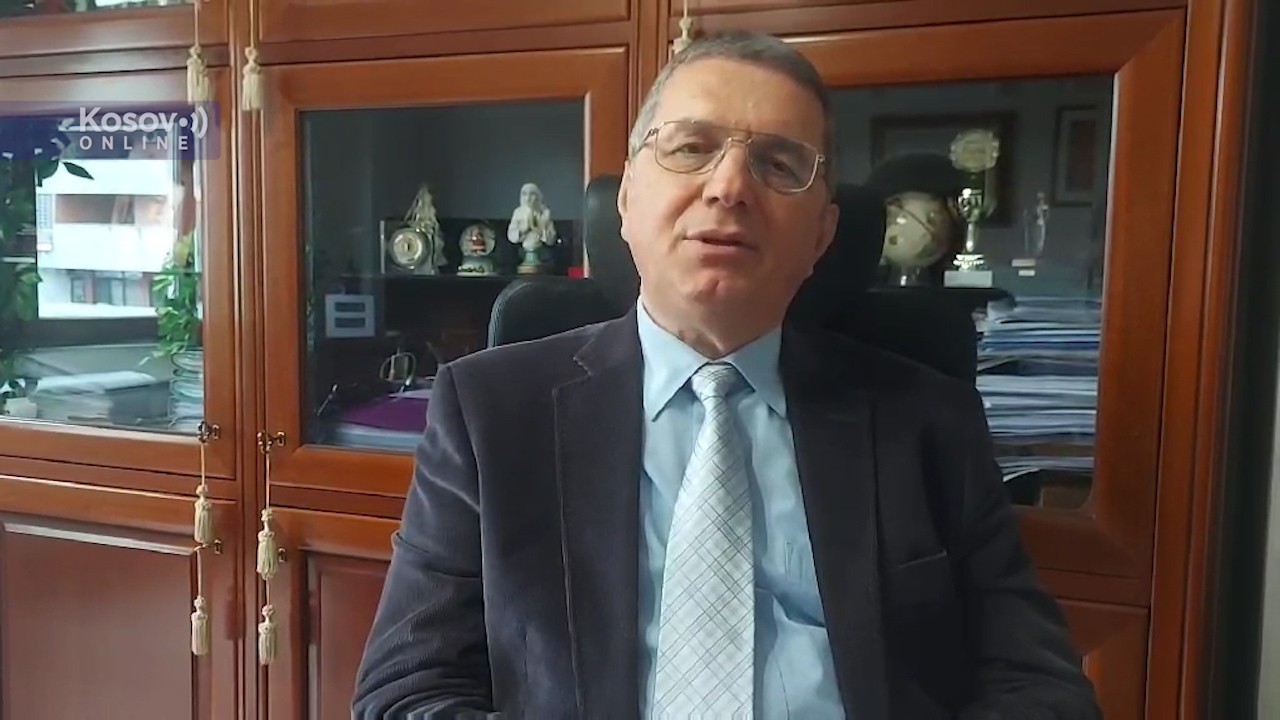
"I think that the Agreement on the Stabilization of Relations between Serbia and Kosovo, known as the Franco-German plan, which enjoys the support of the United States of America, will provide an opportunity for this instrument to gain attention, but without the expectations on which it was built at the beginning," Preci said.
"The open Balkan will be given attention again, it will serve political connections to continue with the series of meetings," Preci said.
0 comments