
The role of the Open Balkan in achieving a compromise solution
"I would say that after the Cold War, we are still far from achieving a new, positive, and sustainable international order," Cardinal Pietro Parolin, the second man of the Vatican, said in an exclusive interview I had with him in May 2019 for "Politika".
In the continuation of his thoughts, he supplemented this statement with the following sentence: "If it is true that history has always known hostile opposing positions and conflicts, the new scenarios that have opened before our eyes in recent years - are confusing."
Today, one year after the start of "Russia's special operation against Ukraine", the whole world fears the use of the most modern weapon against humanity - atomic weapons.
The two largest military powers - the US and the Russian Federation - as if by the end of the Second World War, they did not agree on all not only political but also economic spheres of interest at Yalta, from February 4 to 11, 1945, with the presence of Great Britain. Looking from the perspective of today's events, US President Truman and British Prime Minister Clement Attlee were not satisfied with the way Stalin, Roosevelt, and Churchill agreed at Yalta. Two years after Yalta, the Cold War began between the capitalists (US) and the monarchists (UK), on one side, while the communists (USSR) were on the other.
However, let's not forget that the struggle for today's world order is primarily a question of economic supremacy, which is visible from the Ukrainian battlefield, on which the real balance for preserving peace depends. Unfortunately, it will last for decades, as Kissinger, the oldest and most respected living American diplomat, writes in the book "Diplomacy", pointing out that the economic process will be even longer because American power is greatly declining. Let's add to that that the Chinese, Indian, and Japanese economies have an upward trajectory that places them at the very top of the world ladder, that is, at the head of the creators of the new world order. One of the proofs of how important it is for China to get involved pragmatically in the creation of a future order, primarily economic, is its announcement of a proposal to end the war in Ukraine, and that before Xi met with Putin in Moscow, and after Biden visited Kyiv.
Of course, among them is ours, the Balkan region, which throughout history has been surrounded by the confrontation of various cultures and interests. After the war conflicts, the trampling of international law, and the seizure of the fertile and beautiful Serbian territory, there remains a fight for one's own - above all, on economic grounds. It is not an easy path, but it is peaceful and opens a chance for dialogue at the negotiating table. Let us recall that Kissinger's main trump card in negotiations was always facts at the table, not wishes and aspirations.
I can say that Miroslav Lajcak, the European Union's special representative for dialogue between Belgrade and Pristina, surprised me in the interview I had with him a few days ago for "Politika", which he later confirmed to Tanjug and TVK, saying that there had been no place for speculations regarding the non-paper of France and Germany, which should take the form of an official document with a refined text, and that before that was the obligation of Pristina to sign a document on the formation of the CSM with Belgrade, and the processes of the Brussels agreement on the normalization of their relationship will finally begin. Therefore, we can freely state that this is the beginning of the compromise of all compromises between "Kosovo and Metohija and Serbia". The ultimate goal is peace, and it is the only guide while we treat each other as people.
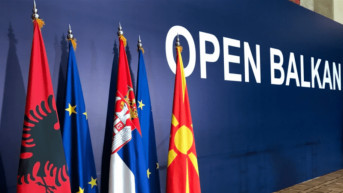
Finally, in the name of truth, let's remember the outcome and compromises in the Second World War, no less - no more, exactly the events in Crimea, and we can also say: today's "Kosovo" for Kyiv and Moscow. What was decided for our former Yugoslavia? At Yalta, Stalin, Roosevelt, and Churchill agreed that the Yugoslav borders would remain untouched (including Kosovo and Metohija) and that the Karadjordjevic dynasty would be replaced by Tito. Until the beginning of the Cold War, Tito balanced between the "big three", and at the beginning of the Cold War, relations with Stalin, known as the “Informbiro”, were strained. With the US and Great Britain, Yugoslavia had solid, correct relations, and it gained a special reputation with the establishment of the Movement of Non-Aligned Countries, and that during the peak of the Cold War. Even today, Serbia enjoys these benefits in India, China, and especially in African countries, which should not be neglected in the creation of a new world order on an economic basis, where Serbia is a leader in the Western Balkans, as the head of the "Open Balkan" initiative.
We will see what position Serbia will have in the new world order; as well as whether our state leadership will listen to Macron and be able to achieve what President Vucic introduced us to: "Take as much as you can for Serbia." However, Macron and Scholz's non-paper, which will be translated into an official EU document, and which will be agreed upon by Belgrade and Pristina in Brussels, will not leave much for a diplomatic radius, nor much room for maneuver, to say the least - almost none.
Serbian MPs missed the chance to find out the background of the Brussels agreement, and even President Vucic could not say much about the non-paper, as this is required by the rule of diplomatic negotiation between serious countries. Lajcak also confirmed for "Politika" that diplomatic secrecy was insisted on, Lajcak instilled optimism with a compromise solution based on political and economic benefit, which would strengthen regional stability and security on the ground. This concretely means that neither Belgrade nor Pristina can fully get what they want.
So, until the non-paper is first shaped into a conceptual diplomatic document, and then into an official EU document - we can perhaps look for an opportunity in a conversation with the Western powers, to preserve peace between quasi-statehood and the division of sovereignty.
Significant support for Serbia can be provided precisely by the successor states that participated in the Tehran Conference in 1943, as well as those at Yalta in 1945 when Yugoslavia received its place within its borders, but also a reward for the determined struggle and contribution against anti-fascism and Hitler's coalition, this time within the framework of the "Open Balkan". Such support would avoid strategic games like the Minsk Agreements, which “burn in armed” dialogue. And peace would shine with the sun of freedom from East to West across the Balkans.
Written by: Zeljko Sajn, special correspondent of "Politika"

0 comments