
The first EU defense strategy: Between European fears and US interests
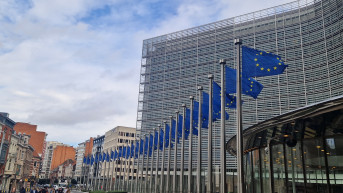
French President Emmanuel Macron stated that Europe should "prepare for war if it wants peace," adding that Russian President Vladimir Putin was "an opponent who will not stop in Ukraine if he wins." This statement came shortly after the European Commission proposed the first European Defense Industry Strategy (EDIS), and European Commission President Ursula von der Leyen advocated for the appointment of an EU defense commissioner.
Macron, in an interview with French television channels TF1 and France 2 on Thursday, conveyed the message that Europe should prepare for war if it wanted peace and also stated that the EU should not draw red lines that, as he put it, would encourage Russia to continue its invasion of Ukraine.
"If Russia wins this war, Europe's credibility will be reduced to zero," Macron said.
Just ten days earlier, on March 5th, the European Commission proposed the first European Defense Industry Strategy (EDIS).
The first step in implementing the new strategy is the legislative proposal for the European Defense Industry Program (EDIP), for which €1.5 billion is allocated from the European budget for the period 2025-2027, followed by a series of measures to ensure that defense industry products can be accessible.
"A strong, resilient, and competitive European defense industry is a strategic imperative and a precondition for strengthening our defense readiness," the EU High Representative for Foreign and Security Policy Josep Borrell emphasized.
This was also the reason why the President of the European Council, Charles Michel, recently met with representatives of the defense industry.
The contentious interpretation of Article 5 of the NATO Washington Agreement
Kosovo Online interlocutors have no doubt that due to the war in Ukraine, as well as increasingly complex relations with the US, this is a new EU defense strategy that will undoubtedly also affect the countries of the Western Balkans.
Nikola Lunic, Executive Director of the Council for Strategic Policy, says that the announcement of a new security strategy is an acknowledgment by the EU that it is unprepared to face security threats such as war in Eastern Europe, as well as possible changes in US policy.
"The European Union has already increased its defense production by 40 percent. However, after Trump's statement, which was intentionally vague for voters, part of the EU is anxious, fearing what kind of relationship the US will have with NATO. Is there a possibility of withdrawal, although that chance is small, or less involvement," Lunic believes.
He explains that the key problem lies in understanding Article 5 of the Washington Treaty on NATO, which, he claims, does not actually obligate member states to enter into war if another member is attacked.
"Article 5 simply states that an 'attack on one is an attack on all NATO members.' However, each country decides individually how it will respond to such an attack. That's why the European Union is considering its own army, and primarily to have a European defense union within NATO that will be fully integrated and where there will be no consensus, but the defense of those countries that enter will be based on the concept that an attack on one country is an attack on all and that all countries will defend together," Lunic emphasizes.
When asked if such a concept would mean confrontation with NATO, Lunic emphasizes that EU members are now trying to find a compromise position with NATO, which would entail a much higher level of obligations but also a higher level of military spending.
He mentions that Germany and Denmark have gone furthest in this direction, practically integrating their armed forces.
"This has never happened before between two sovereign countries. Integrated forces could soon be expected, especially among countries on the eastern flank of NATO. They are interested in drastically increasing their military spending and much more integrating their defense than has been the case so far through the Euro-Atlantic alliance," Lunic believes.
He assesses that this concept will not affect peacetime structures.
"However, in war or any hypothetical action, countries in such a union will act synchronously. It shouldn't come as a surprise now, just as Germany deploys its troops in Baltic countries, that there will be much larger deployments, of one country's forces on the territory of another. In that context, I think there will be much greater interoperability and much greater security obligations for all who enter that union," Lunic believes.
When asked how the new security concept would affect the Western Balkans, especially Serbia, Lunic says that the messages coming from Western intelligence sources should be taken seriously.
"From many intelligence sources, and recently we have seen it from the US intelligence community, there are assessments that the Western Balkans could escalate in tensions, potentially leading to violence and conflicts. The US intelligence community's forecast for 2024 indicates a potential escalation of violence in Bosnia and Herzegovina after Dodik's attempt at secession, as well as between Serbia and Kosovo.
"In such a hypothetical situation, only Serbia and the Serbian people would lose. The only winner in that scenario would be Vladimir Putin, no one else," Lunic emphasizes.
The budget for the new EU defense concept
However, a researcher at the Belgrade Centre for European Policy, Djordje Dimitrov, assesses that the new security strategy announced by EU officials will not have an impact on the Western Balkans. He also notes that the new EU defense concept should not be expected before 2028, and the crucial, unresolved issue is how this project will be financed.
"It is unlikely that the new EU security strategy will come into effect before 2028 and the approval of a new budget, and since Western Balkan countries are not EU members, it's unlikely to happen before 2030. These commitments will not apply to them except perhaps in terms of funds, including the approved six billion euros for the Western Balkans Growth Plan, which is still under debate," Dimitrov says.
He explains that the idea of strengthening EU defense capabilities is not new but has now been brought to the forefront not only due to the war in Ukraine but also because of the US elections and the expectation among Europeans that the return of Donald Trump could lead to a change in their policy.
"In this way, the European Union aims to strengthen its capacities, its autonomy regarding defense, and become less dependent on the United States. This is a factual situation since many European states actually rely on the United States for defense against Russia and other threats," Dimitrov emphasizes.
He explains that, in practice, this would mean enhancing cooperation among EU members in purchasing weapons and exchanging intelligence.
However, he emphasizes that the fundamental problem is how to secure funds for such a project.
Dimitrov points out that the estimates suggest that around 750 billion euros would be needed for such an endeavor, and he says that the European Union currently does not have this money.
"The current budget does not provide for it. Ursula von der Leyen has presented a few ideas, including using frozen Russian assets, urging the European Investment Bank to reconsider its policy that prohibits using its funds and investments for purchasing weapons and ammunition, and thirdly, joint borrowing.
The question now is how EU member states would react to this. There are already objections. Some states expressed concerns last summer and said that the European Commission had exceeded its powers when it sought a joint purchase of ammunition for Ukraine. The position of a defense commissioner is also mentioned. But that will also have to wait for elections in order to see if it will be implemented," Dimitrov notes.
He adds that when it comes to budget issues, there is an additional question regarding the fact that many EU members already have difficulty servicing NATO's budget, which requires two percent of Gross National Income.
"The question arises whether member states will be able to additionally serve the needs of European defense," Dimitrov emphasizes.
He says that divisions within the EU also exist regarding the formation of joint armed forces, or the European army.
"There is talk about forming a European army, which was last mentioned by the Italian Foreign Minister, but it immediately met with disapproval from some countries, including Spain, Slovenia, Poland, and Denmark. They see it as duplication, unnecessary supplementation of NATO capacities," Dimitrov believes.
Political analyst and professor from Kosovo Nexhmedin Spahiu says that all announced plans by European officials envisioning a new defense concept that includes the formation of armed forces depend solely on the will and interests of the United States.
"If it is in America's interest, it will be so. Without US support, there will be no European army," Spahiu is clear.
He explains that the EU is still not in a position to lead an independent policy from the United States and the United Kingdom.
"The European Union is still not in a position to lead its independent policy from the United States and from the United Kingdom, which has exited the EU, but it is still here, in Europe, and is still a force in every sense. If that is their plan, if it fits into their plans, then it will happen," Spahiu emphasizes.
Formation of the European Army
Italian Minister of Foreign Affairs, Antonio Tajani, stated earlier this year that the EU should have its own combined army capable of participating in peacekeeping and conflict prevention.
"If we want to be peacekeepers in the world, we need a European army. This is a fundamental condition for having an effective European foreign policy," Tajani emphasized.
However, the Head of EU foreign policy, Josep Borrell, stated earlier this month, after presenting the European Commission's plan for joint procurement of weapons, that the priority for EU members should be increased cooperation among the bloc's 27 national armies, rather than forming a unified army.
Predrag Petrovic, Director of Research at the Belgrade Centre for Security Policy, says that regardless of whether the European army is formed or not, he does not see it having a dramatically significant impact on the Western Balkans region.
"The European Union and NATO work together, and the future formation of the EU army will be in line with NATO. I don't see any dramatic changes in the region at this moment," Petrovic assessed.
He does not expect the formation of the EU army to happen soon.
"This has been talked about for a very long time, and the biggest obstacles to it have come from NATO, primarily from the desire not to duplicate resources. I see the speed of realizing the formation of the EU army depending on the agreement between NATO and the EU, as well as the commitment of the EU and its members to allocate resources for such a project," Petrovic stated decisively.
Milomir Miladinovic, President of the Assembly of the Club of Generals and Admirals of Serbia, also says that it is difficult to expect the EU to step out of the framework agreed upon between the US and NATO.
He assesses that the announcement by European officials that they will be more dedicated to defense in the future is "an old story."
"I was at the Command and Staff Academy back in 1988. At that time, we discussed with senior officers the formation of a 'European corps.' At that time, the EU was not in this composition and format, but Europeans were thinking about forming their own unit even though most of them were members of NATO forces. They wanted to have their own army to be a 'regular state' with territory, people, government, and even an army, but independent of NATO. However, the Americans never allowed them to do so," Miladinovic says.
Miladinovic says that the crucial question is why EU countries, NATO members, would establish a separate army and whom they would fight against independently of this Alliance.
"I personally think, as a former soldier, that practically nothing will come out of it," Miladinovic believes.
He explains that EU countries, which are also NATO members, have never been hindered from investing in their defense, even more than the NATO standard of two percent of Gross Domestic Product (GDP).
"It is the right of each European country, a NATO member, to arm themselves, buy weapons, modernize, but the main line remains, they must listen to the boss, and that's the USA," Miladinovic emphasizes.
He says that he previously discussed this with the former Chief of the General Staff of the Romanian Armed Forces, who unequivocally told him that - if they had the money - they could have a million-strong army.
"When I spoke with the Chief of the General Staff of the Romanian Armed Forces, he told me that they are obligated to provide a certain level of strength and resources to NATO, and if they have means beyond that, they can have a million-strong army for their own needs. Just as the Americans have regular armed forces, but also territorial defense, or the armed forces of their states," Miladinovic says.
Commenting on the claim by the Vice-President of the European Commission, Margrethe Vestager, that it is unacceptable for EU countries to have spent $108 billion on military procurement in the first 16 months after the war in Ukraine, with nearly 80 percent of purchases coming from outside the EU, mainly from the US, Miladinovic says that major world powers are already spending $50,000 - per second.
"The leading country in terms of armaments is the USA, which allocates over $760 billion for the needs of its armed forces. The other ten countries in total have roughly the same. That's over $50,000 every second. These are huge funds, and if there were awareness among these major powers, the world would be completely different," Miladinovic says.

0 comments