
Five months after visa abolition for Kosovo citizens: Tourist trips or silent departure?
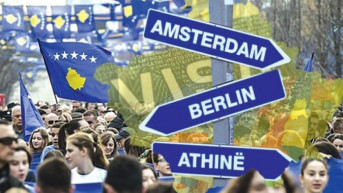
The visa liberalization that came into effect on the first day of this year is seen by citizens holding a Kosovar passport as an opportunity to visit family members living and working in European countries. According to records from travel agencies and airlines, over the past five months, since the decision to abolish visas was implemented, there has been an increased interest in week-long tours of popular European tourist destinations, while economic experts fear a "silent departure" of young people from Kosovo.
Kosovo citizens had been waiting for visa liberalization for a full 12 years before the decision was implemented on the first day of 2024. From Pristina's "Adem Jashari" airport, the first plane took off for Vienna on January 1st without passengers needing visas.
During these five months of the year, there has been an increase in trips to EU countries, as expected, so now according to data from the Reizebiro airline in Pristina, the number of those traveling from Pristina and those coming to Kosovo is almost equal.
Agnesa Aliu from this airline mentioned that the most common destinations for Kosovo citizens are Germany, Switzerland, Finland, and Sweden. According to their experience, visits by Kosovo residents to EU countries do not last longer than a week and are mostly for tourism. Besides tourist destinations, visiting family is the most common reason stated by Kosovo citizens for traveling to a foreign country.
"There is a steady increase in clients, passengers for flights. We also have new seasonal destinations that we are offering. Now we can say that since the visa liberalization in January, there has been a balance in travel and passengers, with departures from Pristina and from the diaspora to destinations we offer. For example, to Germany, Switzerland, Finland, and Sweden. Our experience so far with clients and passengers traveling from Pristina after visa liberalization is that they stay briefly, meaning these are only tourist or family visits. We cannot say exactly, but the stay varies from three to five days, or up to a week, but no longer than that," emphasized Aliu.
Kosovo citizens are satisfied with the initial effects of visa liberalization. Those who have not yet utilized the benefits of visa liberalization will certainly do so in the future.
Although aware of the risk that young people from Kosovo, freed from visa requirements, may head to EU countries in search of a better life, they believe that visa liberalization is a good opportunity to visit European tourist destinations and family abroad, which was not easily accessible until five months ago.
Freedom of movement for citizens holding a Kosovar passport, however, carries certain risks. Besides the positive effects, experts assess that there are negative impacts, such as the departure of young people and the workforce.
While there has been discussion for months about the number of people who have left Kosovo following visa liberalization, economic expert Safet Gerxhaliu points out that the exact number is unknown, but that it will be clearer after the census that was completed on May 17 and 24.
He adds that "counting" those who leave is a waste of time, and instead, there should be a plan presented on how to retain young and educated people in Kosovo.
"If we choose numbers and comments from the Government of Kosovo, we waste time if we count how many people are leaving. If they were doing something, these people would stay here. The lack of political stability is one of the big problems. The fact that everything is politicized is another thing, and the third is that every day we have statements about possible conflicts in the region. If we intend to do something to make people stay in Kosovo, we must create laws that favor restoring lost trust," Gerxhaliu stated.
He adds that there are many reasons for the departure of young people, including unemployment, poor education, and healthcare. However, he believes that the main problem is political instability, and the increasingly frequent statements by officials about possible conflict.
"Those who start wars never suffer, only those who hear about them do. We need to restore perspective and trust to these territories, so we can build a future and that there is a perspective for life here," he emphasized.
Due to the departure of the workforce, the IT sector is the most affected, followed by construction, gastronomy, and medicine, he adds.
"Everyone thought there would be an aggressive departure of young people, but I fear that it is a quiet departure, without much fuss. The IT sector is heavily affected, construction, gastronomy, and medicine are directly impacted. The exact number of those who have left is unknown, but a lot will be clear after the population census. But we cannot afford to waste time counting people who leave, instead, we should pride ourselves on having managed to convince people to stay in these territories, because the Balkans without young people are what the enemies of the Balkans, not the citizens or owners of the Balkans, wish for," concluded Grxhaliu.
Migration is not just a problem in Kosovo but across the entire Western Balkans, Gerxhaliu emphasizes, adding that, aside from goods and services, labor is now also being imported, which he says is devastating for the Western Balkans that was once proud of its large number of young people.
"The problem is that the trend of young people leaving is not just in Kosovo but across the entire Western Balkans, and that countries have become 'flee states' due to politics. If smart and young people are leaving a country, we can imagine what the future of the Western Balkans will look like, when despite being proud of having young and educated people, today we are importing labor from Bangladesh, India, and Pakistan," Gerxhaliu concluded.
While for citizens holding a Kosovar passport, "isolation" ended on January 1st this year, the visa liberalization decision did not apply to Serbs from Kosovo who hold passports of the Coordination Administration for Kosovo and Metohija.
Although the European Parliament voted on April 23rd to liberalize visas for Serbs from Kosovo, on the proposal of European Parliament member Matjaz Nemec, the Council of the EU has not yet confirmed this decision, leaving Serbs from Kosovo as the only ones in Europe who are denied the freedom to travel in the EU.


0 comments