
Formation of the Kosovo Gendarmerie: a real possibility or Kurti's pre-election trick?
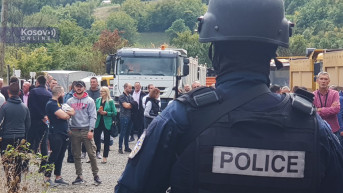
Recent announcements from Pristina's "security circles" that the Kosovo Police might receive a new component—a Gendarmerie—have raised the question of what such a unit would mean in the current, very complex circumstances. Given that numerous actions in the four municipalities in the north, including recent raids on Serbian institutions, are carried out with the presence of "long guns," the message about the potential formation of a new unit has a counter-effect: more police means less security for Serbs in Kosovo.
Written by: Dragana Savic
Security expert Drizan Shala stated that the Kosovo Police is preparing a new component called the Kosovo Gendarmerie, adding that Kosovo must avoid legal and political obstacles for activities in the north "in the event of any possible violation of Kosovo's territorial integrity."
In his opinion, the new unit would need to have at least 2,000 members.
There is still no official confirmation that it will be formed, but if it does come to fruition, the Kosovo Gendarmerie will undoubtedly impact the situation in northern Kosovo.
However, while analysts from Pristina see this impact as positive in terms of security, for experts in Belgrade, this could be another attempt to intimidate the Serbian community.
Security studies researcher Nikola Vujinovic told Kosovo Online that the potential formation of a Gendarmerie within the Kosovo Police would primarily aim to send a political message and that the realization of such an initiative would suit the "patrons of Kosovo."
He emphasizes that, according to European experience, it is customary for the gendarmerie to be part of the Ministry of Internal Affairs, hence its colloquial name "internal army." He adds that it is a unit with military capacities but engages in police work, so he views this initiative in several ways, depending on the target audience.
"One is the Albanian community. The goal of this initiative is to show how Albin Kurti's government thinks about security and territorial integrity. The second is the Serbs, the Serbian community, toward whom a certain tyranny and attempt at intimidation and fear continue. The third is the international community, as the strengthening of the Kosovo Security Force is beyond international law," Vujinovic states.
He reminds that Resolution 1244 does not allow the existence of armed forces, i.e., the Kosovo Army.
"Therefore, I see this as some attempt at an intermediate step to create a unit with military capabilities, but one that would be somehow legal. What raises a question for me is whether this initiative, considering that it was not announced by officials but by certain circles within the so-called Kosovo security system, is merely an election campaign story?" our interlocutor wonders.
He adds that, according to recent analyses, Albin Kurti's pre-election strategy, which involves violence against Serbs, is "yielding results."
Although it is still uncertain whether it will materialize, such an initiative, he says, would suit the "patrons of Kosovo's independence."
However, he believes that this is not a way to bypass the obligation to obtain KFOR's consent for KSF activities in northern Kosovo, and he adds that the Kosovo Police are also required to obtain KFOR's permission when entering Serbian areas.
According to him, the essence of such an initiative is not in the real steps that would be taken but in sending a political message.
"Too many initiatives are coming from certain circles for us to take this seriously now. I'm not saying it isn't serious, I'm not saying it won't happen. But if I hypothetically assume that it will happen, I think it's more of a political pressure on the Serbian community to tell them, 'Look, we now have another stick, and this stick no longer has to be hidden; we can use it,'" Vujinovic concludes.
The formation of a Gendarmerie would benefit both Kosovo and the peace missions in which Pristina participates, but there is no indication that this will happen under the current circumstances, says former Chief Inspector of the Kosovo Intelligence Agency (KIA), lawyer Shkelzen Sopjani, to Kosovo Online.
Sopjani emphasizes that there have been discussions about forming Gendarmerie troops, but he believes that the chances of this happening in the near future are slim, given the complicating security situation in the north.
"However, I believe this should happen, and it would be a significant contribution to peace missions. It would also benefit Kosovo, financially, considering that NATO lacks gendarmerie and police forces. They are involved in numerous peace missions, but as an army, they do not have enough police expertise and experience in the field, except for the Italian Carabinieri and the French Gendarmerie. The French Gendarmerie is not highly qualified for police actions, similar to the Serbian Gendarmerie, which is something between a military and a police unit—a military unit with police training and authority," Sopjani explains.
He believes that the formation of this unit is not intended to bypass the obligation of the KSF to have KFOR's consent for operations in the north.
"I don't think so, because I don't see any reason why the Gendarmerie units would go there, given that we have enough police there, and they are doing an excellent job. The situation in the north is much better than it was last year, except for some complications due to populist moves we've seen recently, and I think there will be more of them until the elections," Sopjani says.
Retired Colonel Ilija Kajtez told Kosovo Online that the announcement of the possible formation of a Gendarmerie within the Kosovo Police is yet another indicator that the West is giving Albin Kurti ideas on how to avoid all the agreements they themselves signed.
He emphasizes that this is part of a continuous process being implemented by Kosovo under the leadership of Kurti, and one that "his foreign mentors support."
"They are training him, giving him ideas, and providing him with all these plans on how to avoid all the agreements that the same Western side has signed. What is tragic is that when Western powers sign an agreement with anyone, the next day they start undermining that agreement because it may no longer suit them at that moment," our interlocutor states.
According to him, those who were the sponsors of Kosovo's unilaterally declared independence are now training the KSF, which should not even exist according to Resolution 1244.
"Those who are arming them, conducting exercises with them, and providing logistical support to these security structures outside the law and international law, are giving them ideas on how to bypass even those already completely ignored and disrespected laws they themselves signed. According to Resolution 1244, they shouldn't have an army at all," Kajtez states.
However, he emphasizes that Serbia does not have a problem with Kurti and the KSF.
"Our problem here is not with Kurti, nor with his armed forces, nor with his so-called Kosovo Gendarmerie, which they plan to consist of 2,000 well-trained soldiers first and foremost, and police officers modeled after NATO. We don't have a problem with him; we have a problem with the West, which is anti-Serbian and is doing everything to drive Serbs out of Kosovo and Metohija," Kajtez concludes.

0 comments