
Is Germany Changing its policy towards Kosovo?
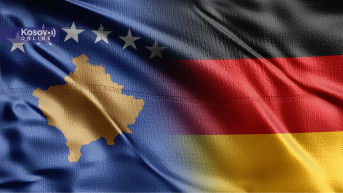
For many, particularly Pristina officials, it was absolutely surprising that Kosovo's expected membership in the Council of Europe did not materialize this month. The Committee of Ministers of the Council of Europe did not even discuss the topic. Western analysts claim that Germany played a decisive role in this.
Less than a month after the Parliamentary Assembly of the Council of Europe recommended by a majority vote that the Committee of Ministers accept Kosovo into the organization at its next meeting, Pristina received a cold shower from Strasbourg on May 17. The ministers of the Council of Europe member states did not even put the topic on the agenda.
Koha's correspondent from Brussels, Augustin Palokaj, assessed Kosovo's absence from the Committee of Ministers' agenda as an expected decision, stating that it cannot even be considered until the international community's condition is met and the draft statute of the Association of Serb Municipalities (ASM) is sent to the Constitutional Court.
He attributed the main blame to the official Pristina but also to Germany.
Historian and Balkan expert Konrad Clewing believes that Kosovo has made many mistakes.
"Kosovo has made many mistakes. The first is based on the belief that Kosovo's Western partners, given Serbia's politics, would pave the way for its membership in the Council of Europe. It was wrongly assumed that the three major EU powers would help at the last moment," Clewing said.
Journalist Michael Martens of "Frankfurter Allgemeine Zeitung" went further, stating that official Berlin could have used its influence to lobby for Kosovo to gain full membership in the Council of Europe, but this was not done because there are divided opinions in Germany regarding Kosovo.
"Germany played a central role in establishing the International Day of Reflection and Remembrance of the 1995 Srebrenica Genocide by the United Nations, which was voted on by the UN General Assembly on Thursday. And of course, it is important to remember this crime. But politics is not only about the past. Which brings us to the weaker side of Germany's present and future. Just a few days before the Srebrenica vote, Germany could have used its influence to ensure that the vote on Kosovo's membership was on the Council of Europe's agenda. But Germany did not enable that. More precisely, some factors in Germany did not. Foreign Minister Baerbock (Greens) expressed support for Kosovo's membership in the Bundestag. But the Chancellor (SPD), who calls for actions, was against it," Martens noted.
Diplomatic Failures and Principles
Long-time Beta agency correspondent from Brussels, Dragan Blagojevic, agrees with Martens' claim that Germany was one of the main co-sponsors of the Srebrenica resolution, but disagrees that it was a success for Berlin, considering it a diplomatic failure.
"Germany was indeed a co-sponsor of the Srebrenica resolution at the UN General Assembly, but the final result and evaluations from some important media, analysts, and people close to governments is that it was a diplomatic failure. I don't see that Germany can particularly boast about this, and the fundamental question is what was the purpose, what was the political goal?" Blagojevic told Kosovo Online.
He adds that Germany's policy on Kosovo is unequivocal, but the current stance of this country aligns with the US and France that without the formation of the CSM, there will be no progress towards Council of Europe membership.
"In March, Gabriel Escobar, a senior US official responsible for the Western Balkans, said that Kosovo could not join the Council of Europe unless it first implemented the decision to establish the CSM. Since then, things have moved in that direction. Both French President Macron and German Chancellor Scholz emphasized this in a joint letter. Kosovo cannot become a member of the Council of Europe; it can be recommended, but that is a condition, and without that condition, there is no discussion. Why? Because they believe that this calms and, to a large extent, if not solves, at least puts the whole situation in Kosovo on the path to a solution. Here, Albin Kurti and his government and his policy have stood as an obstacle," Blagojevic stressed.
When asked whether the official stance of Pristina indicates a change in Berlin's policy towards Kosovo, veteran journalist Dragan Blagojevic says that Germany's position remains "constantly the same."
"Regardless of whether the right-center CDU or the left-leaning Social Democrats or Greens are in power—as they are now—all German governments approach Western Balkan policies from the perspective that Germany rightly, justifiably, and in defense of EU fundamental values and rights, intervened militarily through NATO in 1999," explains Blagojevic.
Mixed Reactions to Kurti's Moves
According to Blagojevic, European officials have a dual view of the actions of Pristina and Prime Minister Albin Kurti.
"In private conversations with officials and journalists, those who support Kurti believe he must pursue policies necessary to establish statehood. Others say he is very stubborn, refusing to heed the opinions of either the European Commission or the Americans. On the other hand, what can such Kurti policies solve or bring to Kosovo or Europe? There’s a wall; it’s over, there’s nothing more," Blagojevic says.
He adds that officials in Brussels are confused by Pristina's actions but are unclear about "who is making these calculations and what kind."
"Some believe Kurti plays the card that his policy towards Serbs in Kosovo, which is essentially chauvinistic and exclusionary under the guise of building statehood, strengthens his base within the Albanian community in Kosovo, especially considering the upcoming elections. But he cannot win elections alone if the EU, the majority of EU countries, and particularly the Americans believe he disrupts what we want to achieve in Kosovo, which is to calm Kosovo and create a solution that will serve as a foundation to turn the entire Western Balkans towards genuine integration into the EU based on the values and criteria known as the Copenhagen Criteria," Blagojevic emphasizes.
Expectations from Pristina
Political analyst Afrim Hoti from Pristina believes that Kosovo should not expect greater support from Germany or other EU members until Pristina proves its credibility and fully implements everything agreed with the EU, including forming the Community of Serb Municipalities (CSM).
"In the case of Kosovo’s membership in the Council of Europe, the situation was confusing due to the failure of obligations by both Kosovo and Serbia. Given this development, it was difficult for Germany and other countries to push and implement Kosovo's request for membership in the Council of Europe. This, of course, does not mean that Germany does not support the idea. They have only suspended the process until Kosovo fulfills its international obligations," says Hoti.
Asked if it is possible for official Berlin to change its attitude towards Pristina, Hoti says that is impossible.
"It is definitely impossible because Germany has harmonized its position with other EU countries. Therefore, I do not see such a possibility. We might expect greater support from Germany, but that will only follow when Kosovo proves its credibility and fully implements what has been agreed upon," states the Pristina analyst.
Commenting on journalist Michael Martens' claim from "Frankfurter Allgemeine Zeitung" that Germany led the adoption of the Srebrenica Resolution but did nothing to help Kosovo join the Council of Europe due to divisions within the top of the German administration, Hoti says that Germany has identical positions on both issues.
"Germany’s role in the Srebrenica Resolution and Kosovo's membership is very strong. Of course, it depends on the political agenda and priorities. In this case, both Germany and other countries supported the idea of the resolution," Hoti stressed.
He added that the same principle should be applied to the reasons why Kosovo did not become a member of the Council of Europe.
"This is not only Germany's stance; it is also the stance of other countries. All countries are pressuring Kosovo's institutions to now fulfill their international obligations, specifically to dynamize the processes for creating municipalities with a Serbian majority," Hoti concludes.
Duality from Berlin
Former FRY ambassador to Germany, Zoran Jeremic, explains to Kosovo Online that the "duality" in official Berlin is the result of two currents in German foreign policy and the old rivalry between the chancellor and the foreign ministry, now clearly visible between Chancellor Olaf Scholz and Foreign Minister Annalena Baerbock.
"The so-called two currents in Germany are an old rivalry between the foreign ministry, which is usually not in the hands of the leading coalition partner, whether it is CDU or SPD, and the chancellor's office, primarily his foreign policy advisors, from Bitterlich to Schinger and now Plötner, who is a professional and serves as a good corrective to Chancellor Scholz, who is more of a domestic politician. He understands foreign policy less, and Plötner's advice is very useful to him. There arises the conflict between the wild, aggressive policy of the Greens pursued by the foreign minister and the more rational, moderate policy pursued by the chancellor, who is aware of circumstances that the minister is often unaware of or ignores," explains Jeremic.
This experienced diplomat emphasizes that Germany's priorities are no longer on the Western Balkans but rather on Eastern Europe.
"There is a more serious problem in Germany itself regarding the war in Ukraine. It is slowly evolving, and Chancellor Scholz says this, into a NATO and Ukraine war—which it already is, but now it is being transferred to European territory in the sense that allies are getting involved. This new formulation and Macron's visit to Scholz are shifting Germany's priorities from the Balkans to the East, where its vital interests are threatened. So, this issue is being relegated to the background," Jeremic believes.
However, he clarifies, official Berlin will not change its stance on Kosovo even in such circumstances.
"Germany's stance on Kosovo is constant. It is only postponed in some manifestations, such as this action for Kosovo's admission to the Council of Europe. It was assessed that this would be too unilateral an action by Germany without coordination with its allies, primarily France and the USA. This has been left for some future, calmer time as a leverage factor for both sides, Kosovo and Serbia, regarding admission and additional concessions from both sides," says Jeremic.


0 comments