
Hague judgment and Kosovo’s international prospects: Could it open the door to new withdrawals of recognition?
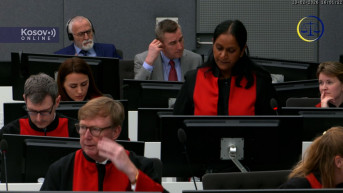
The judgment of the Specialist Chambers in The Hague finding four former KLA leaders guilty of war crimes has raised concerns in Pristina that one of its repercussions could be further withdrawals of recognition of Kosovo. Some of Kosovo Online’s interlocutors believe that a judgment presenting a more objective picture of the war in Kosovo represents a burden and could tip the balance for some countries that have considered reversing their recognition, although not for the leading EU countries or the United States. Others argue that the findings reached by the international judges in The Hague will have greater consequences for Kosovo’s self-perception than for its international position.
Written by: Dusica Radeka Djordjevic
Although the judgment against Hashim Thaci, Kadri Veseli, Rexhep Selimi and Jakup Krasniqi is not the first conviction handed down by the Specialist Chambers for war crimes committed by former KLA members, this particular judgment has caused considerable concern among the Albanian public in Kosovo.
According to analyst Endri Tafani, the decision could, in the long term, affect the positions of some countries that recognize Kosovo, with the most serious potential consequence being the withdrawal of recognition.
Political science professor Dritero Arifi believes that, following such a judgment, Kosovo risks facing greater political and diplomatic isolation. According to him, some countries may not necessarily withdraw their recognition of Kosovo, but could reduce bilateral cooperation or refrain from supporting Kosovo in processes where such support is required.
At the same time, Kosovo Prime Minister Albin Kurti said that Russia and Serbia would attempt to “exploit” the judgment and that, for this reason, a public diplomacy campaign should be launched.
“Key figures” behind bars
President of the Kosovo Business Alliance Agim Shahini believes that Kosovo will face considerable problems if the Specialist Chambers’ judgment imposing prison sentences on former KLA leaders is upheld, because this would mean that key figures in Kosovo were imprisoned for criminal offenses.
In his view, the judgment has changed “the entire image of the Kosovo state” in the eyes of the West.
“If these decisions remain in force, if our commanders, our former President and Speaker of Parliament, and all the others who held office remain in prison, then we will face considerable problems because key figures in Kosovo are in prison for criminal offenses,” Shahini told Kosovo Online.
In his opinion, the Court’s judgment could affect Kosovo’s prospects of securing new recognitions and could also lead some countries to withdraw their recognition.
He said that securing new recognitions from various countries would be difficult because, generally speaking, there were two problems.
“The first is that we do not have functioning institutions and the Ministry of Foreign Affairs is not going anywhere to seek recognition, while we also do not have a President when it comes to foreign policy. At the same time, domestic politics is not in a good situation either. The second problem that will arise if the Court’s judgment becomes final is that many countries will consider whether or not to invest further in Kosovo. We will see about that. There are several powerful countries that have their own interests and continue to support Kosovo. Kosovo will remain what it is, but when it comes to further integration and new recognitions, Kosovo’s entire foreign policy apparatus genuinely needs to be mobilized, and it has not been functioning for more than two years,” Shahini said.
Stefan Surlic, Assistant Professor at the Faculty of Political Sciences in Belgrade, believes that the chances are very slim that, because of the war crimes judgment against former KLA leaders, the leading European Union countries, together with the United States, would reconsider their recognition of Kosovo’s independence. However, he notes that if Serbia continues its campaign to secure withdrawals of recognition, the judgment could in the future become one of the stronger arguments for countries that have previously considered such a move and with which discussions on the issue have already taken place.
Changing the image of the KLA
According to Surlic, the judgment undermines the idealized narrative that Kosovo Albanians have promoted until now—that Serbs were exclusively perpetrators and Albanians exclusively victims.
“This has now, in fact, shed light on a much more objective picture of the war in Kosovo,” Surlic told Kosovo Online.
He added that, although the judgments were not sufficient to deliver justice for all victims of the KLA, they were highly significant symbolically because they changed the perception of the organization.
“At the same time, Belgrade is now in a more comfortable position when discussing the past and the Serb-Albanian conflict, because it can point to crimes that have only partially been punished and brought before justice. Of course, this is an argument because, although there was previously no argument at the level of international law, there was a moral dimension that was frequently emphasized, particularly by Western countries that were the most vocal supporters of Kosovo’s independence: ‘We have a moral obligation, because of the Albanian victims, to support Pristina.’ Now, whenever they invoke that argument, the obvious response is: ‘Where is the moral obligation toward the Serbian victims and toward the systemic discrimination that Serbs continue to experience to this day?’” Surlic said.
In his view, if the judgments are upheld on appeal, they will represent a major problem for Pristina and a kind of burden, because they will undermine an image built over many years that focused exclusively on Albanian victims.
“Kurti and even those who oppose him are united in the view that this judgment must be overturned on appeal because they equate it with the concept of Kosovo’s independence and fear precisely the consequences—that many international actors will become more reserved toward Pristina’s demands and policies than they have been until now,” Surlic said.
He expects a campaign aimed at discrediting the Court’s decisions.
“I believe that what lies ahead is a serious lobbying campaign—a strategy by Pristina to discredit the decisions of this Court at all costs and to ensure, again at all costs, that the appellate judgment is substantially more lenient or overturns the first-instance judgment entirely. That is their only way out if they want to continue pursuing their current policy. Any other scenario would have certain consequences, primarily negative ones for them and for the idealized narrative that Kosovo’s independence was the product of a conflict in which only Albanians were victims,” Surlic said.
Crisis of legitimacy
Historian Vukan Markovic believes that the conviction of former KLA leaders by the Specialist Chambers in The Hague will not significantly affect the way the international community views the organization and that its consequences will be greater for Kosovo’s self-perception than for its international position.
“This trial will not significantly affect the way the international community views the KLA, at least not the majority of the international community, which in most cases does not concern itself with the details,” Markovic said.
He added that the judgment against the former KLA leaders resembled the kind of shock Croatia experienced following the initial judgment against Ante Gotovina, Mladen Markac and Ivan Cermak.
“We hope, of course, that what happened with Gotovina will not happen in Thaci’s case and that he will not be acquitted on appeal. But that epic, victorious, triumphalist narrative, which is essentially the founding narrative of the Republic of Kosovo, has been called into question if it turns out that the victory in that war was more tainted than they are prepared to accept. Particularly because, paradoxically, this judgment relates primarily to Hashim Thaci’s Albanian victims,” Markovic told Kosovo Online.
The expulsion of Serbs from Kosovo and the destruction of Serbian historical heritage, he noted, were not the subject of this judgment.
“The judgment concerns their settling of scores with those whom they would describe as domestic traitors. That makes it particularly uncomfortable for their self-perception, and that is why they cannot accept it in a way that would allow them simply to continue building the KLA myth as they have done until now. In that sense, the judgment has to some extent created a crisis of legitimacy regarding the KLA’s role in the formation of Kosovo. But will it change anything politically? Hardly,” Markovic assessed.
In his view, anyone seeking to reconsider recognition of Kosovo would not base such a decision on Hashim Thaci or Albin Kurti.
“Withdrawing recognition of Kosovo is a fairly complicated process that has followed entirely different dynamics in different situations. In some cases, it involved direct bilateral relations between Serbia and individual actors in countries that withdrew recognition. In others, it reflected the interests of states facing similar secessionist situations within their own territories, while some were motivated by the view that the process initiated in 2008 had in fact resolved nothing. That disappointment with Kosovo’s statehood contributes to some extent to withdrawals of recognition,” he said.
If Serbia were to continue its campaign for withdrawals of recognition of Kosovo, Markovic added, it might use the judgment as an argument with certain actors.
“But it should be borne in mind that not a single people on the Balkan Peninsula accepts any Hague judgment. The official narrative among Serbs, Bosniaks, Croats and now Albanians is that the court is fundamentally unjust and unfair. It is therefore difficult to imagine anyone using a Hague judgment as a major argument, particularly Serbia using it as an argument for withdrawing recognition of Kosovo. If that campaign resumes—and at one point it was quite successful—it will continue in those parts of the world where there is greater room to act because Western pressure is weaker,” Markovic said.
On September 16, the Specialist Chambers in The Hague convicted Hashim Thaci, Kadri Veseli, Rexhep Selimi and Jakup Krasniqi of the war crimes of arbitrary arrest and detention, cruel treatment, torture and murder. Thaci and Krasniqi were each sentenced to 25 years in prison, Veseli to 18 years and Selimi to 13 years.


0 comments