
Markovic: Judgment against KLA leaders will have greater consequences for Kosovo’s self-perception than for its international position
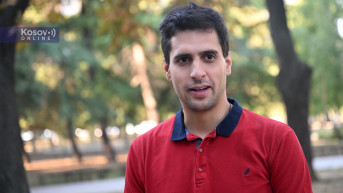
Historian Vukan Markovic believes that the conviction of former KLA leaders by the Specialist Chambers in The Hague will not significantly affect the way the international community views the organization and that its consequences will be greater for Kosovo’s self-perception than for its international position.
“This trial will not significantly affect the way the international community views the KLA, at least not the majority of the international community, which in most cases does not concern itself with the details,” Markovic said.
He added that the judgment against the former KLA leaders resembled the kind of shock Croatia experienced following the initial judgment against Ante Gotovina, Mladen Markac and Ivan Cermak.
“We hope, of course, that what happened with Gotovina will not happen in Thaci’s case and that he will not be acquitted on appeal. But that epic, victorious, triumphalist narrative, which is essentially the founding narrative of the Republic of Kosovo, has been called into question if it turns out that the victory in that war was more tainted than they are prepared to accept. Particularly because, paradoxically, this judgment relates primarily to Hashim Thaci’s Albanian victims,” Markovic said.
The expulsion of Serbs from Kosovo and the destruction of Serbian historical heritage, he noted, were not the subject of this judgment.
“The judgment concerns their settling of scores with those whom they would describe as domestic traitors. That makes it particularly uncomfortable for their self-perception, and that is why they cannot accept it in a way that would allow them simply to continue building the KLA myth as they have done until now. In that sense, the judgment has to some extent created a crisis of legitimacy regarding the KLA’s role in the formation of Kosovo. But will it change anything politically? Hardly,” Markovic assessed.
In his view, anyone seeking to reconsider recognition of Kosovo would not base such a decision on Hashim Thaci or Albin Kurti.
“Withdrawing recognition of Kosovo is a fairly complicated process that has followed entirely different dynamics in different situations. In some cases, it involved direct bilateral relations between Serbia and individual actors in countries that withdrew recognition. In others, it reflected the interests of states facing similar secessionist situations within their own territories, while some were motivated by the view that the process initiated in 2008 had in fact resolved nothing. That disappointment with Kosovo’s statehood contributes to some extent to withdrawals of recognition,” he said.
If Serbia were to resume its campaign for withdrawals of recognition of Kosovo, he added, it might use the judgment as an argument with certain actors.
“But it should be borne in mind that not a single people on the Balkan Peninsula accepts any Hague judgment. The official narrative among Serbs, Bosniaks, Croats and now Albanians is that the court is fundamentally unjust and unfair. It is therefore difficult to imagine anyone using a Hague judgment as a major argument, particularly Serbia using it as an argument for withdrawing recognition of Kosovo. If that campaign resumes—and at one point it was quite successful—it will continue in those parts of the world where there is greater room to act because Western pressure is weaker,” Markovic said.
He stressed that this Hague judgment should be distinguished from judgments also handed down in The Hague, but by a different court, concerning conflicts in other parts of the former Yugoslavia.
“Formally and legally, this court is part of the institutional framework of the so-called Republic of Kosovo. It is completely independent and autonomous, but it is part of Kosovo’s judicial structures. Among other things, the ‘Not in My Name’ protests in Pristina concern precisely the fact that these judgments were handed down in the name of the people of Kosovo,” he said.
According to Markovic, this was important because the international community had initiated the Hague process at a time when it could no longer exert leverage over actors in the Balkans in the same way it had been able to do with Serbia, Croatia and Bosnia and Herzegovina in the early 2000s.
“They had to be provided with a legal arrangement under which these courts would nevertheless remain within Kosovo’s judicial system, enabling them to relent. This in itself is an indication that the international community can no longer shape or influence developments in the way it once could,” the historian said.
He also noted that the process of “Kosovo becoming a state” had stalled.
“Kosovo has serious institutional and constitutional problems, while in Belgrade we are already facing a political and social crisis, so these status issues will not be resolved in any way. It suits all the actors for them to remain frozen,” Markovic concluded.



0 comments