
Has the failure of the meeting in Brussels shown the EU's inability to address the Kosovo issue?
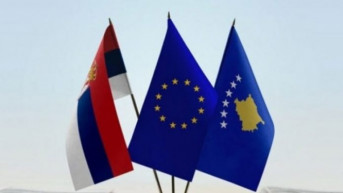
The failure of the latest round of talks between Belgrade and Pristina in Brussels has raised questions about how much control the EU, as the main mediator, still maintains and to what extent it is capable of influencing and preventing unilateral actions such as the recent ban on the dinar in Kosovo.
The crisis in the dialogue process under the auspices of the European Union, with no tangible progress, has indirectly been confirmed by the EU Special Representative for the Belgrade-Pristina dialogue, Miroslav Lajcak.
After yesterday's meetings in Brussels, he assessed that there were no answers to many political questions.
“I welcome the commitment of the parties to finding a sustainable solution for the communities affected by the recent CBK regulation. Today's meeting within the dialogue framework was an important first step, but there are no answers to many political questions. Additional meetings will be needed,” Lajcak wrote on his X network account.
German Ambassador to Serbia Anke Konrad says for Kosovo Online that the European Union has mechanisms to exert pressure on the parties in the dialogue, but its role is that of a mediator, and only Belgrade and Pristina can reach a solution.
“The EU is a mediator in the dialogue and, of course, can exert pressure, demand, or try to convince both political sides to conclude the dialogue process, but the EU's role is solely to mediate between Belgrade and Pristina in what they are willing to accept,“ Konrad said.
She explained that the key problem was that both sides had agreed to the deal, but they saw steps to implement it differently.
“So far, this progress has not been convincing, however, this should not discourage us from giving up. It is simply a matter of finding a way to unblock some issues and move forward. We strongly support such an approach and hope that the EU Special Representative Miroslav Lajcak will soon be able to invite both leaders to meet again. We expect both leaders to be ready for dialogue because only through dialogue can disputes be resolved,“ Konrad says.
According to her, negotiations in Brussels should be seen only as a part of a broader picture in normalizing relations, which also includes the formation of the Community of Serb-majority Municipalities, which will largely contribute to the normalization of relations.
On the other hand, her colleague, long-time Serbian Ambassador to Germany Zoran Jeremic, emphasizes that the EU has mechanisms to prevent unilateral actions, but the fundamental reason for the crisis in the dialogue lies in the 'tug-of-war' between the EU, the US, and Germany over who will have primacy in Kosovo.
"It was a 'tug-of-war.' There's a serious conflict over primacy in Kosovo between the EU, the US, Germany, and other factors. And this is one of those. But that's their issue. What should primarily concern us is the position of the Serbs in Kosovo and the unilateral measures Kosovo takes to make their lives and stay in Kosovo more difficult. To me, this often resembles the racial laws of Germany. They were legitimate at the time and passed in Parliament, but they were inhumane. Similar to what Kosovo is doing now. It's enacting regulations, laws that make life for minority communities difficult or prevent it on the ground for which it considers itself responsible," Jeremic says.
He points out that the key question is whether the EU wants to implement mechanisms to prevent being pushed out of the negotiation process.
"There are mechanisms, indeed, but the question is whether they want to apply them, and that's the whole problem. Kosovo has claimed, in line with certain factors of the international community, that it can eliminate the European Union from those parts of the dialogue for which it is not interested in having a dialogue. They are now trying to reduce the matter to relations between two states, and they are trying to ignore and diminish everything beyond that. In doing so, they are being helped and supported by the EU, especially some of its members, and ultimately, this makes dialogue more difficult," Jeremic emphasizes.
Jeremic specifies that it is up to the European Union to understand and implement measures to protect the respect of the Brussels Agreement.
"For now, the EU is the sole mediator. The question is whether it understands and applies its measures or prerogatives as a mediator and the signed Brussels Agreement for which it guaranteed implementation. So, it's merely a matter of implementing what has been agreed upon, rather than constant attempts to undermine the spirit of the agreement through continuous circumvention," Jeremic points out.
Commenting on the latest round of negotiations in Brussels, the former Serbian Ambassador to Germany assesses that Serbia has shown diplomatic maturity and did not fall into the trap set by Pristina to shift the talks from political to technical negotiation levels.
He emphasizes that Belgrade has conveyed a clear message that it is interested in dialogue and participation, and it is up to EU officials to consider the relationship Pristina has towards their role as mediators in the negotiations.
"Kosovo has shown its intention to shift the dialogue from the political level to the alleged level of technical cooperation between the competent institutions of the two countries, which we cannot accept. Therefore, it is good that the meeting took place. We came in the usual format, and it is up to the European Union to consider how Kosovo relates to it and the world as a mediator," Jeremic concludes.
However, Marko Dasic, an associate professor at the Faculty of Political Sciences in Belgrade, says that the main problem is that the parties involved in the dialogue have overly high expectations of the EU as a mediator in the negotiations.
Dasic emphasizes that the EU, relative to the mandate it has been given, has achieved certain results, but it is up to Belgrade and Pristina to reach a solution.
"The ultimate solution must be reached by the parties to the dispute, and the EU only manages the 'channels' that should lead to the essence itself, which is the normalization of relations between Belgrade and Pristina," Dasic says for Kosovo Online.
He reminds that there was an expectation that complete implementation of the agreement would occur a year ago, first with the draft agreement in Brussels, followed by its concretization in Ohrid.
"However, today we see that there is nothing in terms of the full implementation of the agreement, although perhaps we were too gullible to believe that such implementation would indeed happen. Mediation is a managerial intervention in the diplomatic process, but one should not harbor illusions that the mediator's role is crucial and decisive in this process," Dasic emphasizes.
He explains that there are several lines of argument supporting the thesis that the EU is still achieving certain results as a mediator in the dialogue.
"The first is the construction of excessive expectations that the EU, as a mediator, will be able to first formulate and make decisions within a short period and then persuade the parties in dispute to implement them as agreed. This is an illusory expectation, especially considering the mandate assigned to the EU in this mediation process, which is only to facilitate dialogue," Dasic points out.
The second position is based on hypothetical reasoning about what would happen if there were no EU mediation.
"Often you will hear, even from some European officials, that they would really like to play the role of an 'architect' assigned to them. 'Architects' in terms of proposing a framework agreement that would later be negotiated in detail. However, they often play the role of firefighters because crisis situations arise," Dasic says.
He emphasizes that the EU's crisis management in Kosovo deserves praise.
"It seems to me that the EU's crisis management deserves praise, considering the fact that they have successfully prevented any further escalation of something that could have been the seed of a much stronger conflict between Belgrade and Pristina, mainly on Kosovo territory," Dasic believes.
He assesses that the reasons for the stall in implementing the agreed-upon, including the formation of the Community of Serb-majority Municipalities, should be sought "in the internal political relations" in Kosovo.
"I think the political elites in Kosovo are not ready to do something like that. Kurti made it clear during all the pre-election campaigns and then in his political actions when he was already in office. I have argued several times that during Kurti's mandate, the formation of the Community of Serb Municipalities will not happen, at least not in the form that the Serbian community would truly be satisfied with," Dasic says.
When asked if the EU could influence a change in such a stance by the authorities in Pristina, Dasic says it is doing so.
"But, in line with the 'levers' of influence, I believe it is achieving its maximum. The EU even tried to sanction Kurti, albeit quite symbolically, in the form of some diplomatic pressure, such as some diplomatic representatives of EU member states not meeting with him and publicly speaking against his policies. They tried to reason with him, but it was not enough pressure for Kurti to change his policy, and his reactions to further pressures will not be significantly different. He will remain consistent with a policy that is entirely detrimental to the Serbian community in Kosovo," Dasic emphasizes.
Marigona Shabiu from the Youth Initiative for Human Rights (YIHR) in Pristina believes that the responsibility for the stalemate in the dialogue lies not only with Serbia and Kosovo but also with the European Union as the mediator of the negotiations.
Shabiu tells Kosovo Online that the previous results of the political dialogue process have been below expectations, especially for the lives of ordinary people, highlighting the Serbian community in Kosovo.
She sees responsibility and the causes of failure in the parties involved in the dialogue, as well as in the European Union as the mediator of that process.
"The process is moving very slowly and without much pressure from the EU on the parties to encourage greater commitment and dedication to the dialogue process," Shabiu emphasizes.
She also criticizes the EU negotiators for their lenient stance towards both the authorities in Belgrade and Pristina.
"This has not only led to animosity between the parties but has generally halted the process. It is very important that when discussing the dialogue process, the lives of ordinary people and communities are kept in mind, especially in fully securing the rights of the Serbian community through the constitution and every other mechanism that would ensure the full inclusion of the Serbs in Kosovo's society and institutions," Shabiu emphasizes.
She notes that it is important for Serbia to understand that there is a new reality in Kosovo, but also for the Government of Serbia, as a participant in the dialogue, to acknowledge what happened during the war in Kosovo, meaning to acknowledge the crimes, ensure justice for the victims, and apologize.
"On the other hand, the Government of Kosovo must ensure the same for all Serbs, civilian victims during the war," Shabiu emphasizes.
Reminding that Kosovo accepted the Ohrid Agreement from last year and that Prime Minister Albin Kurti stated that he accepted the Franco-German plan, Shabiu says that this process has been stalled, but that the US could play a key role in ensuring that what has been signed is fulfilled.
"I believe that the US will play the most important role and that Kosovo will have to accept the agreement on the formation of the Community of Serb-majority Municipalities. It is just a matter of time and which government will do it. But, I hope, I know that this document must be implemented. On the other hand, Serbia must fulfill all the steps and items of that agreement. I think the most important thing is for Serbia to de facto recognize Kosovo as an independent state. In this way, both sides will embark on integration processes that will contribute to the democratization of both Serbia and Kosovo and contribute to the improvement of human rights in both states. This will ensure that we have better societies, especially when it comes to the rights of minority communities," Shabiu concludes.
That greater commitment from the European Union as the main mediator in the negotiating process between Belgrade and Pristina is necessary was recently emphasized by Wolfgang Petritsch, former EU Special Envoy for Kosovo, in an interview with Kosovo Online.
“Brussels must act decisively because refusal to engage in dialogue is unacceptable behavior,“ Petritsch stated after Pristina's chief negotiator, Besnik Bislimi, declined an invitation to attend a meeting in Brussels following the ban on the dinar.
Petritsch recalled that Pristina was taking advantage of the fact that this was an election year, and in such circumstances, political boundaries were often tested without consequences.
“This was clearly also the thinking in Pristina, considering that European Parliament elections will be held in June, followed by the establishment of a new European Commission. This has put the EU in a difficult position because it is not fully effective. Of course, there are still Miroslav Lajcak and Josep Borrell, there is a European administration dealing with these issues, but the political weight is diminishing. As long as the pre-election campaign is ongoing, there is no new European Commission, no decision has been made on whether Lajcak will continue his mission, who will lead EU foreign policy... All these are questions that will be addressed over the next several months, which is why I am pessimistic that a good solution will be reached before the elections,“ Petritsch explained.
When asked whether it was possible to have another round of high-level dialogue before the European elections, he responded that it was speculative whether dialogue at the stage immediately before the elections was meaningful or whether both sides are waiting for the European Parliament and US elections.
“The elections in the EU and the US will significantly determine a new scenario and a new political environment, as well as opportunities for negotiations,“ Petritsch said.

0 comments