
Have the local elections opened the way for the formation of the Government of Kosovo, or for extraordinary parliamentary elections?
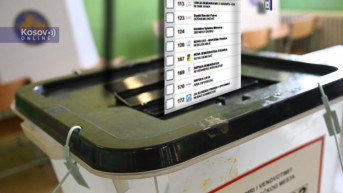
In the local elections held on October 12, twenty-one municipalities in Kosovo elected new mayors, while seventeen others will have to wait until the second round on November 9 to know who will lead them for the next four years. Before the second round, the Prime Minister-designate of Kosovo, Albin Kurti, is expected to propose a new cabinet — but the question remains whether he can secure the support of a sufficient number of MPs in the Kosovo Parliament. Interlocutors for Kosovo Online believe that the local elections have influenced the process of forming a new government, noting that a very interesting period lies ahead.
Written by: Milena Miladinovic
The Self-Determination Movement won in three municipalities in the first round — Podujevo, Kamenica, and Stimlje — and will compete in twelve more in the second round. The Democratic Party of Kosovo (PDK) has declared an unofficial victory, as it won the largest number of municipalities in the first round and will go to the runoff in most municipalities. According to analysts, the main battles will be in Pristina and South Mitrovica.
While waiting for the second round, Kosovo President Vjosa Osmani granted Albin Kurti the mandate to form the new government after the Kosovo Assembly completed its constitutive session.
Kurti’s message afterward was that he would hold talks on forming a new government during the week but that he was also ready for new elections if he failed to gain the necessary parliamentary support.
According to Kosovo Online’s interlocutors, after Sunday’s elections, Kosovo is closer to new extraordinary parliamentary elections than to the formation of a new government, although there is still room for party negotiations. They add that the sovereign voter has sent a message to the parties — both in central and local elections — and now the question is whether they will listen to the citizens.
In any case, they assess — an interesting period lies ahead.
“We’re closer to new parliamentary elections”
Milos Pavkovic, Director of Strategy at the Center for European Policy in Belgrade, told Kosovo Online that after the first round, it is interesting that the deadline for forming a government is October 26 — before November 9, when the second round of local elections will be held.
“It seems to me that it will be much harder for Self-Determination to form a government, since they failed to achieve a positive result in the elections. On the other hand, it doesn’t look like the strongest opposition parties — PDK, LDK, and the Alliance for the Future of Kosovo — have the coalition potential to form some sort of ‘anti-Kurti’ bloc among themselves. So, in that situation, as things stand now, I think we are closer to new extraordinary elections than to any option of forming a government,” Pavkovic said.
Asked which parties gained or lost coalition potential after the local elections, Pavkovic replied that Self-Determination had definitely reduced its coalition potential — if it ever had any.
“From February to October — eight months — they haven’t managed to find a coalition partner and never really had great coalition potential. In previous years they ruled without one, with an absolute majority. Now, after these local elections, it seems to me that the Democratic Party of Kosovo is gaining coalition potential and could be in a position to form a government with the LDK, the Alliance for the Future of Kosovo, and potentially even Self-Determination. Why not? That’s a theoretical scenario, albeit less likely. Still, I think opposition parties can benefit the most from new elections, as they expect better results riding the wave of success from the local elections,” Pavkovic concluded.
Political parties — more or less — punished
University professor Mazlum Baraliu believes that no political party got what it expected in the local elections and that the period leading up to the second round will be very interesting.
Baraliu told Kosovo Online that during this period, the two parties with the most votes in the municipalities heading to the runoff will try to win them through agreements with other parties.
“No political party got what it expected, what it planned, or promised. Certainly not Self-Determination either — they probably thought they would win more. But it depends on what the sovereign citizen has said, and the citizen has spoken through the results we now see and will see once the votes are fully counted and the final results are known. The second round will be interesting, as every party, whether leading or lagging, will try to attract other parties through tacit or open agreements to win the municipalities in the runoff — and that’s the case with most municipalities,” Baraliu said.
Such agreements, he added, could also influence the formation of the Government of Kosovo. However, if inter-party negotiations continue at the same pace as before, he is skeptical that a government will be formed.
“If there were tacit or informal agreements for this round of local elections — which is possible, since every party wants to win as many municipalities as possible — that would certainly affect the formation of the new government. But if the political parties continue behaving as they have over the past seven or eight months, I doubt it will happen. Unfortunately, they haven’t managed to overcome their differences or agree on key issues for citizens’ welfare, the country’s perspective, or the international stage. We haven’t seen that, so I remain skeptical,” he added.
He also emphasized that voters’ opinions could shift before the second round.
“The period until the second round will certainly be interesting — we’ll see how voters decide, since there can be realignments of political or psychological preferences in the runoff,” Baraliu said.
Still, he concluded that no political party is satisfied with the results. Both in central and local elections, he noted, citizens have given clear instructions to the parties for the future — but the parties have not respected the people’s voice.
“Everyone expected more, but the voter has spoken — that’s their sovereign right. I think the citizens have indicated what should be done in the next mandate, or possibly in the new government, but the parties simply haven’t respected the citizens’ voice enough. Instead, they’ve tried to shift blame onto each other. This time, the citizens have spoken — and they have, to a greater or lesser extent, punished every political party,” Baraliu concluded.
Lost coalition potential
Historian Stefan Radojkovic emphasized that Self-Determination leader Albin Kurti and his Movement have lost their coalition potential and that, even after the local elections, there remains a stalemate in forming the Government of Kosovo.
According to Radojkovic, Kurti expected to secure enough parliamentary support with the help of non-Serb minority communities to form a new government.
“The elections confirmed what we’ve known for a while — there is a deadlock, at least in terms of votes within the Albanian community and the possibility of forming a government in Pristina’s administration. Albin Kurti and Self-Determination have undoubtedly lost coalition potential. He expected to achieve enough votes with minority parties to turn that into parliamentary seats,” Radojkovic told Kosovo Online.
He added that the local elections showed that while Kurti still has voter support, it’s not sufficient — and the same applies to the opposition.
“It turned out he has significant support, but not enough; likewise, the opposition Albanian parties have a large number of votes and could outweigh him in coalition with the Serbian List. However, given Kurti’s conduct, those bridges have been largely burned. What might once have been potential cooperation now hardly exists — the elections showed that. They served as a kind of barometer — for instance, in South Mitrovica, where Kurti focused heavily during the campaign, harassing Serbs, the PDK is leading, even though final results are still pending,” he added.
According to him, Self-Determination’s lack of coalition potential explains why it failed to secure greater support at the local level.
“Self-Determination took Podujevo and Gnjilane — larger municipalities — but in Pristina, Prizren, and South Mitrovica, the situation is unfavorable. They have considerable support there, but lacking coalition potential means they don’t have enough backing to form power locally on their own,” Radojkovic concluded.


0 comments