
How long will Kurti be able to refuse Washington's request to withdraw the Special Forces and the mayors from the north?
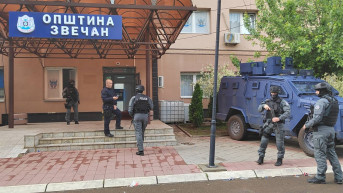
The crisis in the north of Kosovo, caused by the intrusion of the Kosovo Special Forces into municipal buildings, in order to impose illegal Albanian mayors elected in elections that were boycotted by the Serbs and in which only slightly more than three percent of voters participated out, has largely entered its third week, and Kosovo Prime Minister Albin Kurti not only does he continue to ignore the requests of the US and the EU to de-escalate the situation but he offers his own proposals, continues with violent actions and arrests of the Serbs. According to the interlocutors of Kosovo Online, Kurti will refuse to withdraw the Kosovo Special Forces and illegal mayors from the municipalities in the north until Washington and Brussels take concrete actions and apply serious sanctions against the authorities in Pristina.
Yesterday, Kurti continued with his tactics of deepening the conflict. First, the Minister of Infrastructure Liburn Aliu entered the building of the Municipality of Leposavic in the early hours of the morning, in order to visit the mayor Lulzim Hetemi, although KFOR refused him a visit on June 9. The gathered Serbs saw off Aliu with red paint and eggs, which they used to bestrew the jeep he was in.
The Kosovo Prime Minister then met with the Quint ambassadors, after which he announced his plan for de-escalation in the north, which does not mention the withdrawal of Kosovo policemen and mayors.
While the Serbs protested yesterday in Zvecan in support of the arrested Dusan Obrenovic and Rados Petrovic, in North Mitrovica the Kosovo Police arrested another Serb on charges of alleged participation in the May 29 incidents in front of the municipal building in Zvecan.
International mediators have already activated several "punitive" measures, including the exclusion of Kosovo from the "Defender Europe 23" exercise, and threatened with many others, including political isolation and personal sanctions against Kurti and Interior Minister Xhelal Svecla. The Quint's ambassadors in Kosovo symbolically demonstrated this on Monday, when they did not appear at the "Liberation Day" ceremony organized by Kurti and President Vjosa Osmani.
Also last night, the Cabinet of the High Representative of the European Union for Common Foreign and Security Policy, Josep Borrell, drafted a proposal for a package of measures directed against the Government of Kosovo and Prime Minister Albin Kurti, who are considered to lack the political will to take the necessary measures to de-escalate the situation in the north of Kosovo, and Albanian Prime Minister Edi Rama canceled the joint session of the governments of Kosovo and Albania, due to "the tightening of relations between Kosovo and the entire Euro-Atlantic community".
All that, our interlocutors add, is clearly not enough for the Kosovo Prime Minister to give up his "hard" approach.
And last week's mission of the American Envoy for the Western Balkans, Gabriel Escobar, and the EU Envoy for dialogue, Miroslav Lajcak, in Pristina, where they held a series of talks with the leaders of the government and the opposition, as well as representatives of the Serbs, has so far been without results. The Director of the Office for Kosovo and Metohija, Petar Petkovic, said that Kurti was only "misleading Escobar and Lajcak" and that he was doing everything, and even bringing the entire region to the brink of conflict, in order to avoid the formation of the Community of Serb-majority Municipalities, which had been an obligation of Pristina for more than ten years.
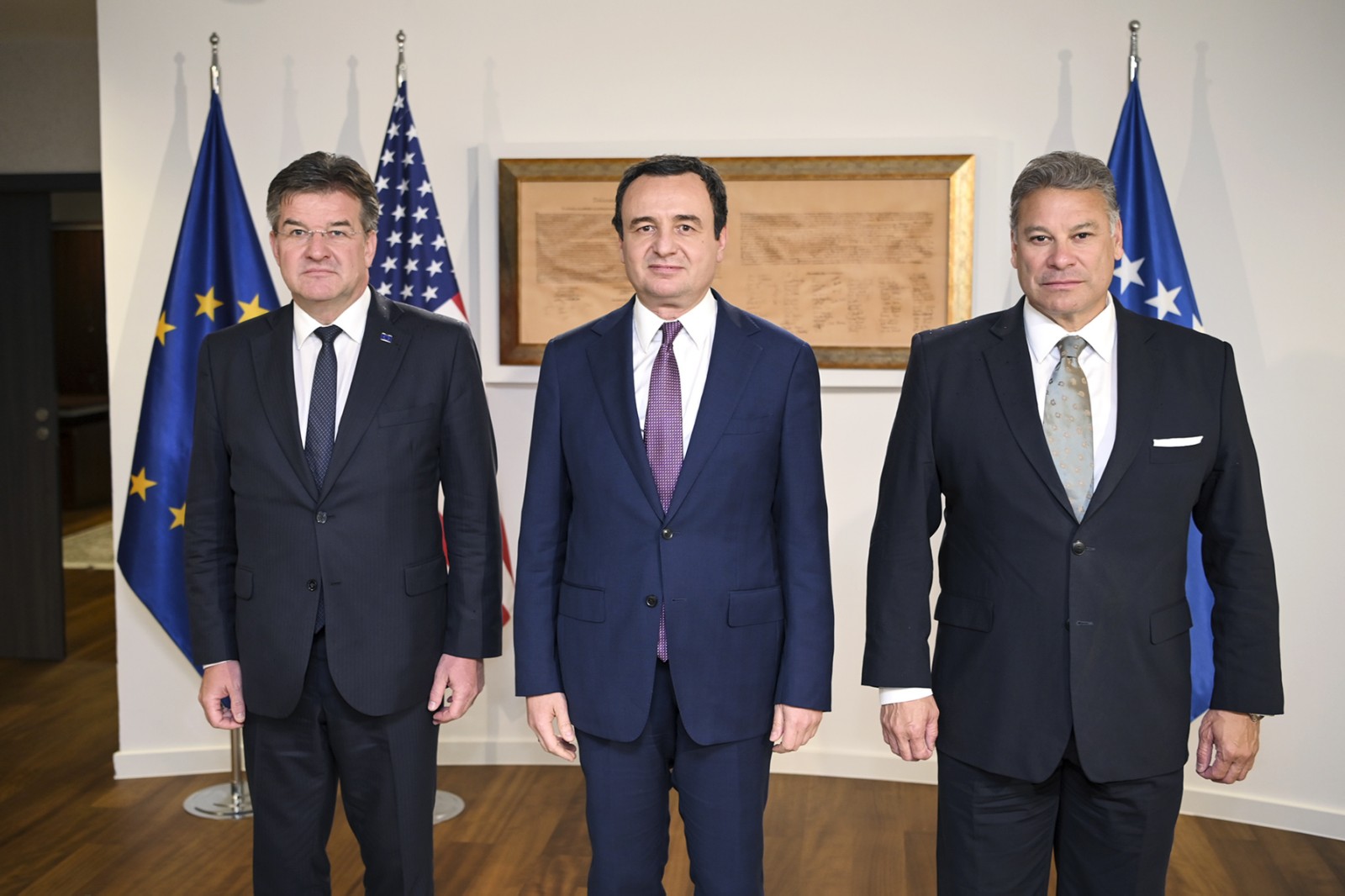
The President of the Center for Social Stability, Ognjen Karanovic, reminds Kosovo Online that last week Escobar and Lajcak gave Kurti a deadline of two days to respond to the demands of the US and the EU to de-escalate the situation in the north.
"Those two days have largely passed, and we do not see that Kurti has fulfilled the demands that the collective political West stood behind. This also raises the question of how long Kurti will be able to ignore the requests for the withdrawal of the Special Forces and the mayors, which is - indefinitely. That is, until the US and the EU, in whose court the ball is now, discipline Albin Kurti," he states.
Karanovic says that it is hard for him to believe that they do not have the mechanisms to do this.
"The US will not take any robust measures against the temporary institutions of Pristina. And until that happens, Kurti will behave like this. The US cares, and perhaps only they care, out of the major powers, to de-escalate the situation in the north of Kosovo and Metohija. They do not want these tensions produced by the temporary institutions of Pristina to turn into some local or, God forbid, regional war, i.e. to expand. They do not want that and obviously, they also have some 'red lines' of their own. Kurti uses that vacuum in the political West and disagreements between Berlin and Washington in connection with the support for him personally and his political option," Karanovic points out.
He adds that Kurti is aware that his shaky rating among the Albanian electorate in Kosovo grows as long as there are tensions and as long as there is a threat, announcement of terror, or terror against the Serbs and not only in the north.
"In the conservative Albanian political body, this is interpreted as an act of some kind of 'patriotism' by Kurti, and in this way, his rating increases, and elections are expected in Kosovo and Metohija. And he wants to take advantage of it, he does not want to miss the opportunity for his political option to win the majority support again. On the other hand, the opposition Albanian parties, although Escobar and Lajcak call on them to understand the seriousness of the crisis and the situation in which Kosovo found itself, know that the West will not take harsh measures against their 'child'" Karanovic says.
He believes that none of the Albanian political factors in Kosovo are in favor of de-escalating the situation, "that is, relaxing relations with the Serbian community in Kosovo and with Serbia, where the southern province de jure is located".
"That would undermine their positions in the electorate and it is a stalemate. Kurti hopes that the West will give in, on the other hand, the opposition hopes that he will have to fulfill the demands, which would be a big blow for him and his Self-Determination Movement. Most importantly is that the Serbs in Kosovo and Metohija are aware that the state of Serbia is with them and that they are not giving up their demands and the struggle for survival and identity. And those extended deadlines for Albin Kurti will be repeated, just as his violent actions will be repeated," Karanovic points out
Institute for European Studies analyst Rajko Petrovic points out that Vjosa Osmani recently stated that they would wisely wait for things to smooth out with their Western partners because, our interlocutor explains, they differ in the tactics they want to implement, but their strategy is the same.
"It seems that Kurti is following exactly this kind of policy. It is clear that there is a tactical divergence between the collective West on the one hand and Albin Kurti on the other on how to solve the existing crisis in Kosovo and Metohija. On the other hand, their strategic goal is the same, which is the acquisition of full so-called Kosovo independence. Certainly, neither the US nor any other Western power centers will allow their word, which they gave in front of the eyes of the whole world, to be demeaned by Albin Kurti," Petrovic says.
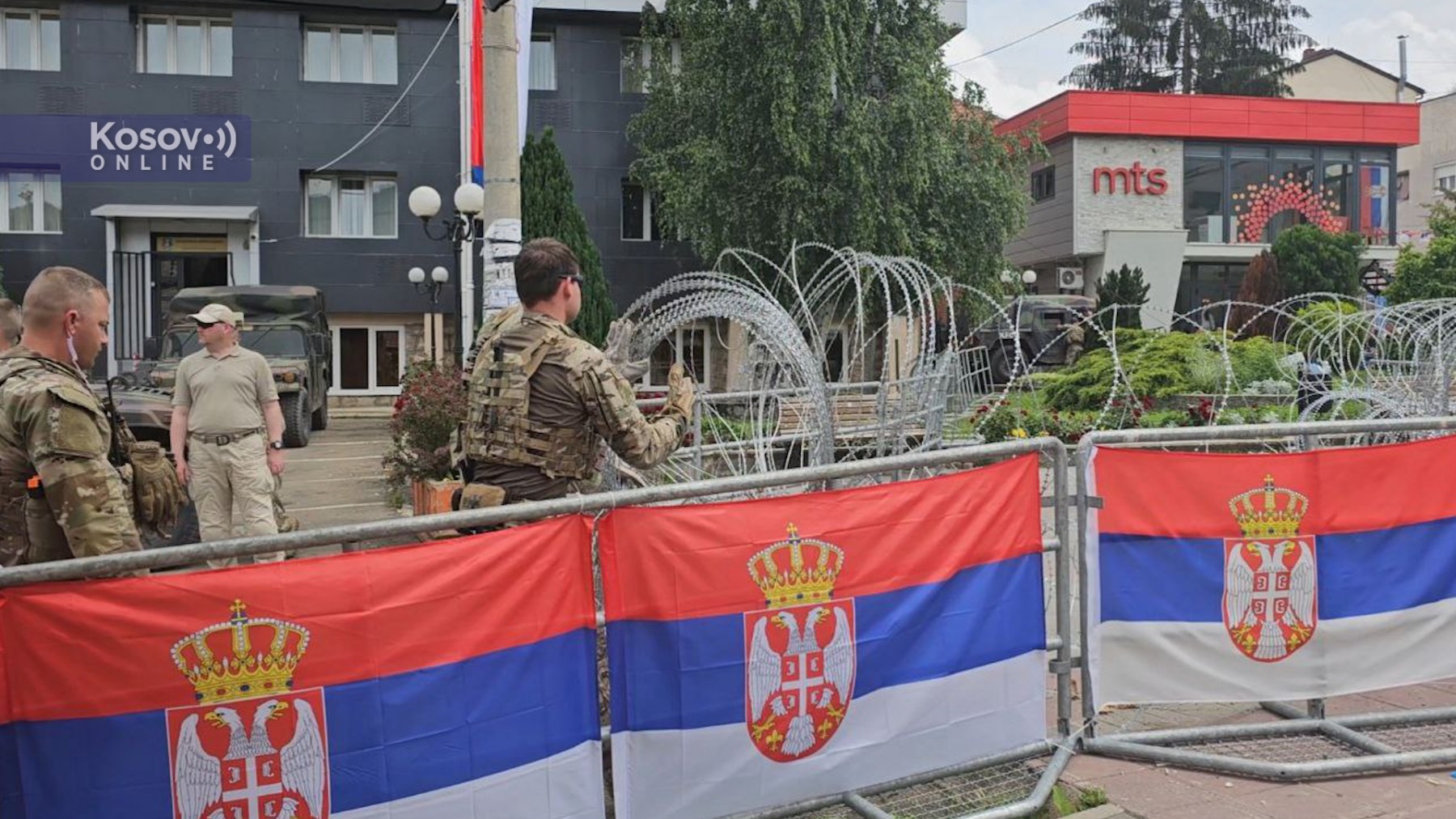
He reminds that Escobar, Borrell, and Lajcak clearly said that they expected the situation in Kosovo and Metohija to stabilize in such a way that they returned to the starting points from before the holding of local elections in the four municipalities in the north.
"Kurti, it seems, is slowly but surely losing his compass, he is a man of extremes who somehow sees himself as a kind of messiah of the Albanians in Kosovo and Metohija who needs to fulfill some big goals, and quickly. Kurti came to power in the midst of an internal political crisis in Kosovo and he obviously knows how to function only in such crisis, uncertain and tense situations. I have never heard any story from him about economic development, about social issues, demographic problems that more than present there," Petrovic says.
According to him, Kurti will resist the pressure to withdraw the Special Forces and the mayors until the West takes some concrete measures to make him behave as they see fit.
"Let's just remember what happened to the people who were the 'leaders' of the so-called independence of Kosovo, far stronger political figures than Kurti - Ramush Haradinaj, Hashim Thaci. And they are where they are, Haradinaj in the opposition, Thaci in The Hague, only because they were no longer usable or cooperative enough for the official Washington, Brussels, and Berlin. Regardless of the extremely negative opinion I have of both Haradinaj and Thaci, whom I consider war criminals, they are political figures of a far higher rank than Kurti. I think Kurti should understand that if the West let them go 'down the drain' at a certain moment, sooner or later it will happen to him too," our interlocutor says.
The West, he believes, has at its disposal numerous mechanisms that can prevent Kosovo from progressing - from European integration, through support for participation in some international activities.
"The Americans are very pragmatic about introducing various packages of personal sanctions against leaders who, from their point of view, are 'disobedient'. Official Belgrade has sent its clear messages. We want the situation to return to the initial basis before the holding of illegitimate elections in the north. Kurti is under great pressure from the more extreme part of the Kosovo public because the withdrawal of the mayors would represent a defeat for him and a victory for the Serbs and Serbia in this mini-diplomatic battle," Petrovic says.
He is convinced that Serbia's victory is certain.
"I don't remember a situation where the interests of one country, as is the case with Serbia, were supported by all the leading countries of the world, from the US to Russia and China, and all the important countries of Western Europe. Therefore, Kurti has no chance to win in this game; I think he made some hasty moves. It is also good that the relations between the Serbs and KFOR in the north have smoothed out after those incidents in Zvecan, which has a serious intention to participate in de-escalation in a way to restrain Kurti and his protégés." Petrovic concludes.

0 comments