
What is behind Rama's proposal for the CSM Statute - pressure on Kurti or other motives?
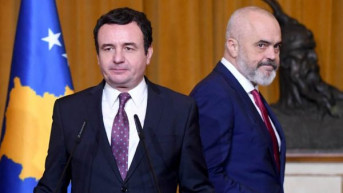
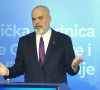
The sudden action of the Prime Minister of Albania Edi Rama - sending the draft proposal of the Statute of the Community of Serb-majority Municipalities to Paris and Berlin, may be a form of pressure he wants to encourage Albin Kurti to accept the CSM, but also to confirm the dominant position within the Albanian corps, Kosovo Online interviewees assess. Also, they state that the Prime Minister of Albania is well aware that the work regarding the CSM is not his, because he is not a party to the dialogue.
Edi Rama's proposal on the CSM sent to German Chancellor Olaf Scholz and French President Emmanuel Macron stirred up the Kosovo political scene quite a bit and at the same time opened the question of why Rama "enters the field" where the main player is the Management Team for the CSM, composed of the Serbs from Kosovo, the only one authorized by the Brussels Agreement to propose this document.
Explaining his gesture yesterday, Rama said that he "has known for a long time that the CSM will be the Gordian knot of dialogue".
Although the Management Team for the CSM has already presented its draft for the Community Statute within the dialogue in Brussels, subsequently the Prime Minister of Kosovo, Albin Kurti, said that he had his own version, and now Edi Rama also ran as a proposer. One of the many messages urgently sent to him from Pristina yesterday read, "We don't need a savior."
Journalist and former ambassador Dragan Bisenic tells Kosovo Online that Edi Rama's proposal on the CSM is to some extent an unexpected move because it comes from a party that is not directly involved in the CSM talks.
"Secondly, he still cannot be the entity that will carry out the CSM in Kosovo, he could, of course, eventually in Albania. It seems that this is a kind of pressure that the Albanian Prime Minister wants to encourage or in another way to induce Albin Kurti to accept the CSM and to form it as provided for in the Brussels Agreement from 2013," Bisenic says.
As he states, there are also interpretations that this move by Rama was coordinated with European subjects, perhaps even in some way with Germany and France, to whom he sent that paper.
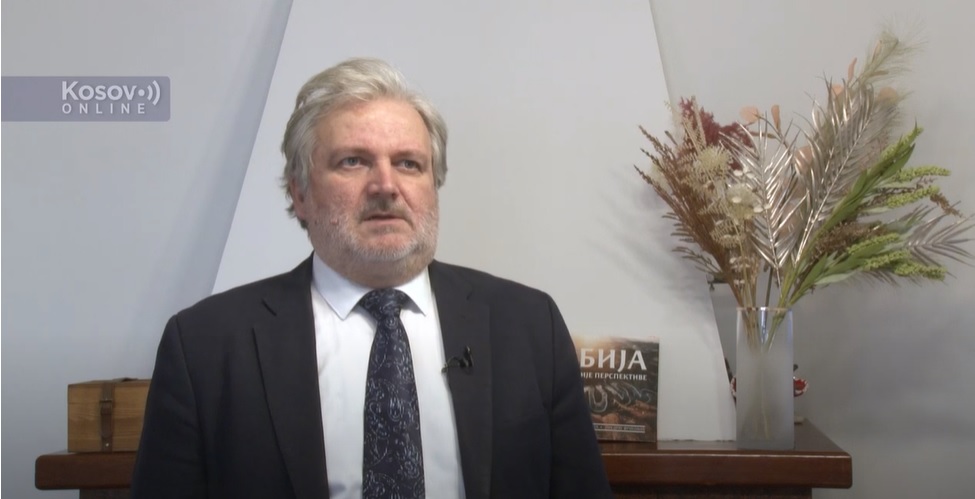
"Regarding intra-Albanian relations, Kosovo and Albania, Rama in this way shows a certain paternalistic attitude towards Kosovo, i.e. manifests his superiority, because Albania is still a country, and Kosovo, despite the recognition it received from certain Western countries and the US, still it is not. So Rama establishes a hierarchy there and confirms a dominant position, especially since the relations between Rama and Kurti on a personal level are quite cold and strained. The joint session of the governments of Kosovo and Albania will soon follow, and it will certainly be discussed at it. Certainly, this Rama's move caused great and undivided dissatisfaction among political subjects in Pristina, who condemn his move in different ways and harsh tones," Bisenic says.
When asked if we could assume that Rama's proposal was on the lines of what had been proposed for the CSM in 2013, Bisenic said that it was difficult to say, but that it should be on that line.
"Especially because on the same day Albin Kurti also gave a new interpretation of his understanding of how to reach the CSM. And he actually proposes a new round of negotiations where he asks to open negotiations on what has already been negotiated so that it would be acceptable for him. So he does not accept that more papers appear there, as he said, and then to find some arithmetical or compromise middle ground between them. That attitude of Kurti's means a direct rejection of what Rama wrote and means diverting the previous dialogue in some another direction which inevitably implies that the current talks on the framework document for the normalization of relations cannot be continued in this format and thus calls into question what is considered to have been reached as some kind of additional response on February 27 in Brussels and Ohrid on March 18". Bisenic concludes.
Analyst Gazmir Raci tells Kosovo Online that Albanian Prime Minister Edi Rama knows that the job of the CSM is not up to him.
"The draft Statute must be the product of an agreement in Brussels, according to the last Brussels agreement and the Ohrid annex. The EU should now present a concrete proposal that should be based on the agreements from 2013 and 2015 and the verdict of the Constitutional Court of Kosovo," Raci believes.
He recalls that Prime Minister Kurti in Ohrid was ready to come out with a draft of the Statute, but that it was not accepted, so at the last meeting in Brussels he presented the basic principles and, as he says, "a European model that is Croatian, and which is very similar to the reality in which we lived in the former Yugoslavia, and even now".
"Dialogue facilitators should return to Brussels as soon as possible to implement the latest Brussels agreements and nothing more," Raci believes.
The director of the International Institute for Middle Eastern and Balkan Studies (IFIMES) in Ljubljana Zijad Becirovic points out that there is an open rivalry between Edi Rama and Albin Kurti who will be the Pan-Albanian leader.
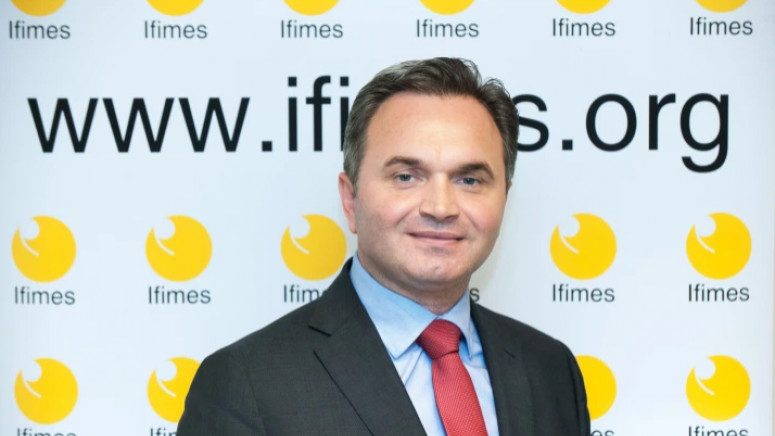
"Rama's proposal regarding the Community of Serb-majority Municipalities is an attempt to help the international factor to save the dialogue and normalization of relations and to avoid Albin Kurti. At the same time, he ignored the fact that Kurti cannot be avoided, he can only be eliminated, but even that would be short-lived. In any case, Rama does it primarily for himself and only then for the international factor. By the way, Rama became the favorite of Catholic Europe a few years ago by switching from Orthodoxy to Catholicism, and that group largely took over the leadership of the US. The question arises if this is the right way to reach a solution for the CSM because the institutional path is bypassed. Who benefits from all this or does someone want to gain time? In any case, the content of the proposal and the response to the proposal of the key actors are important," Becirovic concludes.
The initiative of the Albanian Prime Minister could be understood, as Rama himself said, as a gesture of goodwill intended to contribute to the unblocking of the process, is the assessment of an expert on the Balkans and a senior associate of the Democratization Policy Council in Berlin, Bodo Weber, because, as he says, dialog state is currently completely stuck.
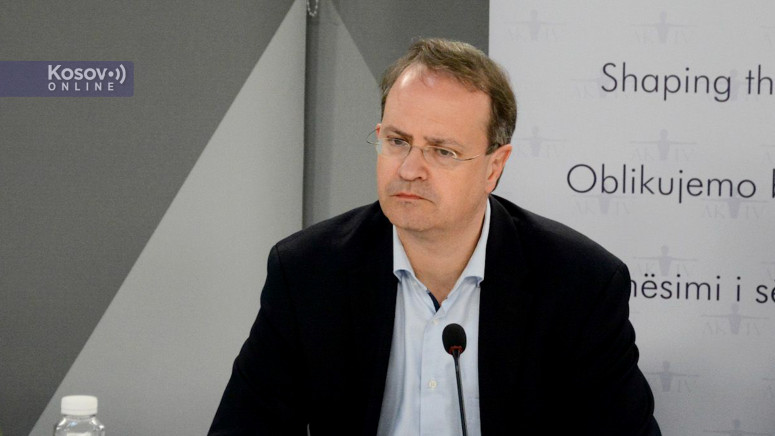
"However, I am not sure that this move will really serve that goal. We should not forget that Rama-Kurti relations are strained because Rama, once behind the scenes supported the territory exchange initiative, so such a move to bypass Pristina will not really contribute to building trust between Tirana and Pristina. In addition, Albania is not a party to the dialogue, so now according to that model, for example, Milorad Dodik could appear with his draft of the Statute. I am afraid that this move will only confirm the critics of Prime Minister Rama that his regional policy, including his support for the Open Balkan, only copies Vucic's concept of the "father of the nation" instead of actually contributing to the improvement of regional relations," Weber told Kosovo Online.


0 comments