
Why does Jorn Rohde emphasize that Germany does not have such strong diplomatic relations with anyone, as it has with Kosovo

Kosovo and Germany recently marked a decade and a half since the establishment of diplomatic relations, with the statement of Ambassador Jorn Rohde that Berlin does not have such strong diplomatic relations with any country as with Kosovo, which is not a surprise for analysts, because Germany has supported Kosovo's independence from the beginning, and membership of Kosovo in the Council of Europe.
Three days after Pristina declared independence, Berlin officially recognized Kosovo, and in a statement dated February 20, 2008, stated that recognition of independence based on the Athisaari plan was the right path, both for Kosovo and Serbia, but also that the Federal government was convinced that after several years of efforts, further attempts at mediation would not be successful, which was why "quick recognition of Kosovo by as many countries as possible is the only way to bring lasting stability to the region".
It is no secret that Kosovo and Germany maintain close political relations, and they were pointed out on several occasions by the President of Serbia, Aleksandar Vucic, who often pointed out that it was the Germans who often provided support to Pristina, not wanting to be conditioned by anything, although they had mechanisms for that.
That is why Rohde's statement that "he cannot think of any other country with which Germany has such strong diplomatic relations" is not surprising, and that Germany and Kosovo share the same values that indicate their closeness.
However, the member of the Left in the Bundestag, Zaklin Nastic, does not agree with Ambassador Rohde.
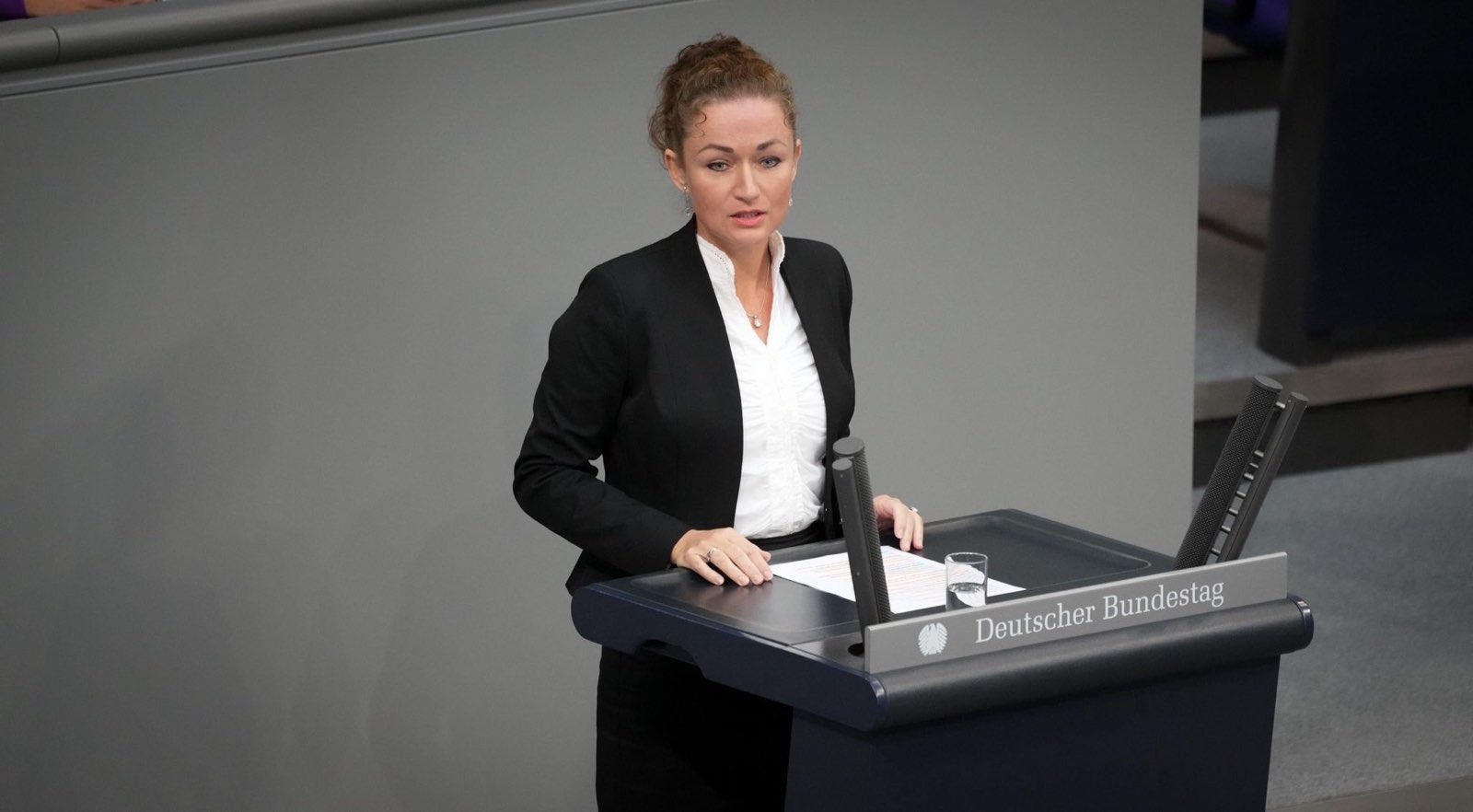
In a statement for Kosovo Online, Nastic points out that Germany, instead of praising excellent relations with the authorities in Pristina, should make efforts to improve the position of minority people in Kosovo.
"It is very irritating when the German ambassador in Pristina praises the positive diplomatic relations between Germany and the government in Pristina, while at the same time, the Federal Government allegedly has no information available about the attacks on the Serbian minority and the Orthodox churches when I inquire about it. It is surprising that despite 'excellent diplomatic relations', the German government does not make stronger efforts to improve the position of minorities in Kosovo and Metohija since they created this artificial state called 'Kosovo' with bombs," Nastic pointed out.
Journalist Miroslav Stojanovic, a longtime correspondent of "Politika" from Germany, points out that the relations between Pristina and Berlin are the same as those between Washington and Pristina, which is why there is a little intolerance - the influence of which will be greater in Pristina.
"Of course, Washington is decisive and obviously Albanians from Kosovo are far more oriented towards Washington, but Germany is also there whenever needed and it was certainly a kind of protégé when it comes to Albin Kurti," Stojanovic tells Kosovo Online.
He explains that in Berlin they "counted on" the fact that Kurti is a politician of the younger generation, who did not directly participate in the war and does not have behind him all the 'political structure' that was associated with Thaci, and that he could be the politician who would be most helpful to them.
"I remember that when the Americans, with Grenell's 'bulldozer diplomacy', removed him from the Prime Minister's post for the first time, because of the famous taxes that he did not want to abolish, then the Germans regretted a little, more in the media than politically. But, obviously, the race is there," Stojanovic states.
He also notes that during the visit of two American senators to Pristina, Albin Kurti, and Vjosa Osmani, they repeated to the guests from the US that Kosovo is "the most American ally" not in Europe, but in the whole world, and that they make similar statements when it comes to Germany.
He also points out that there have always been good economic relations between Serbia and Germany, but politically - whenever interests crossed, and it did not suit the Germans, it always "sparked" and Berlin was never gentle, but very sharp.
He also points out that it is interesting that for the first time pacifists, so-called The Greens and the Social Democrats brought Germany directly into the war in 1999, which was the third participation of the Germans against Serbia in a century, but that country has always had an economic interest in the Balkans, since the time of the SFRY, which was a large market.
Then, he adds, we had a very large economic exchange with Germany, which continues even now.
However, the main point of contention in the relations between Serbia and Germany is independent Kosovo.
"The Germans will never give up the idea that Kosovo becomes a sovereign and independent country in the full sense, it is a joint, American-German child, because those two countries pushed and insisted on recognition the most. They still support Kosovo's admission to the Council of Europe the most and very wholeheartedly, despite all the restrictions that exist in that old European organization, and by jumping the queue, so their strong commitment to Kosovo really exists and that is why we, for sure, would always have to confront them," Stojanovic believes.
He also adds that the difference between German diplomacy and Washington was most felt during the time of Donald Trump, because, unlike Europe, Brussels, and above all Berlin, the American administration then took a completely different path.
"Instead of political conditioning, they started from the economic topic, to somehow create a better atmosphere with large investments and relax relations, in which more rational steps can be taken more easily so that sparks don't always occur, seemingly over bizarre things, which are considered important here,” Stojanovic stated.
Milos Pavkovic, a researcher at the Center for European Policies, believes that the German ambassador's statement is not surprising considering that Germany supports Kosovo's independence and openly "sponsors" Kosovo's membership in the Council of Europe.
"The fact is that Germany has supported Kosovo's independence since 2008, and this can be seen in Germany's sponsorship of Kosovo's membership in the Council of Europe, so these relations are good and Germany has a policy of recognizing Kosovo as an independent state, and that is no secret," Pavkovic said for Kosovo Online.

He states that the fact that the relations between Berlin and Pristina are at a high level is evidenced by the fact that even German Chancellor Olaf Scholz, during his visit to Belgrade last June, mentioned the mutual recognition of Serbia and Kosovo as a solution to the problems between the two sides, although this is, he adds, the attitude of Germany, but not of the entire EU.
However, he emphasizes that regardless of the strong ties between Germany and Kosovo, Berlin insists on respecting the signed agreements, and therefore on the formation of the CSM as one of the conditions for Pristina to complete the process of accession to the Council of Europe and to open the perspective of EU membership.
"This is what Germany insists on despite those good relations," Pavkovic said.
When asked whether Germany had better diplomatic relations with Kosovo than with Serbia, he said that it was ungrateful to comment because, if the opposing position of Belgrade and Berlin on the issue of Kosovo were to be excluded, the two countries would have very good cooperation.
"Germany recognizes Kosovo as an independent state and this is where the foreign relations between Serbia and Germany differ," Pavkovic said.

0 comments