
Is the idea of territorial exchange as a solution for relations between Belgrade and Pristina still alive in international circles?
Whenever the debate on territorial exchange as a possible solution for relations between Belgrade and Pristina is brought up, it seems that there are as many supporters as there are opponents. This idea had "rested" for a while, only to be brought back into the spotlight a few days ago by John Bolton, the former National Security Advisor in the administration of former U.S. President Donald Trump. Is this formula still "alive" in international circles or has it been permanently archived?
Written by: Dusica Radeka Djordjevic
The idea of territorial exchange was intensely discussed in public in 2018 and 2019, and after five years, some interlocutors from Kosovo Online believe that this idea has already passed, while others think that it hasn't expired yet.
Bolton’s statement from four days ago is also being interpreted differently. He said that the American position for "some time" now has been the hope that Serbia and Kosovo could reach something acceptable for both sides, including territorial exchange. Is this his personal view, or, if Trump returns to the White House, would he support such an outcome?
In Kosovo, politicians occasionally touch on this topic, and the views expressed are diametrically opposed: some believe that territorial exchange could lead to a new war in the Western Balkans, as suggested by Foreign Minister Donika Gërvalla, while others, like Dardan Molliqaj, leader of the non-parliamentary opposition Social Democratic Party, believe it is the best option for solving problems with Serbia.
Is this option being considered today in official Washington, Berlin, London, or Moscow?
Marko Prelec, Senior Analyst for the Balkans at the International Crisis Group, tells Kosovo Online that as far as he knows, it is not an active topic in America.
"In Europe, there are occasional fears about it, and it seems to me that the idea that borders must not be changed anymore is mostly for ideological reasons. The fact is that if there were an agreement requiring both sides, freely and democratically expressed by both parties, there would be no reason for external objections. But in today’s conditions, and in any conceivable future, it is extremely unrealistic and unimaginable. I think we should forget about it," says Prelec.
He adds that the idea of territorial exchange as a solution for relations between Belgrade and Pristina was once conceivable, but today, in the heightened and almost hostile relations between Belgrade and Pristina, such a thing is unrealistic.
"That idea was extremely delicate and required a very high degree of mutual trust. And during the time when this was being worked on under Thaçi's administration, in 2018 and 2019, it clearly did not get far enough," Prelec states.
Speculations that official offers of territorial exchange were on the table during the dialogue when Hashim Thaçi and Aleksandar Vucic were the main actors from Pristina and Belgrade have been denied by both sides, including Federica Mogherini, the former High Representative of the European Union for Foreign Affairs and Security Policy and mediator in the dialogue, who claimed that there were never any discussions on that. Regarding media sketches at the time about how this solution might look on the ground – that part of northern Kosovo would go to Serbia, and the region around Presevo would go to an independent Kosovo – messages from Germany were most often that discussions about territorial exchange were not leading in the right direction.
Timothy Less, a professor at the Centre for Geopolitics at the University of Cambridge, believes that if Donald Trump were to win the U.S. elections, his administration would support territorial exchange or the partition of Kosovo as a way to secure Serbia's recognition of Kosovo. The administration of President Joseph Biden, he points out, would not support a solution to Kosovo’s status based on territorial exchange, nor would Kamala Harris’s administration if she were to win the elections in November.
“Biden, Harris, and the Democratic Party, in general, are liberal idealists motivated by ideas of restorative justice, punishment for what they see as Serbia's barbarism in the 1990s, opposition to nationalism and nation-states. They place great value on what they call the international rules-based order, which excludes any kind of border changes, especially at a time when Russia is seeking to revise borders elsewhere in Eastern Europe,” says Less.
"That is hostility toward nationalism, a desire to punish the Serbs, a kind of legalistic way of thinking that does not accept border changes, hostility toward Russia, opposition to the partition of Ukraine, and so on, which certainly represents an obstacle or at least a potential obstacle to any attempt by a future Trump administration to resolve Kosovo's status through territorial exchange. This was the case in 2018 when London and Berlin opposed the partition, encouraging the Albanians to resist it as a solution. However, the government in Germany is weak and could fall, potentially being replaced by a right-wing government that has a more realistic and less idealistic view of the Balkans, and in that case, it could force the United Kingdom to change its position to avoid isolation and allow others to determine a solution for Kosovo’s status without it," Less argues.
When asked whether territorial exchange would be an option that contributes to stability in the Balkans or would have the opposite effect, as others in the Balkans might want to reopen border issues, Less says that although there are short-term risks of instability, they are limited, while in the long term, border changes in the Balkans are a prerequisite for stabilizing the region.
"This would allow various peoples to live in their own states with full rights and opportunities, as opposed to the current multiethnic concept, which sustains a state of nervousness, tension, and ultimately instability," says Less.
He certainly does not exclude the possibility that territorial exchange, in the case of resolving Kosovo's status, would bring up other border issues, pointing to the stance of Milorad Dodik and the Bosnian Serbs during the period of 2018-2020 when they advocated for the inclusion of Republika Srpska in the agreement regarding Kosovo's status.
"Moreover, I believe that the Bosnian Serbs would push even harder for this in 2025 if Donald Trump were to return and seek partition as a solution, given their increasing determination to separate from Bosnia. So, while there are some short-term risks of instability due to territorial exchange as a solution, I believe those risks are limited," concludes Less.
Confirmation that the United States has not abandoned the idea of territorial exchange to achieve an agreement between Belgrade and Pristina, though with certain conditions, is seen by Pristina-based analyst Afrim Kasolli in statements made by U.S. Ambassador to Pristina, Jeffrey Hovenier.
"In an interview with a Kosovo media outlet, he (Hovenier) stated that this idea can be realized, but there must first be a democratic agreement between the two countries for it to happen. Without a democratic agreement, it is excluded, and according to his words, the U.S. is now focused on the Brussels dialogue process with the aim of normalizing relations between the two countries according to the current conditions in the dialogue. The current U.S. administration, as well as the previous Trump administration, did not reject this idea, but they set preliminary conditions for it to be realized. Whether it will be implemented and under what conditions is difficult to say in the current circumstances, as some European countries, especially Germany, were against this project," Kasolli stated for Kosovo Online.
Regarding Russia, he believes that it is not impossible for Russia to agree to such an option, as well as to a new scheme of geopolitical redefinition that includes, as he says, its territorial claims in Ukraine and Georgia. In that case, Kosovo could also be part of the geopolitical redefinition where territorial exchange is not excluded.
"But currently, based on the stance of international diplomats and the positions of Brussels and Washington, there seems to be no readiness or willingness to implement this project, as they have made it clear that they remain focused on continuing the Brussels dialogue and on the obligations that Serbia and Kosovo need to fulfill based on the agreements from 2013 and 2015, as well as the Brussels agreement and its implementation annex from Ohrid last year," says Kasolli.
Senior Research Fellow at the Institute for International Politics and Economics in Belgrade, Dusan Prorokovic, tells Kosovo Online that Bolton's statement mentioning territorial exchange should be taken as his personal opinion rather than a strategic projection. Prorokovic says that Bolton is one of the American Republican politicians who views international relations from a realist perspective, but that his influence was far greater in the past than it is today.
"He has had several failures in some of his strategic views in recent years, which is ultimately why he was dismissed from Donald Trump's administration. Moreover, his influence on American foreign and security policy is very questionable," adds Prorokovic.
"I don't see that it is in Russia's interest to increase conflict potential or to spark new conflicts in the Balkans, or at least new crises. It's even less in China's interest since they have invested significantly in the region. All in all, this is something that is far from being realized and very difficult to implement," he says.
He also assesses that there are no tendencies among European actors to view territorial exchange as acceptable.
"On the contrary, everything Kurti is doing in northern Kosovo, he is doing after informal alignment with the French-German plan. So, he is acting with the support of European partners, I would say much more with the support of the United Kingdom than France, and partially with the support of Germany. The situation on the ground relates to integrating northern Kosovo into the so-called Kosovan institutional system. So, why would Kurti even negotiate about territorial exchange? And since we are facing elections in Kosovo next year, and it seems likely that Kurti will secure another four-year mandate, that issue simply won't even come up on the agenda," says Prorokovic.
At the same time, he sees no willingness in European countries, the European Union, or the United Kingdom to discuss this topic.
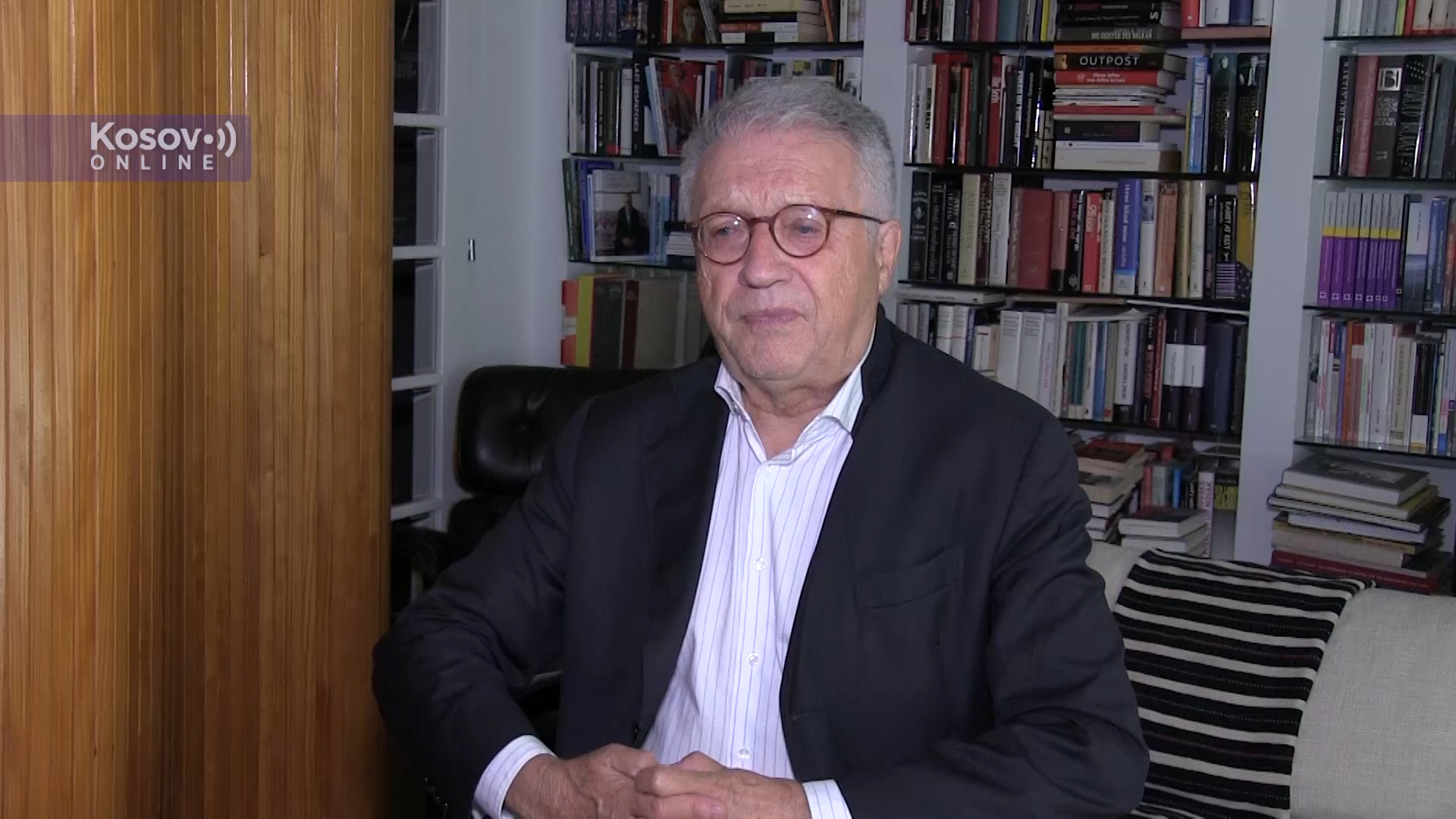
Former EU Special Envoy for Kosovo, Wolfgang Petritsch, regarding the issue of territorial exchange as a potential solution for relations between Belgrade and Pristina, tells Kosovo Online that, according to the principles of the OSCE and the Paris Charter, border changes are allowed if two sovereign states agree on it.
"Also, since only two states that recognize each other can negotiate such a bilateral border agreement, I believe that the unresolved issue of mutual diplomatic recognition makes this unlikely at the moment," points out Petritsch, noting that any border changes must not be violent.


comments