
(Il)logical fluctuations in voter numbers ahead of elections — Who should respond?
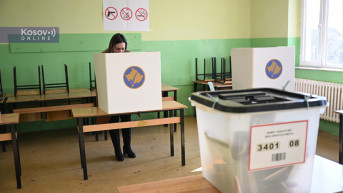
New elections, old paradoxes. Gracanica has once again found itself in the spotlight due to the fact that the number of registered voters in this municipality has decreased more than in other areas compared to the list established for the October local elections — in which, however, the number had increased relative to the February parliamentary elections. The latest fluctuation in these figures raises doubts about the upcoming electoral process, and in order to dispel all concerns, it would be desirable to hear the position of the OSCE or the EU Office in Kosovo, interlocutors of Kosovo Online suggest.
Written by: Dusica Radeka Djordjevic
When there were public objections regarding the voter lists in Gracanica prior to the October local elections, the Central Election Commission (CEC) explained that the changes reflected the activation of the address registration system.
“The CEC maintains and updates the voter list based on accurate and up-to-date data from the Central Civil Registry. In this process, the list is systematically cleaned of persons who have died or renounced citizenship of the Republic of Kosovo. The observed changes are linked to the activation of the address system by the Agency for Civil Registration and the Kosovo Cadastre Agency, which began in October 2024. This process naturally affected the designation of Polling Centers according to each citizen’s registered address, and influenced a number of municipalities across the Republic of Kosovo,” the CEC stated at the time.
The CEC did not answer our portal’s question regarding the reasons for the latest change in the number of voters in Gracanica.
That there are once again irregularities in Gracanica ahead of the snap parliamentary elections was pointed out a few days ago by the Serb List Presidency member Igor Simic, who described the situation as a clear example of political engineering.
He also cited concrete figures.
“After the local elections were completed and the snap parliamentary elections called, within only two months the municipality of Gracanica has lost 740 voters, according to the Central Election Commission. Voter numbers: February – 22,881; September – 25,325; November – 24,585. Will anyone react? Is this democracy? What is the regime in Pristina doing?” Simic asked.
Security studies researcher Nikola Vujinovic believes that the OSCE and the EU Office in Kosovo must clarify the situation.
The decrease in the number of voters in Gracanica ahead of the 28 December parliamentary elections — following an increase before the 12 October local elections — in Vujinovic’s view raises well-founded suspicions that electoral engineering is taking place.
He notes that many actors publicly comment on the need for elections in Serbia to be fair, transparent, and supported by free media, and that the same voices should react regarding elections in Kosovo.
“First and foremost the OSCE, then the EU Office, since Kosovo aspires to join the European Union. All of them must in some way provide an answer as to whether this is engineering or not — or at least acknowledge the situation. What concerns me is that they are paying no attention at all to this issue. Recently incidents occurred in South Mitrovica, where representatives of the Democratic Party of Kosovo determined that there had been ‘Bulgarian train’ activity at certain polling stations, and this was met with absolute silence from international observers,” Vujinovic told Kosovo Online.
He adds that the increase in Albanian voters in Gracanica — a majority Serb municipality — before the local elections already speaks for itself.
“The fact that 740 voters have now suddenly disappeared in this municipality between October and December tells us that someone has withdrawn their people and relocated them to another area they consider more important,” Vujinovic assesses.
He further points out that the voter register in Kosovo is generally unrealistic, as it contains over two million voters, while in practice there are not even 800,000 living on the ground.
He sees a particular problem with the upcoming snap elections being held on 28 December.
“It is unlikely that the European Union will, during the New Year holiday period, deploy a significant number of observers, nor will the OSCE be able to field many. All of this indicates, in my opinion, a broader attempt by Albin Kurti to secure enough mandates to form a government,” Vujinovic states.
Dusan Borisavljevic from the Youth Council of the Municipality of Gracanica considers it unnatural that, ahead of the parliamentary elections on 28 December, this municipality has 700 to 800 fewer voters.
“It is not normal that just one month after the local elections there are 700 to 800 fewer voters, just as it was not natural to have an influx of new voters into majority-Serb areas during the local elections. The numbers are simply inflated, and the background and long-term consequences of this will be seen at the next local elections and throughout the four-year mandate of the new local administration,” Borisavljevic told Kosovo Online.
He suspects hidden motives behind the relocation of polling stations, noting that members of the Albanian community were not even aware before the local elections that their polling stations had been moved somewhere within the territory of the municipality of Gracanica.
Historian Aleksandar Gudzic says he does not know what the goal or intention of the CEC is, and does not wish to believe this is a case of manipulating electoral will or other ulterior motives, but warns that the fluctuating numbers of Albanian and Serb voters in Gracanica calls into question the entire electoral process for the repeated parliamentary elections.
“Before the parliamentary elections on 9 February this year, there was a certain number of Albanian and Serbian voters; before the local elections, the number of Albanian voters increased; now, ahead of the repeated parliamentary elections, the number of Albanian voters has decreased, as has, to some extent, the number of Serb voters. All of this undermines the regularity of the electoral process and creates room for speculation and manipulation, and that is not something the CEC and Kosovo institutions should be doing by decreasing or increasing the number of voters ahead of parliamentary elections,” Gudzic told Kosovo Online.
He believes that if the issue is one of updating the voter list, it should be done after the electoral process, not before it.
“All of this casts a negative light on the entire electoral process ahead of us. In my opinion, it reflects clumsy conduct by the Central Election Commission,” Gudzic said.
Gracanica, however, is not the only example of inconsistencies accompanying electoral processes in Kosovo.
Dusan Radakovic, Executive Director of the Center for Advocacy of Democratic Culture in North Mitrovica, recalls that the problem of changed polling stations during the local elections was not reported only in Gracanica or Pristina, but also in the north of Kosovo.
“We pointed out that this was a problem even before the local elections. There were people here whose polling stations were moved to Istok, Pristina, Gnjilane, Gusterica, even though they had no connection to those areas. The CEC is responsible for this, and I hope that one day we will learn what lies behind it. For now, we can only speculate whether the issue lies in determining at what moment and for which elections certain votes are needed,” Radakovic told Kosovo Online.
In his view as well, the change in the number of voters in Gracanica — an increase before the locals and a decrease before the parliamentary elections — amounts to a form of engineering.
He notes that for the local elections, polling stations in the neighborhoods of Marigona, Preoce, and Ajvalija were evidently reorganized so that the joint list of all Albanian parties participating in the elections could achieve better results.
“That is how it was for the local elections, and when the parliamentary election takes place, those people are no longer considered residents of Gracanica,” Radakovic concluded.
Otherwise, the period for contesting inaccuracies in the voter list, according to the Central Election Commission, lasts until 6 December, meaning there is still time to address any potential irregularities.




0 comments