
Implementation of the law on foreigners and vehicles: Establishing order or a mechanism of pressure on Serbs?
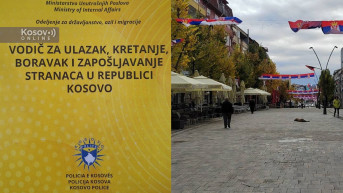
New enforcement of the laws has brought new anxiety for Serbs, particularly for those who do not possess Kosovo documents and who drive vehicles with Serbian license plates on the basis of an authorization. Observers of local developments note that the implementation of the Law on Foreigners and the Law on Vehicles as of 15 January will target exclusively the Serbian community, and that the new rules have nothing to do with establishing order, but rather represent a mechanism for exerting pressure on Serbs.
Written by: Milena Miladinovic
Under the Law on Foreigners, citizens who do not hold Kosovo citizenship are considered foreigners and are required to register their stay with the Kosovo Police, while the Law on Vehicles stipulates that driving on the basis of an authorization will no longer be permitted if the driver does not have residence in the country in which the vehicle is registered.
The Kosovo Ministry of Foreign Affairs announced an information campaign on the implementation of these laws for the period from 1 November last year to 15 January. However, just one day before the deadline, there is no information on how this campaign was conducted, nor on whether citizens were informed about the manner of implementation of the laws and the consequences of non-compliance.
As announced at the time, there was to be no punishment during the information campaign. Nevertheless, as early as 3 November, the Kosovo Police issued a fine to Lazar Djordjevic from the village of Koretin for driving on authorization.
The Deputy Director of the Kosovo Police for the Northern Region, Veton Elshani, told Kosovo Online that full implementation of a previously adopted order of the Kosovo Ministry of Internal Affairs will begin tomorrow, under which driving a vehicle on authorization will be treated as a traffic offense, as will the application of the Law on Foreigners.
Regarding the Law on Vehicles, Elshani explained that this concerns the enforcement of a procedure that was supposed to enter into force on 1 November last year, but whose application was postponed until 15 January.
Elshani stressed that the new rules do not mean a blockade of the north, but rather the sanctioning of those who do not have proper documentation, noting that the aim is not punishment but the introduction of order into the system and the registration of persons who stay in Kosovo for extended periods.
“What I can say is that we do not have any new order to further postpone this measure that we already had. It was supposed to start on 1 November last year, but we extended it until 15 January by order of the Ministry of Internal Affairs. And tomorrow, from 8 a.m. or from midnight, it will begin to be treated as a traffic offense. For example, when we talk about authorization, it will be a traffic offense. This means that a police officer can stop a person on the street; one person may proceed to where he needs to go, while another will be fined 200 euros for not having authorization,” Elshani said.
He explained that this is a regular police procedure.
“It is nothing drastic; we will not block the north, there will be no confiscation of vehicles. It is more about people learning that driving on authorization is no longer allowed. But when I talk about vehicles driven on authorization, that means that a Serb from Kosovo cannot drive a vehicle from Serbia on the basis of an authorization. However, if a Serb from Kosovo also has documents from Serbia, then he can drive on authorization,” Elshani clarified.
The Law on Foreigners has existed for a long time, Elshani added, noting that its enforcement is simply beginning tomorrow.
“It is a very simplified process. This means that a person can come, for example, if you are coming to study here, we need to know that you entered Kosovo and that you will be staying here for a longer period. That means you come to a police station and say: I am Veton Elshani, I study here and I live at this address. That’s it. Then it becomes a different process for the Ministry of Internal Affairs, where the person needs to obtain short-term residence and then receive documents, and so on. For us, it is important that people are in the system. If you are coming, for example, as part of an organized group to visit churches, that is not a problem at all—people do not even need to come to us because they are already announced at the border,” Elshani explained.
If someone comes to Kosovo and plans to stay longer, they need to register themselves at a police station or be registered by the family member with whom they are staying. According to Elshani, this procedure is greatly simplified and there will be no deportations if a person registers in accordance with the given instructions.
“We have people who hold documents issued in Kosovo—Police Administration Kosovska Mitrovica, Gnjilane, Pec—and who have not been able to obtain Kosovo documents. That represents a problem, but since there is no solution for those people, we will not touch that category. For example, in a case where a mother has four children, we will not separate a mother from her children or vice versa. For us, it is important to know where those people are—nothing more,” Elshani concluded.
Interlocutors of Kosovo Online emphasize that the Law on Foreigners will particularly affect employees of Serbian institutions that are not integrated into the Kosovo system—education and healthcare—as well as students. In their assessment, the implementation of the law will depend on the political moment and the will of the Kosovo authorities. In addition to fears of fines and detention, they also point to a complicated bureaucratic procedure.
With regard to the Law on Vehicles, they assess that anyone driving vehicles with Serbian license plates will be targeted.
A Mechanism for Exerting Pressure on Serbs
Political scientist from Gracanica Ivan Tomic said that the Law on Foreigners has nothing to do with establishing order, but rather represents a system of control and a mechanism for exerting pressure on Serbs.
Tomic told Kosovo Online that the Law on Foreigners is based on the false premise that all Serbs coming from central Serbia, as well as Serbs living in Kosovo without Kosovo documents, are foreigners, and that it sends a clear message to all Serbs—that they are not at home on their own land and that anything can be done with their lives.
“This will mean that every teacher or professor who comes here to educate children, every doctor who comes to treat people, or every student who comes to study, will have to go through a complicated bureaucratic procedure in order to exercise the right to come and live here. I believe this is wrong and that this law has absolutely nothing to do with establishing any kind of order, but rather exclusively represents a system of control, additional pressure, a mechanism for exerting pressure on Serbs, and also sends a very important message to all Serbs who live here, as well as to Serbs in Serbia—that Kosovo is an independent state, that we are not at home on our own land, and that Albin Kurti can do absolutely anything he wants with us and our lives,” Tomic stressed.
In another sense, Tomic added, the Law on Foreigners will represent a complicated bureaucratic procedure.
“Waiting in lines, people will be harassed by always possibly missing one document to complete something. We still do not know what mechanisms will be applied, whether people will be punished, first warned, or detained. Thus, it remains unclear how and in what manner this law will be implemented,” he said.
According to him, the biggest problem will be faced by employees in healthcare and education, because the Kosovo system will not recognize their employment certificates.
“I do not see a way in which they will be able to exercise their right to register their stay here when they say they work in a Serbian hospital or a Serbian school. Those papers will not be recognized, and they may simply be told that it is not possible and that they must find another way,” Tomic said.
He also foresees numerous problems in the implementation of the law, which, he emphasizes, will depend exclusively on the arbitrariness of Pristina and the political moment.
“Depending on the political moment, that is how they will treat people. If necessary, they will arrest someone or fine someone, and all of this will serve their internal political agenda,” Tomic is convinced.
Regarding the Law on License Plates, Tomic believes it will also create many problems for all those who drive vehicles on authorization.
“Not everyone has five, six, or seven thousand euros to buy a new vehicle. Many people’s lives here depend on this. Many take their children to speech therapists or special educators in Štrpce, Kosovska Mitrovica, and elsewhere, and they drive vehicles with Serbian license plates. I do not know how they will function,” Tomic said, adding that the worst part is that there is still no information on whether these laws will be applied, in what manner, and what Serbs can expect as of 15 January.
Problems for Those Without Kosovo Documents
Journalist from North Mitrovica Lazar Stevic told Kosovo Online that the implementation of the Law on Foreigners will create major problems for people who do not have Kosovo documents.
“We still have no information on whether this will really be applied as of 15 January or whether some model is being sought to extend the deadline, because this creates a truly major problem, especially for those people who still do not have Kosovo documents but hold ID cards issued by police administrations in Pristina, Kosovska Mitrovica, Pec, and other cities in Kosovo. There are also many who came from central Serbia to live here and were unable to obtain Kosovo documents,” Stevic said.
He believes that a concrete solution must be found and that the international community must be involved.
“A concrete solution must be found that will benefit those people who will be in enormous trouble if the Law on Foreigners enters into force on 15 January, requiring them to register at a police station upon every entry, state why they came—whether for tourism, work, marriage, family reunification, or any other reason. I believe that above all the international community should become involved and that this problem should be resolved through dialogue in Brussels,” Stevic stressed.
According to him, the implementation of the Law on Foreigners will most severely affect employees in institutions that are not integrated into the Kosovo system—education, healthcare, and the university.
“This will be a major blow to all three institutions, which are, so to speak, the pillars of the stay and survival of Serbs in these areas. Healthcare, education, the university—we know how many professors travel from central Serbia to teach here. This will be a major problem primarily for those people, but also for those who have lived here for years and have not been able to obtain Kosovo documents. The biggest problem will be for people who travel; they will be the first to be targeted. They will have to find a way, as required by the law, to provide proof of where they work and in which institutions, and we all know that healthcare, education, and even the university are not integrated into the Kosovo system, so the question arises whether the Kosovo Police will accept those certificates,” Stevic added.
As he noted, in addition to personal documents, license plates also pose a major problem.
“We know that it has been announced that driving on authorization will no longer be possible. There are several measures that could be introduced—allowing re-registration or arranging insurance as was previously done for RKS plates entering central Serbia, with annual insurance payments. This would solve a major problem for all those who drive vehicles with plates from cities in central Serbia,” Stevic said.
Making Life More Difficult for the Serbian Community
Security studies researcher Nikola Vujinovic told Kosovo Online that Pristina’s intention is, through the Law on Foreigners and license plate regulations, to completely exclude Serbian institutions from Kosovo and to make life more difficult for the Serbian community.
Vujinovic emphasized that the application of these laws will require registration of stay with the Kosovo Ministry of Internal Affairs and will make it impossible to drive vehicles with Serbian license plates on authorization. Both issues, he stressed, are crucial for Serbs.
“On the one hand, it will be necessary to register the arrival of a foreigner with the Kosovo Ministry of Internal Affairs within three days of arrival. The problematic aspect is that temporary residence may not be approved. On the other hand, it will no longer be possible to drive with foreign license plates on authorization or without temporary residence. It should be particularly emphasized that this applies to countries outside the European Union—meaning Serbia is the primary target. Both of these issues are of crucial importance to the Serbian community, and their implementation was postponed precisely because of protests by the Serbian community. If this truly begins to be implemented on 15 January, it will make life more difficult for the Serbian community,” Vujinovic stressed.
According to him, the laws are structured in a way that will create problems exclusively for the Serbian community.
“A large number of people living in Kosovo and Metohija do not want to take documents issued by the so-called Pristina and the so-called Kosovo. On the other hand, a large number of people from central Serbia come to Kosovo and Metohija to work, primarily in institutions of the Republic of Serbia. The intention of this law is clear—to completely exclude Serbian institutions from Kosovo and Metohija. Therefore, the Serbian community will primarily, and I would even say exclusively, face problems,” Vujinovic concluded.



0 comments