
Indonesia on the front line of defending international law — Can lobbyists for Kosovo’s recognition shake its position?
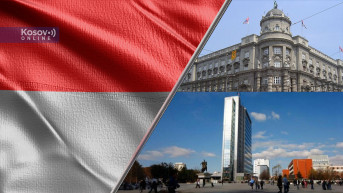
For Indonesia — a member of the Organization of Islamic Cooperation, ASEAN, and, as of this year, BRICS — Kosovo is an integral part of Serbia. Although exposed to pressure and strong lobbying efforts, experts familiar with political dynamics in the world’s most populous Muslim-majority country say that such a position is natural: Indonesia pursues an independent foreign policy, respects the UN Charter, and has its own experience with separatist movements. Still, Pristina’s allies, above all Albania, are not giving up on attempts to persuade Jakarta to shift its stance.
Written by: Dusica Radeka Djordjevic
Two years ago, then–Indonesian Foreign Minister Retno Marsudi stated that Indonesia would not change its position on not recognizing Kosovo’s independence, regardless of the constant pressure to reverse this decision.
Nevertheless, Tirana never misses an opportunity when lobbying for new recognitions of Kosovo. Thus, Albanian President Bajram Begaj, while receiving the credentials of Indonesia’s new non-resident ambassador Listiana Operanante, called on Jakarta to consider recognizing Kosovo and supporting its membership in international organizations.
Earlier, in early November, former Kosovo president Atifete Jahjaga told the 9th World Peace Forum in Jakarta that recognition of Kosovo’s independence is an act that strengthens democratic values and creates space for deeper cooperation.
Former Serbian ambassador to Indonesia Slobodan Marinkovic told Kosovo Online that representatives of Kosovo and Albania have sought interlocutors along Islamic lines, but that Indonesia’s principal position, as one of the most important countries in that part of the world, remains that it conducts an independent foreign policy.
“They refer to it as an independent and flexible foreign policy,” Marinkovic noted.
Pressure From Within
According to Marinkovic, pressure on Indonesia to recognize Kosovo has been ongoing for the past two decades, and Indonesia has resisted them, including internal pressures, as some political parties within Indonesia also support recognition.
Even so, he stresses that Indonesia fully acknowledges UN Security Council Resolution 1244, which affirms that Kosovo and Metohija is an integral part of the Republic of Serbia, and advocates that misunderstandings and issues be resolved through dialogue.
“At meetings of the Organization of Islamic Cooperation, where Indonesia is a full and highly respected member, resolutions are adopted almost every year calling on Islamic countries to recognize Kosovo; Indonesia, however, enters a reservation. It consistently supports Serbia in international organizations—whether concerning Kosovo’s admission to UNESCO, Interpol, or any other institution. It firmly adheres to the principles of international law and the UN Charter and, like us, cherishes the traditionally friendly ties between our two countries,” the diplomat explained.
Regarding whether Indonesia’s position influences smaller countries in the region, Marinkovic said that if the largest Muslim country does not recognize Kosovo, other smaller ASEAN members will not do so either.
“Just as I believe Indonesia would never accept the way Kosovo was created, neither will the Philippines, Vietnam, or Cambodia. As long as there is no dependence on a major power that strongly supports and sponsors Kosovo’s independence, Serbia’s position among ASEAN countries is relatively stable and secure,” Marinkovic said.
Begaj Testing the Waters
Political analyst from Pristina Shkelzen Maliqi believes that since several Islamic countries recognized Kosovo this year, there may be a chance for Indonesia to change its position as well.
“The Albanian president is likely testing the waters through his contacts, since some Islamic countries have already recognized Kosovo. This could mean there is a possibility that Indonesia might reconsider its stance. It is possible this could happen through Turkey or other channels, strengthening the trend of Islamic states recognizing Kosovo’s independence,” Maliqi told Kosovo Online.
He believes that global realignments and the geopolitical climate appear to be accelerating this process.
“Syria’s recognition of Kosovo, for example, and Serbia’s defensive posture contribute to the impression that some countries which historically maintained ties with Belgrade — dating back to Tito’s era and the Non-Aligned Movement — may be reconsidering or pursuing new interests,” Maliqi said.
‘There Will Be No Recognition of Kosovo’
Aleksandar Mitic, Senior Research Associate at the Institute of International Politics and Economics in Belgrade, said that he visited Indonesia two months ago and had the opportunity to speak with officials there. According to him, Jakarta’s position is crystal clear: there will be no recognition of Kosovo.
He warns, however, that one should not forget the very intensive efforts made by Ankara and Tirana in recent years, as well as the negative role of Riyadh regarding Syria, which recognized Kosovo in October.
He warns, however, that one should not forget the very intensive efforts made by Ankara and Tirana in recent years, as well as the negative role of Riyadh regarding Syria, which recognized Kosovo in October.
Commenting on President Bajram Begaj’s lobbying, Mitic said that this was nothing new: ever since 2008, each Albanian president — including the current one — has made the same request whenever meeting with Indonesian officials: reconsider your position that Kosovo is part of Serbia.
“It is completely normal for Tirana, which lobbies for Kosovo’s unilateral declaration of independence as part of its Greater Albania policy, to also lobby Indonesia — the world’s largest Muslim country and the world’s fourth most populous state. However, Indonesia has not changed its position since 2008, despite the fact that neighboring Malaysia recognized Kosovo immediately, and is also a majority-Muslim country. Later in the mid-2010s, several ASEAN states, such as Brunei — also Indonesia’s neighbor — and Thailand, recognized Kosovo’s unilateral declaration of independence, yet Indonesia has remained very firm in its stance,” Mitic told Kosovo Online.
Indonesia, he emphasizes, stands firmly on the position that Kosovo is an integral part of the Republic of Serbia — in line with defending international law, but also in defense of its own territorial integrity, given its decades-long struggle with separatist movements.
Indonesia had serious problems with separatist movements for decades, and in 2005 a settlement was reached concerning the Aceh province, which has since remained peaceful and without conflict.
“Aceh received substantial autonomy — the same type of solution that Serbia offered for Kosovo and Metohija. In Indonesia’s case, this was accepted, and peace has lasted ever since, though there is always a lingering concern that some separatist movement could re-emerge, especially if encouraged from abroad. Thus, Jakarta’s position is understandable — just as it is entirely understandable that Serbia is extremely invested in Indonesia maintaining this stance,” Mitic emphasized.
Incidentally, the signing of the 2005 agreement between the Indonesian government and separatist rebels in Aceh was preceded by seven months of negotiations mediated by none other than the former Finnish president well known in Belgrade and Pristina — Martti Ahtisaari.



comments