
Is it within KFOR's mandate to allow Kosovo Special Forces to kill Serbs with snipers?
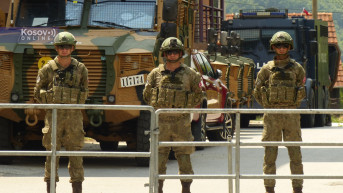
"Dramatic events in Banjska, during which four Serbs and one Albanian police officer lost their lives, have shown that KFOR and EULEX are not fully carrying out their mandate to ensure peace and security in Kosovo and have effectively given Prime Minister Albin Kurti a free hand for Special Forces actions in the north," the interlocutors of Kosovo Online, Minister of Defense Advisor Predrag Rajic, and analyst Aleksandar Mitic believe.
Serbian President Aleksandar Vucic emphasized yesterday that NATO and KFOR had given "carte blanche" to the Kosovo Police in Banjska, where, as he stated, two Serbs had been killed by sniper fire from a great distance when there had been no need for them to be liquidated.
Paradoxically, this happened just a few weeks after NATO Secretary-General Jens Stoltenberg sent a message from the Alliance's headquarters in the presence of Kosovo President Vjosa Osmani - that not only was permission needed to deploy Kosovo Security Forces to the north but also that every action by the Kosovo Police must be carried out in consultation with KFOR. This message was greeted with hope by the Serbs in the north, and with cautious optimism by Belgrade, but it soon became clear that the violence would not stop.
Defense Minister Milos Vucevic also pointed out that Serbia expected a much more active role from KFOR, "rather than allowing the hunting of the Serbs to extermination." As he emphasized, what had been happening in Kosovo for days and months presented great challenges, all due to Kurti's exclusive policy.
Former US diplomat and UN regional representative in Mitrovica from July 2005 to October 2008, Gerard Gallucci, wrote in an op-ed for "TransConflict" that it was high time for the Quint powers, which facilitated Kosovo's independence, to face the reality that independence would not work until Serbian security forces return to the north and that part once again becomes fully a part of Serbia.
"The Serb enclave in northern Kosovo has a land link to Serbia. It is time to acknowledge that US and EU efforts to achieve an agreement between Belgrade and Pristina or to turn Kosovo into a peaceful multi-ethnic state have nothing," Gallucci said.
KFOR and EULEX have sent messages that they are closely monitoring the situation and are ready to react in order to guarantee peace, security, and freedom of movement to all communities in Kosovo.
Predrag Rajic, Advisor to the Minister of Defense of Serbia, expressed concern after yesterday's incidents in Banjska that the Serbian community in Kosovo was facing a very difficult period in which they would face additional pressure from the regime of Albin Kurti.
Rajic warned Kosovo Online that it was very likely that the terror of Albin Kurti would not only continue but would intensify, given that, as he points out, KFOR, responsible for security in Kosovo, does not want to fully carry out its mandate and protect the Serbs.
"First of all, it seems that KFOR, which is tasked, both by UN Security Council Resolution 1244 and other documents, with ensuring peace, simply does not want to fully carry out its mandate, and that's what we can observe. Instead of positioning itself between the two sides when incidents occur, as the situation demands, KFOR steps aside and leaves Kurti's regime to do as it pleases," Rajic said.
He reminded that Serbia had been warning all along for over a year that Kurti's actions, starting with incidents related to license plates and identity cards, would escalate into incidents with broad consequences, including fatal outcomes, as had happened yesterday, with casualties among both the Albanians and the Serbs.
"It was only a matter of time before this happened because a portion of the Serbs in Kosovo and Metohija could no longer endure Kurti's terror. Of course, we cannot say that what happened is good; far from it. I feel sorry, too, for the police officer of Albanian nationality who lost his life. I believe he is also a victim of Kurti's adventurism and extremism because he was pushing loyal people into dangerous situations that could spiral out of control at any moment. I'm sorry, of course, especially for the young Serbs who lost their lives," Rajic noted.
He pointed out that the entire event in Banjska yesterday was "a sad situation that threatens to escalate again at some point."
Rajic expressed his fear that what happened yesterday would not be, and was not, an isolated incident, as long as the ROSU special units were present in northern Kosovo, as long as Kurti insisted that Albanians who had no legitimacy govern the municipalities in the north, as long as we had his radicalism, and as long as the international community remained silent, taking no action or, at most, issuing statements.
He believes that the international community is not doing what its obligation is and what it should do – prevent escalation on the ground.
"When such an incident occurs, we have seen that both KFOR and EULEX stand aside and give Kurti a free hand to do what he thinks he should do, and he clearly does not mean anything good for the Serbian community," Rajic concluded.
He reminds that EU representatives went public yesterday with the assessment that the Kosovo Police in Banjska had organized a "legitimate anti-terrorist operation".
According to his words, the EU believes that Kurti acted yesterday in accordance with Kosovo's laws, which are apparently the only valid ones for it.
"Serbian laws don't mean much to them if they mean anything at all. It seems to me that international regulations don't mean much to them either. They consider those Serbs, who rose up in the north of Kosovo and Metohija because they couldn't take it anymore, to be terrorists," he said.
Rajic, taking into account all the circumstances, does not see a positive way out of this situation in Kosovo and points out that it will continue to be very tense.
He says that the only thing left for the Serbs in Kosovo is to avoid provocations as much as possible.
"Now it is obvious that in every subsequent similar situation, KFOR and EULEX will react similarly, giving Kurti a free hand. And he will use all the force at his disposal, which is getting stronger thanks to their partners, to deal with the Serbs in Kosovo and Metohija," Rajic emphasized.
He added that Kurti's only goal was an ethnically pure Kosovo without Serbs, and ultimately, to provoke and involve the state of Serbia in a conflict and direct confrontation with NATO, as in 1999.
"That is his dream - to make Serbia and NATO go to war again. It's a devilish plan by Albin Kurti that will not come true, and which the state of Serbia will not accept. It's a trap that Kurti has been preparing for Serbia for over a year, but one that Serbia consistently avoids. Therefore, it is important for the Serbs in Kosovo and Metohija to remain united among themselves, to remain united with official Belgrade, not to make any hasty decisions, and not to fall for provocations," the advisor said.
He pointed out that, in addition, the Serbs have no other solution because, on the ground, there are Kurti and his radical elements carrying out terror, as well as the international community, which, he says, generally does not condemn this but, in a way, rather supports such actions by the Pristina regime.
Rajic also commented on the family of the killed police officer Afrim Bunjaku, which urged the Kosovo Prime Minister not to use the police in the north and to return to dialogue, stressing that their appeal was understandable and that Kurti wanted to gain political points even from the death of a police officer.
"I think that the Albanian political scene is not unified in that regard. It's clear; Kurti has faced resistance because he has damaged Pristina's relations with the West over the past year. The process of his dismissal has been initiated, and we will see how it will proceed. The family's gesture is entirely understandable because their father, son, brother, and husband have died, and he will not return home. Kurti wants to gain political points from it, but those points are not important to them; they have lost someone they hold dear and close. It's all very sad," Rajic said.
However, despite all the condemnations, Rajic believes that Kurti will try to complete his mandate until 2025 when Kosovo is scheduled to hold new elections.
During this period, the Kosovo Prime Minister will strive to radicalize the situation as much as possible because, as Rajic explains, he has nothing more to offer to voters than what he promised when he came to power.
"He came to power primarily with rhetoric promising to tackle organized crime, corruption, high unemployment, low incomes, and poor infrastructure. He has not done any of that for the Albanian community in Kosovo, so now he is offering cheap populism, demagoguery, nationalism, and chauvinism. All of this is directed toward the Serbian community in Kosovo and Metohija and official Belgrade. He basically tells Albanians, 'All your problems will disappear when there are no more Serbs in Kosovo and Metohija,'" Rajic notes.
Unfortunately, such rhetoric about the Serbs in Kosovo is working well for Kurti.
"I fear that he will not give up on it, and whether opposition political forces in Kosovo will have the strength to deal with him politically and potentially lead to early elections, the near future will tell us. The situation there is quite complex, but that is precisely why he provokes such incidents - to portray that opposition as someone who is trying to bring him down just when he is 'dealing with Serbian terrorists.' That is why he essentially provokes such incidents, and that's why they essentially play into his hands," Rajic concluded.
A Research fellow at the Institute for International Politics and Economics, Aleksandar Mitic, assessed for Kosovo Online that KFOR and NATO "look the other way," allowing Pristina and Kosovo Prime Minister Albin Kurti to do as they please, and emphasized that Serbs had to be prepared in the coming days for a series of dangerous actions that Kosovo authorities might carry out.
According to Mitic, the biggest losers in what happened overnight from Saturday to Sunday in Banjska are the families of the victims, as well as all Serbs and Albanians.
"Belgrade is also a loser because just a few days ago, at the UN General Assembly session, Serbian President Aleksandar Vucic eloquently pointed out the double standards regarding respect for territorial integrity and why Serbia cannot give up Kosovo and Metohija, as it is being asked of it," Mitic said.
He states that pressures are being exerted on Serbia precisely through such escalating crises that Kurti, Pristina, and the Quint have been conducting for some time now.
"We can say that even greater losers than Belgrade are Kosovo Serbs who live and will continue to live in an atmosphere of fear and are currently experiencing a real horror. Everything we hear through the media, from friends and acquaintances, everything that is happening at this moment down there and what will happen in the next hours and days is frightening and indicates that the main goal of that terror is Serbs in Kosovo," Mitic said.
He believes that it remains to be seen who the winner will be.
"At first glance, it seems to be Kurti and the Quint. Each for their own reasons, but they have common interests. Kurti succeeded in legitimizing by force what he has been doing for a year now, which is to control the situation in northern Kosovo, despite violating all possible agreements that Belgrade had with KFOR and NATO. We see that KFOR has allowed Pristina to do whatever it wants, not only yesterday but also in the previous period," Mitic said.
He added that Kurti legitimizes himself as a factor controlling security in the north.
"He has been working on this with some members of the Quint for a year now. There were tactical differences within the Quint; some were against allowing violence, while others advocated a tougher stance, and it is evident that the tougher line ultimately prevailed," Mitic said.
He added that it was clear that NATO and KFOR were not reacting because there was a policy of "looking the other way."
"It is clear that there is this so-called 'carte blanche' or 'laissez-faire' policy, a policy where NATO looks the other way, does not do its job, and lets the Albanians legitimize by escalating violence what they consider the territorial integrity and sovereignty of Pristina over the entire territory of Kosovo and Metohija, including the north, which has had a huge problem since the end of the NATO aggression. What is clearer is that EULEX does not know what it is doing in Kosovo. Their members are probably having coffee in Pristina while all this is happening, and KFOR looks the other way, while Albanians with various, mostly illegal and illegitimate formations - given that many of them operate outside UN Security Council Resolution 1244 - act as they please," Mitic said.
He added that the main goal of the whole story was for Serbia to forget its interests.
"To forget what the position of both Belgrade and Kosovo Serbs was when they left the institutions almost a year ago when they opposed the violence of Pristina and Kurti and the inaction and insufficient pressure from the West on him to fulfill what was agreed in the Brussels agreements, whatever they may be. And in my opinion, they are not good for Serbian interests, as could be seen from what happened yesterday, when the Serbs were left to fight on their own, unarmed, in the sense that they did not have the support that could have come from Belgrade," Mitic said.
He added that "pressure on Kosovo Serbs forces Belgrade to return to dialogue and the implementation of the bad Franco-German plan and the agreements from Ohrid".
"On the other hand, there is no guarantee that Serbian demands will be met that the Community of Serb-majority Municipalities will be established, and that Kurti's violence will stop. This is a kind of shortcut through which pressure will be exerted on Belgrade. If Belgrade, after what happened yesterday, accepts to participate in the dialogue according to plans and schemes that are probably being discussed in Brussels at the meeting of Lajcak, Eskobar, and the Quint members at the moment, it will be bad for Belgrade. It will not improve the position of Belgrade or Kosovo Serbs," Mitic believes.
He adds that there is a fear of new pressures on the Serbs in the north.
"We see that we can no longer imagine where the next pressure will come from; there is a whole range of different methods used to discriminate against Serbs, whether it is harassment, arrests for alleged war crimes, bans on importing medicines and food, violence, throwing bombs. The atmosphere of fear and violence that has been created and is being created suits Pristina and those behind it in the Quint. This means that the Serbs in Kosovo must be prepared for a whole series of dangerous actions by Pristina, which unfortunately can lead to new victims," Mitic emphasized.

0 comments