
Jazz festival and basketball tournament – A Showcase of Culture or a Show of Force
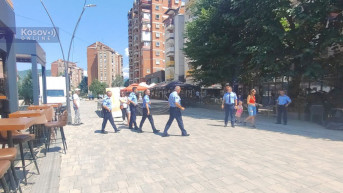
Culture and sport are well-known as convenient tools of “soft power”—ways to influence others to act in line with your wishes without overt coercion. Although presented as cultural and sporting events meant to promote togetherness, the performances organized this summer by the Municipality of North Mitrovica have been perceived by citizens as provocations and part of an election campaign. To be precise—not by everyone, but only by the Serbs, who constitute 95 percent of the city’s population.
Written by: Ivica Simic
The much-advertised “multiethnic character” that the organizers proudly underlined existed only on the posters—and even those were printed solely in Albanian. Judging by the audiences on the days of the events, there was no need for translation anyway. Albanian musicians, athletes, referees, music, sponsors, police… Even acting Minister of the Interior Xhelal Sveçla “threw” a basketball in an attempt to demonstrate that he was playing on his home court.
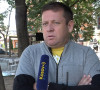
Longtime sports worker from North Mitrovica, Goran Kovač, told Kosovo Online that in the organization of the tournament, sport was nowhere to be seen—only politics.
“There is not even an ‘s’ of sport here. I have lived my entire life in Kosovska Mitrovica, and what is happening these days is nothing but politics and pressure—on us as citizens and as athletes. For the past 25 years not a single such event was held, and now suddenly we have jazz festivals and tournaments, which I see as pure provocation. All of this is happening in an area with a Serbian majority, and it pains us, because its purpose is to provoke us and drive us away from here,” Kovač explained, describing how politics has seeped into every pore of life in the north. He added: “The Serbs are resilient, and our people will endure these provocations, but I hope the world will recognize that this cannot go on—because this has crossed every line.”
If trust within the community is a measure, the tactic becomes clear. The Serb List’s candidate for mayor of North Mitrovica in the upcoming local elections, Milan Radojevic, said that such events do nothing to build confidence in the north.
“The organization of the latest basketball tournament on the Milic Brothers Square, dedicated to the innocent Serbian youths who perished in the 1999 war, is scandalous. It shows the attitude of the current illegitimate municipal authorities toward the Serbs and Serbian victims, as well as the denial of the right of Serbs to preserve a culture of remembrance for their fallen,” Radojevic emphasized.
Such events are not the first, and Radojevic believes they will not be the last. As local elections approach, he expects further provocations.
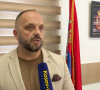
“As this administration nears its end and elections draw closer, we expect increasing provocations by the mayor, by Pristina, and by Albin Kurti. It is clear that the local administration does not have the capacity to organize such events on its own but receives direct instructions from Pristina. Proof of this are the frequent visits of acting Minister of the Interior Sveçla, the Minister of Local Government, and other ministers from Kurti’s caretaker government,” Radojevic noted.
Citizens of North Mitrovica also see hidden motives behind what should have been simple celebrations of music, sport, and culture. In comments to Kosovo Online, they stressed that while they have nothing against the organization of events as such, the political message against Serbs and the attempt to impose Albanian dominance in the north has not gone unnoticed.
“Festivals should be organized, but we all know there is another connotation here. Is it really about a festival, or is there another agenda behind it? Social events should be embraced in a positive spirit—but care must be taken that this ‘positive spirit’ does not end up producing something negative,” one resident commented.
She doubted whether Serbs would be permitted to organize anything similar, noting:
“Maybe we should try, and see what happens. Of course, with caution—we all know the reality here. There is no hidden agenda; it’s all out in the open. It’s very difficult, but it should be attempted, maybe it will be accepted. But the truth is—we are unwanted.”
An Albanian from South Mitrovica, encountered while visiting the north, remarked that music and culture should bother no one, but that everyone should have equal opportunities.
“Music is everywhere; music is beautiful. It should not disturb anyone. Everyone should have their rights—to sing, to play, for children to walk freely, and for everything to be open,” he said.
A local resident from the north, however, offered a harsher assessment:
“None of this is good for us—it’s only provocation. Serbs will never be allowed to do the same,” he insisted.
For many in North Mitrovica, concerts, tournaments, and public events—open only to Albanians—are the culmination of months of measures taken by Pristina. Those with years of experience in sports or politics see no ambiguity.
Kovač explained that the latest actions of the local authorities and organizers are not surprising, but simply a logical continuation of earlier steps. Since the seizure of the sports hall by municipal inspectors in May, Serbian athletes have not been allowed to train there. Neither the hall nor the training sessions—for which it was built—are available to Serbian children.
“Looking back, the first thing Albin Kurti did upon coming to power was to ban Serbs from competing in sport. For the past four to five years, our clubs have been forbidden from playing their matches in Kosovo and Metohija—charges are filed immediately, and athletes are forced to host their games in central Serbia. Worst of all, there are no training conditions. Children who want to play sports—at a time when it is most needed—are not allowed to. Months ago, our hall was closed, and it now sits empty. There are plenty of halls in the south, but it was important to them to take over our hall, built in 2019 for the people in northern Kosovo and Metohija. Now even it is not in use, but our children are making do. I hope someone will recognize this situation,” Kovač continued.
Kosovo Police entered the sports hall in North Mitrovica on May 15. At the time, it was promised that training schedules would not be disrupted, but four months later the hall remains closed.
“That was pure blackmail. We did everything, submitted the training schedule, all the paperwork they asked for. When I asked when we could resume, given that twelve teams train there, they told me we could come the next day from 2 to 4 p.m.—precisely when the children are in school—and that all twelve teams should fit their training into that two-hour slot. I asked why such provocation, but they only said they would inform us—and they never did. The athletes and clubs refused to accept such blackmail. We hope this will change and that the old conditions will be restored,” Kovač concluded.
Milan Radojevic also pointed to double standards. Serbian clubs, he said, are prohibited from engaging in any sporting activity.
“This shows the kind of cooperation they want with Serbs. Serbs are forbidden from holding any events. Our children are banned from training in the sports hall. That is sport—there is no politics in it. Yet they went so far as to forbid our children and clubs from using the sports hall. They banned cultural events too, all under the pretext that clubs and associations must register. Politics, culture, and sport should not be mixed. Unfortunately, Pristina violates this daily. When Albanians organize events, they are generously approved, supported—even understood by international organizations. But when Serbs try to organize similar events, they are always obstructed—the police are sent to shut them down and suppress them,” Radojevic concluded.
Organizing a sports, musical, or cultural event is never simple. Yet the “soft power” mentioned at the outset is not hard to recognize. Here, however, it comes with a peculiarity: inclusion and charm are presented as the goal—but without any real choice.

0 comments