
Kovac: Organization of sports events allowed only for Albanians
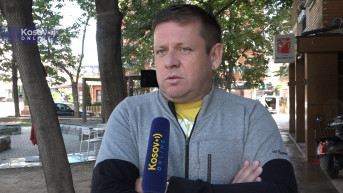
The increasingly frequent organization of sports or cultural events in the territory of North Mitrovica by Albanian associations is perceived by the city’s Serb majority not as a means of fostering interethnic rapprochement, but as a provocation, says long-time sports worker Goran Kovac in a statement for Kosovo Online.
According to him, these events in no way bring Serbs and Albanians closer together, but rather deepen existing divides.
He particularly stresses that all events permitted to Albanians are denied to Serbs, noting that when it comes to the organization of any event, only one side—the Albanian—is consulted.
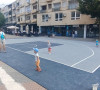
Kovac describes the recent 3x3 basketball tournament as a clear provocation, which, in his words, cannot be characterized as a sporting event.
“There is not even an ‘s’ of sport here. I have lived my entire life in Kosovska Mitrovica, and what has been happening in recent days is nothing but politics and pressure—on us as citizens and as athletes. In the past 25 years, not a single such manifestation was held, and now suddenly we have jazz festivals and tournaments, which I see as a pure provocation. All of this is happening where the Serbs are the majority. It hurts us and is clearly aimed at provoking us and driving us away. But Serbs are resilient, and our people will endure these provocations. Still, I hope the world will see that this cannot continue, because it has gone too far,” Kovac said.
He recalled that this is only the culmination of earlier measures, including the seizure of the local sports hall by municipal inspectors.
To this day, he noted, Serbian athletes have not been allowed to train in that hall—built precisely so that children could use it for sports—which now stands empty.
“Looking back, the very first thing that Albin Kurti did after coming to power was to ban Serbs from competing in sports. For the past four to five years, our clubs have been forbidden from playing their matches in Kosovo and Metohija; charges are immediately brought, so athletes are forced to play their home games in central Serbia. Worst of all, there are no conditions for training. Children who want to engage in sports—at a time when this is most needed—are not allowed to do so. A few months ago, our hall was closed, and it now sits idle. There are so many halls in the south, but it was important for them to take over ours, the one built in 2019 for the people living here in northern Kosovo and Metohija. Now even it is not in use, though our children find ways to cope. I hope someone will recognize this situation,” Kovac continued.
Kosovo Police entered the sports hall in North Mitrovica on 15 May, and since then no training sessions have taken place there, even though authorities had promised clubs they would be able to resume the next day. Four months later, the hall remains closed to all athletes.
“That was outright blackmail. We complied with everything—submitted the training schedules and all the documentation they asked for. When I asked when we could begin training again, given that 12 teams use the facility, they told me we could come the next day from 2 to 4 p.m.—precisely when the children are in school—and that all 12 teams would have to train in that two-hour slot. I asked why such a provocation, but they only said they would let us know, and never did. The athletes and clubs refused to accept such blackmail. We hope things will change and return to the way they were,” Kovac concluded.

0 comments