
Joint Commission for the Missing in Kosovo: Does Brussels offer new hope for victims' families?
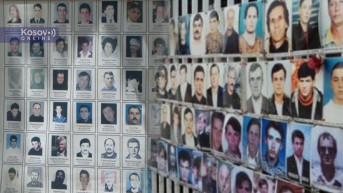
After four years of disheartening silence, the voice of families of the missing and abducted from Kosovo, both Serbs and Albanians, is expected to be heard again in January. At the latest meeting of the main negotiators from Belgrade and Pristina in Brussels, the formation of a Joint Commission was agreed upon, which will start implementing the Declaration on Missing Persons under EU supervision. Representatives of the missing persons' associations and experts in the field, in a discussion with Kosovo Online, hope that Brussels' mediation will yield results, but they also warn that this issue has always been more political than humanitarian.
Written by: Arsenije Vuckovic
The EU Special Envoy for the Belgrade-Pristina Dialogue, Miroslav Lajcak, announced that the first meeting of the Joint Commission for the Missing will be held soon, and he is very pleased about this.
"A significant step towards finally closing the issue of the families. We will soon host the first meeting of the Joint Commission," Lajcak said after the meeting with the chief negotiators Petar Petkovic and Besnik Bislimi.
A significant step, echoed the heads of the government commissions in both Pristina and Belgrade.
The President of the Kosovo Government Commission for Missing Persons, Andin Hoti, viewed this as a significant breakthrough in clarifying the fate of the missing.
"This step represents an important moment in addressing our concerns regarding this very sensitive and significant issue for our families and society," said Hoti.
The President of the Serbian Government Commission for Missing Persons, Veljko Odalovic, stated that the agreement in Brussels removed the last obstacle for the implementation of the Declaration on the Missing.
He emphasized the necessity of returning to a mechanism that had already yielded significant results.
Both Hoti and Odalovic speak about the unresolved fate of more than 1,600 missing and abducted individuals in Kosovo from January 1, 1998, to December 31, 2000.
This is part of the adopted Declaration.
"We jointly commit, to ensure the full implementation of relevant obligations concerning missing persons, to closely cooperate on identifying burial sites and monitoring excavations, and to provide full access to reliable and accurate information that helps locate and identify the remaining missing persons from January 1, 1998, to December 31, 2000," the text of the Declaration published by the EU External Action Service states.
In a conversation with Kosovo Online, Veljko Odalovic expressed that it would be beneficial for the Joint Commission to start working as soon as possible because the families of the missing, both Serbs and Albanians, deserve answers and the truth.
"The Declaration on the Missing was practically agreed upon between President Vucic and Albin Kurti a year and a half ago, and its implementation depends on when this Joint Commission starts working, as it is identified in the declaration. The most important thing is that the Working Group can return to its mandate," says Odalovic, reminding us that the Working Group on Missing Persons was formed under the auspices of the UN Secretary-General, in accordance with Resolution 1244. Odalovic emphasizes that it was a mechanism that functioned well until it was unilaterally interrupted by Albin Kurti four years ago.
"This was a mechanism that had results, that had simply made rules and a general framework by which it had given these results. Stopping it was highly irrational, and it was a very bad move primarily because of the families of the missing who expected that when the Declaration was adopted, agreed in Ohrid - we would gain new momentum," Odalovic states.
Asked whether he expects the Joint Commission to be able to overcome the four-year hiatus and disagreements, he is confident that the Declaration on the Missing, through the agreed text of joint rules, provides frameworks for work, and the European Union guarantees its implementation.
"I hope we will have that meeting soon. I have called on representatives of the International Committee of the Red Cross to contact Pristina and agree on the timing of the meeting and the agenda so that we can start working. When we encounter a problem in our work, what we cannot agree and resolve on our own, we delegate precisely to this joint commission, so that the joint commission, through the mechanisms it has, which are indeed more powerful than the working group alone, can help us and support us in our work," Odalovic details.
Political Will
The Executive Director of the Humanitarian Law Fund in Kosovo, Bekim Blakaj, welcomes the establishment of the Joint Commission which, mediated by the EU, would start implementing the Declaration on the Missing, but warns that without political will, this will not be possible.
"We have been waiting for the establishment of the joint commission for more than a year and a half, since the joint statement by the President of Serbia and the Prime Minister of Kosovo in Ohrid, in May 2023. At that time, the parties agreed to establish a joint commission to be led by someone from the European Union. However, it took more than a year for this to happen," Blakaj told Kosovo Online. He hopes that the future commission will produce concrete results, but he reminds that this is not the first mixed group between Pristina and Belgrade, but that results were lacking.
"Of course, we hope that this commission will produce some concrete results regarding the missing persons, but we really cannot be very optimistic, because there have been working groups before, namely a joint working group. They did meet often in the past, but we did not see results even then. Thus, just the establishment of the Commission itself means nothing if there is no political will to truly illuminate the fate of the missing persons. And, unless the issue of missing persons begins to be really viewed as a humanitarian issue. Unfortunately, this has not been the case so far. Generally, almost always, the issue of missing persons has been treated as a political issue and very often the search process for missing persons was interrupted precisely because of political statements, reactions, demands," concludes Blakaj.
Depoliticizing the Process
Families of the missing, both Serbs and Albanians, seek only one thing - to finally end their agony and learn the fate of their loved ones. However, they are aware that the key problem is that from the beginning, it has not been a humanitarian but a political issue.
Slaviša Vuksanovic, a member of the Executive Board of the Association of Families of the Kidnapped and Missing from Kosovo and Metohija, expects that thanks to the agreement in Brussels and the EU as a mediator, after four years, there could be progress in illuminating the fate of the missing and kidnapped from 1998 to the end of 2000, but not only in Kosovo, but also in Albania.
"We expect and must be of the positive opinion that this new Commission will succeed in, so to speak, forcing both sides to come to realization, namely to depoliticize the process and to start the procedure of finding the missing persons down in Kosovo and Metohija," Vuksanovic emphasizes to Kosovo Online.
He reminds that it is about implementing the Declaration on the Missing signed on May 2, 2023.
"Now, if we look at the previous Working Group led by the International Red Cross, which mediated between the commissions of Belgrade and Pristina, that they have not met and have not realized anything in the last four years, we must hope that this new Commission formed in accordance with the Declaration on Missing Persons will contribute to finding progress in locating people who disappeared and were kidnapped from 1998 until December 31, 2000," believes Vuksanovic.
However, he emphasizes that the families of the missing and kidnapped insist on taking concrete measures and on issues that have not been opened so far, about which the former chief Hague prosecutor Carla del Ponte wrote, and which are included in the report of the special rapporteur of the Council of Europe, Dick Marty, based on which the Kosovo Specialist Chambers were formed in The Hague.
"It is irrefutably proven that there was human organ trafficking, and all these unauthorized and illegal operations and kidnappings and trafficking were done in the territories of the Republic of Albania which was not an official participant in the conflict, but we know that it was a participant. Families demand that the jurisdiction be expanded and that, besides the locations in Kosovo and Metohija we got from our Commission for Missing Persons, locations around the 'Yellow House' be determined, to find out what happened to persons who were unlawfully and illegally kidnapped, and afterwards had their organs removed in the territory of Albania," emphasizes Vuksanovic.
The Truth about the "Yellow House"
Silvana Marinkovic, the coordinator of the Association of Kidnapped and Missing Persons in Gracanica, believes that the result of the work of the Joint Commission for the Missing should also be the criminal responsibility for all those crimes where the perpetrators are still unknown, and the victims are still listed as missing.
One of those events is the "Yellow House".
"Uncovering those potential graves and uncovering all the crimes that occurred in the territory of Kosovo and Metohija would be direct evidence against all those who are being tried in the Special Court. In Kosovo, 1,670 persons are still being searched for. Out of that number, 650 are Serbs and non-Albanians. However, everyone is well aware of the existence of the 'Yellow House' in Albania, so our suspicions are also turned in that direction. The suspicions are that those who were young, healthy, and strong, in the end, ended up in the 'Yellow House.' Those are our suspicions," says Marinkovic to Kosovo Online.
So far, she has waited long enough to find out the truth not only about the fate of her husband but also many other Serbs from Kosovo.
"My husband disappeared on June 19, 1999, on the road from Pristina to Gnjilane, at a place called Labljane. And since that day, we have no information about him, except unofficially what we got information about some existing camps. That was until 2004. From 2004, every trace is lost," Marinkovic recounts. She explains that this is just one of a series of unresolved crimes.
However, she is not optimistic that the Joint Commission for the Missing will give results.
"Unfortunately, both my opinion and the opinion of other families are that this has not given us much hope that this issue will be resolved. What is most important in solving this problem is political will. However, there is no political will to resolve the issue of the missing," says Marinkovic to Kosovo Online. She emphasizes that opening archives is key in the process of resolving the fate of the missing, but so far, there is no mechanism that would enable this.
"While the Working Group was operational, there were indications that all archives would be opened, but so far this has not happened. We know well that several agreements have been reached through the dialogue process, however, none of these agreements have been respected so far. Therefore, our hopes are not high," believes Marinkovic.
She thinks that during the course of resolving this humanitarian issue, Pristina was the one that stalled the process.
"No agreement has been respected so far. If Pristina wanted the Working Group to continue working, it would not have stopped its work. So even now, I do not believe in the continuation of the work," Marinkovic highlights.

0 comments