
A Kosovar or an Albanian - Will the upcoming population census give rise to a "Kosovo nation"?
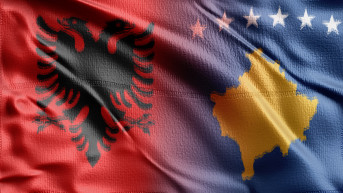
The upcoming population census in Kosovo will not only be a matter of statistics but will also raise the question of identity - whether Albanians in Kosovo will identify themselves as Kosovars or as Albanians. This dilemma, as confirmed by Kosovo Online interlocutors, raises the question of whether it is possible to create a Kosovo nation, whether it can evolve into a multi-ethnic one, and how it affects the position of the Serbian population.
In 2004, when university professor Nexhmedin Spahiu promoted the book "On the Path to the Nation of Kosovars," copies were violently confiscated and burned in front of cameras, and as he testified himself, he was accused of national betrayal and divisions within the unified Albanian nation for years. The situation changed only when after the declaration of independence, Tony Blair and Hillary Clinton, during their visits to Kosovo, wished a long life to the "new Kosovo nation." Spahiu commented that only after that did the number of supporters of the "Kosovo nation" begin to increase.
However, the deep political divisions on this issue were confirmed by Albin Kurti himself, who in 2019, as a candidate for prime minister, stated that Albanians lived in Kosovo and that there was no Kosovo national identity.
Last year, the reactions were sparked by the statement of Liburn Aliu, a minister in his government, who stated that Kosovo was a "temporary project" and expressed doubt that it was possible to create a Kosovar nation.
Such views do not surprise Marija Marsenic, a sociologist from the Institute for European Studies. She told Kosovo Online that Albanians needed an ethnically pure nation and that the project of independent Kosovo was temporary until the green light was given for the opening of the path to "Greater Albania." She sees the population census scheduled for April as another tactical move of repression against the Serbian population.
"As for the question of forming a new Kosovo nation in these areas, it's interesting to note that in the identity cards of so-called Kosovo, the national affiliation listed is 'Kosovar.' This was primarily done to present to the international community and the collective West some semblance of inclusivity among Serbs, Albanians, and other peoples living in the Kosovo and Metohija region. However, the goal is, of course, entirely different," Marsenic believes.
She points out that the Kosovo government actually wants to prove, on one hand, that the number of Albanians is expanding, but that there is also the issue of Serbs separating themselves from their national identity in this way.
"Of course, the goal is not about inclusivity and equality, rather, the goal is the same for Tirana and Pristina, despite certain political disagreements, and that is the formation of a 'Greater Albania,'" our interlocutor explains.
Marsenic believes that they will identify themselves as Albanians in the census because they desire an ethnically pure nation.
"Declaring national affiliation as Kosovar is temporary because it raises the question for them as well of what a Kosovar is. Is it an Albanian from Kosovo and Metohija, or is it something else? So, they need an ethnically pure nation, and the project of the so-called independent Kosovo is also temporary. Officials of the so-called Kosovo government also say this. The project of the so-called independent Kosovo is temporary until the green light is given for annexation and the opening of the path to 'Greater Albania,'" she concludes.
When asked about what the census will mean for the Serbs in Kosovo, she says that in any case, it will not accurately reflect the situation on the ground and will not favor the Serbs because it will lead to a reduction in their political and further opportunities in the Kosovo area.
"On the contrary, they want the census to show a smaller number of Serbs than there actually are in Kosovo and Metohija. Additionally, we can expect Pristina to block people from coming to the addresses they are registered at and where they lived until Albin Kurti's regime came to power. Of course, due to the repression of his regime, a large number of Serbs who lived in Kosovo and Metohija were forced to leave their ancestral homes, and they won't have the opportunity to return during the census period. Overall, the position of Serbs in Kosovo and Metohija is the worst it has ever been, and we witness daily mistreatment and harassment of Serbs both north and south of the Ibar River, which is a way for Albanians to remind Serbs that they have no rights in these areas," she notes.
Historian and political scientist Stefan Radojkovic agrees with her, stating that the Kosovo nation does not exist and that creating such an artificial nation with civic principles in these areas is impossible to implement.
"The question of the concept of a Kosovo nation and what that should mean is actually related to mimicking the liberal-democratic state modeled after Western Europe, meaning there is a so-called civic nationalism and civic belonging to the so-called civic state. This would imply that Albanians would identify as citizens of Kosovo or Kosovars on the census, but that would also involve other ethnic communities - Ashkali, Turks, Bosniaks, Serbs, Roma - identifying as citizens of Kosovo and feeling like Kosovars," Radojkovic says.
He further explains that Kosovo operates on an ethno-national principle, where Kosovo is equated with Albanians, at least from the perspective of the Pristina administration.
"They use the term 'Kosovars' in interaction with the international community, where again they would have to perform this kind of mimicry, claiming that there is a Kosovo civic nation, where all Kosovars, regardless of language, origin, religion, etc., are considered. This is actually mimicry, and it's not accidental, everyone knows that the flags of Pristina institutions are often highlighted, along with the Albanian ethnic flag, which is the flag of Albania, an internationally recognized sovereign state. They will continue with this performance, but it hasn't convinced anyone, especially Gorani and Serbs, that this Kosovo nation includes them too," our interlocutor points out.
Radojkovic says that in Kosovo, national affiliation is understood more as ethnic than civic.
"Albanian nation, Serbian nation, and Croatian nation are already formed. This current attempt following the civic liberal model is the historical reality of Western Europe and practically impossible to implement in states located east of France. The civic principle of a nation is not natural and organic there, it's not indigenous, but in those areas, it's an ethnic principle where we can be citizens, have an ID card, and have a passport of a certain state, but national affiliation is understood more as ethnic than civic. In that sense, it's a futile endeavor because there is no Kosovo nation, there hasn't been a separate Kosovo ethnic group. It's the Albanian ethnic group that has its independent state Albania, which is recognized and a UN member, and this is an attempt to create an artificial nation," Radojkovic concludes.
An analyst from Pristina, Blerim Burjani, assesses that it will be very difficult to conduct and validate the census and suggests that it should be postponed.
"Citizens have the right to decide which field to fill out on the form, they will choose and express their national affiliation in the population census. Citizenship is a legal element, while national affiliation is the citizens' feeling, so it will be both, as it has been in previous years," Burjani says.
He assesses that it will be difficult to conduct the population census due to the fact that most villagers work in a larger city, but also because of population emigration.
"We don't have much data yet on what the population census form will look like or how they have constructed the form with questions. I think there are no good grounds to implement the regulation, it will be difficult because we have many people who travel constantly within Kosovo during the day, who work in cities but have their residence in the village. There are many such cases. Then we also have emigration," Burjani explains.
He believes that it would be good to postpone the census to avoid it ending up being worthless.
"I think it's better for now to postpone the census. After all, the number of citizens is known. Municipalities have registers with documents or property registers. Of course, we need a population and property census, but whether the results will be valid in the end, we don't know," Burjani says.


0 comments