
Serbs in Lipljan, two decades after the Pogrom: Struggle for staying and survival
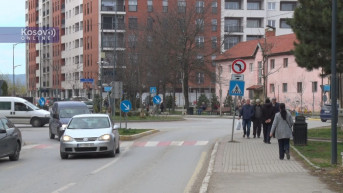
Abandoned properties and houses, contrasted with tall buildings surrounding the churches of Saints Florus and Laurus and the Presentation of the Blessed Virgin Mary, paint a picture of Lipljan, a town where 5,000 Serbs once lived, 20 years after the March Pogrom.
The pogrom against Serbs in Lipljan continued in the days following March 17th, when, according to our sources, 2,000 Albanian extremists embarked on a "raid" on Lipljan.
The Lipljan parish priest, Father Dragisa Jerinic, stated that attacks on Serbs in Lipljan had continued even after the Pogrom, with the aim of expelling the remaining Serbs.
"The March pogrom in Lipljan lasted several days, not just on the 17th and 18th of March, but longer. In the following days, there were raids to destroy what little remained of the Serbian people, so they would have no place to return. A period of house reconstruction followed. It was thought then that people would return, but the atmosphere was such that no one could come back. Almost no one returned to the center of Lipljan, only about one percent did, and even they were expelled. Today, in the city center, we have less than ten families," Father Dragisa said.
According to Father Dragisa, the bombing in 1999 and the March Pogrom were organized with the aim of driving out the Serbian people.
"They didn't succeed because the people know that only in our sanctuaries and through prayer can survival and existence be possible because all the Holy Martyrs of Kosovo interceded for us before the Lord, and only in that way could we remain and survive," Father Dragisa said.
Those who survived that tragic event remember March 17th with fear in their voices. Zoran Simijonovic said that the Serbs who had not left Lipljan were fighting to stay there.
"The majority are no longer with us; if there were 4,000 of us, now there are only five percent left. I can't give an exact number because people are leaving. The situation is grim. Those of us who remain are fighting as much as we can, gathering here in the church. The year 2004 caused big problems. The Serbian part was evacuated, the Finnish army left us, simply moved away, and allowed the pogrom. A good part of Lipljan was burned, and only a few families remained. Almost no one returned," Simijonovic said.
Incidents still occur today. According to Cedomir Mitrovic, the uncertain situation is forcing those who stayed to consider leaving the homes and hearths they built their entire lives.
"When I was in elementary school, there was only one Albanian house, and now the situation is almost reversed. The Serbs left, very few of us remain. I couldn't imagine selling my house before, now I'm old, I can't do physical work, and I'm thinking of selling the house. We are under pressure, they recently broke our window. They entered the yard and threw bricks. We were terrified, we thought it was an earthquake. When we saw the glass, we realized what was happening," Mitrovic said.
Lipljan was once a Serbian urban center with 5,000 Serbs. From 1999 to 2004, that number decreased to 3,000, and after the Pogrom, only 300 Serbs remained in the city.


0 comments