
Kosovo associate member of the NATO Parliamentary Assembly – a step towards membership or compensation for the Council of Europe?
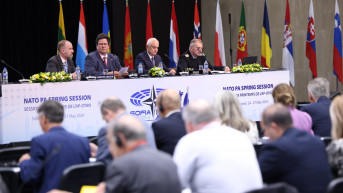
Kosovo has been granted an upgraded status in the NATO Parliamentary Assembly—from observer to associate member, which, according to expectations in Pristina, should serve as a stimulus for their accelerated path towards membership in the Alliance. In Belgrade, this decision is interpreted as a reward to the current Kosovo authorities for their unilateral actions, which are deteriorating the living conditions of Serbs daily. According to analysts speaking to our portal, the decision about Kosovo in the NATO Parliamentary Assembly can also be seen as compensation for their pending application to join the Council of Europe.
Regarding Kosovo's entry into NATO, it is reminded that this requires a consensus that currently does not exist, but it is also pointed out that Kosovo is distinctly pro-NATO oriented, which is why the recent decision is not surprising.
Kosovo has been an observer in the NATO Parliamentary Assembly since 2014, and by becoming an associate member, it now holds the same status as Serbia, Bosnia and Herzegovina, Armenia, Austria, Azerbaijan, Switzerland, Georgia, Moldova, Ukraine, and Malta. Remaining as observers are Australia, Egypt, Japan, South Korea, Kazakhstan, the Palestinian National Council, and Tunisia.
What does the status of associate member bring? According to what is stated on the NATO Parliamentary Assembly website—members of associated delegations have the right to attend plenary sessions of the Assembly, seminars, and meetings of the assembly’s committees and subcommittees. They can speak and propose amendments, but they do not have voting rights.
Regarding Kosovo's new status, yesterday at the vote, the MPs from countries that do not recognize it—Spain, Romania, Slovakia, and Greece, as well as MPs from France and Italy remained abstinent, while the Hungarian delegation voted against.
Security studies researcher Nikola Vujinovic told Kosovo Online that he was surprised by the number of abstentions at the vote, which he says speaks to the lack of unity within NATO and shows the varying priorities of each country in Europe. In his opinion, the status of an associate member in the NATO Parliamentary Assembly for Kosovo does not necessarily mean that it will enter the Alliance sooner.
He states that this is indeed a victory for the establishment of Albin Kurti ahead of the increasingly likely snap elections, and yet another in a series of pressures on Serbia which says, "if you won't join us, others will."
"Serbia should take the next step and express some form of protest, whether by suspending its membership or through further protests or declarations, but it is simply unacceptable for a country not recognized by all NATO members to be part of it, creating a paradoxical situation. To the Serbs in Kosovo, this decision sends the same message they have received from the international community over the last 20 years: face the fact that you live in an independent state, recognize the legitimacy of that state no matter how violent and undemocratic it is towards you, no matter how much it violates your basic human rights, not to mention national and religious rights," says Vujinovic.
Senior advisor of the ISAK fund, Marko Savkovic, notes that the voting at the NATO Parliamentary Assembly indicates that, as in the case of the Council of Europe, there is no unity here either.
"The efforts Serbia invests through its diplomatic apparatus and parliamentary diplomacy make it difficult for these proceedings to proceed smoothly. However, we must bear in mind that this is the NATO Parliamentary Assembly, and Kosovo is distinctly pro-NATO. In the context of the prolonged Ukrainian crisis, the ongoing war there, new divisions, and alignments, there are strong arguments on the side of those trying to present Kosovo as part of this transatlantic alliance, which has now found a renewed reason for its existence, a reason for further expansion in this confrontation with Russia. In this situation where allies are being sought, politicians in Pristina fit that description," Savkovic told Kosovo Online.
He adds that there is always talk of giving something to Kosovo, to somehow encourage and integrate them.
He explains that the NATO Parliamentary Assembly does not have a formalized role within the NATO structures but is crucial as a parliamentary forum, a place where security is discussed, due to all of its committees and relations with countries outside of NATO and those in the Partnership for Peace program.
He also believes that Kosovo is not any closer to NATO membership as of yesterday.
"When it comes to membership, a consensus of all members is indeed required. We have NATO members that do not recognize Kosovo, to start with, and decisions in NATO are always made by consensus. Also, through everything that has happened in the last two years, Kosovo has not managed to establish itself as the most desirable and indispensable partner. Its Euro-Atlantic future is still in some kind of limbo. At the same time, Kosovo has experienced a 'defeat' in terms of entering the Council of Europe, which is a more significant institution, so here we might have a bit of satisfaction, to show that there is at least some positive regard for their efforts in part of the international community," concludes Savkovic.
Branka Latinovic, former Serbian Ambassador to the OSCE, shares a similar perspective, suggesting that the enhancement of Kosovo's status in the NATO Parliamentary Assembly is compensation for the stalled consideration of its membership in the Council of Europe. She also views it as a message to Serbia following the approval of the Srebrenica Resolution at the UN General Assembly and how Belgrade interpreted it.
Latinovic remarked to Kosovo Online that the timing of the decision to grant Kosovo the status of an associate member was influenced by several factors at this session. One of these was to package Kosovo’s status together with that of Bosnia and Herzegovina.
"BiH's candidate status was confirmed, and a status enhancement was decided for both assemblies, essentially reaffirming what BiH had already had, as it was assessed to be a state, or a territory in the case of Kosovo, coming from risky areas where there is a security risk," Latinovic states.
Following the decision at the NATO Parliamentary Assembly, Kosovo’s President Vjosa Osmani announced that Kosovo would continue its efforts towards NATO membership. Nuredin Ibishi, a security expert from Pristina, believes that the status of an associate member in the NATO Parliamentary Assembly will contribute to Kosovo's membership in the Alliance, potentially leading it to join the Partnership for Peace soon.
“With this upgrade in the hierarchy of the NATO Parliamentary Assembly, Kosovo becomes a participant in decision-making. It can now propose amendments and make comments on all documents of the NATO Parliamentary Assembly, which previously had to be done through other delegations but can now be done directly. The participation of Kosovo’s parliamentary committees will contribute to peace not only in Kosovo but also in the Balkans,” says Ibishi to Kosovo Online.
He reminds us that the Kosovo Security Forces are currently undergoing a ten-year transformation plan that runs until 2028, and there are calls from the president, the prime minister, and the minister of defense for Kosovo to become part of the Partnership for Peace as soon as possible.
“Once this development plan is completed, and perhaps even before, I believe there will be an opportunity for Kosovo not only to participate in the Adriatic Charter but also in the Partnership for Peace, before full NATO membership,” Ibishi notes.
The upgrading of Kosovo's status in the NATO Parliamentary Assembly, according to officials in Belgrade, will further encourage the institutions in Pristina not to implement agreements that have been reached.
Serbian Foreign Minister Marko Djuric has criticized the upgrade as a reward for the Albin Kurti regime for arresting dozens of Serbs and mistreating them, banning Serbian goods for 11 months, illegally expropriating property, seizing Serbian churches, and plundering banks.
"This is a signal that some countries have begun to replace the doctrine of human rights respect, which they purportedly supported this project for 25 years ago to promote the sovereignty and independence of Kosovo, and I am not interested in the excuse of the war in Ukraine. The fact is that it is immoral to reward someone who consistently resorts to violating human rights. This damages the already not-so-great image of that alliance in our country, even though Serbia has made efforts to establish as good a partnership as possible with NATO," Djuric declared.



0 comments