
Vujinovic: Kosovo's status as NATO PA associate member does not mean that it will enter the Alliance faster

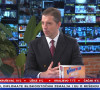
Security studies researcher Nikola Vujinovic told Kosovo Online that Kosovo becoming an associate member of the NATO Parliamentary Assembly did not necessarily mean it would enter the Alliance more quickly, but that Serbia should take the next step and express its protest.
Vujinovic emphasizes that joining NATO is a political matter.
"I don't think this indicates that Kosovo will join NATO faster because joining NATO is a political matter; there are no specific procedures or standards. While the European Union has some, NATO does not. This is bad news for us because it only gives additional legitimacy to that false state and state-like entity of Albin Kurti," he said.
Vujinovic notes that this is a political victory for Kurti's establishment and regime ahead of the upcoming snap elections, but he is pleased with the outcome of the voting.
"We saw that representatives from 17 countries supported it, Hungary was against it as our biggest ally in NATO, and 14 countries abstained, including France and Italy. This clearly indicates the priorities of each country in Europe," he said.
He says that this is yet another pressure on the Republic of Serbia, saying, "If you don't want to be with us, there are others who do."
"We can again discuss the quality or lack of quality of Kosovo's state and its security forces, but this is definitely one of a series of messages we've seen in recent months regarding Serbia and its conduct in international relations. Will this influence Kosovo's acceptance into NATO? I don't believe so. We don't want to join NATO, so it means nothing to us. What I would say, and my opinion is, that we should take the next step to express some form of protest, whether by suspending our membership or through further protests or declarations, but it is simply unacceptable that a state not recognized by even all member states is part of this. It is a paradoxical situation," Vujinovic said.
Vujinovic highlights that Serbs in Kosovo are receiving the same message they have been getting from the international community for the past 20 years.
"'Face the fact that you live in an independent state, recognize the legitimacy of that state no matter how violent and undemocratic it is towards you, no matter how much it violates your basic human rights, not to mention national and religious rights.' This is not encouraging, but the behavior of the international community and NATO in the form of KFOR in Kosovo and Metohija in recent years and decades, I dare say, indicates that Serbs in Kosovo and Metohija did not expect anything different. This is just news among other news, and they won't get too excited. I think they would be more upset if ROSU raided another bank or some kindergarten or school. That would be more alarming for our citizens because this is just a natural sequence of events," he said.
He emphasized that Kosovo was "created" by NATO.
"It was not created by the Albanian people, nor is it a national idea, but Kosovo exists because of NATO. Most Kosovo citizens, when asked how long they will stay in Kosovo and Metohija, say, 'As long as NATO is here.' When NATO withdraws, they will withdraw too. It is clear whose state this is, and this is just a legitimization of that. I wasn't surprised that it was voted on; I was surprised by the number of abstentions, I really didn't expect representatives of 14 countries to abstain. That really speaks to the disunity within NATO," Vujinovic concluded.

0 comments