
Kosovo Diaspora in the U.S.: Why is Kurti abandoning the Albanian lobby across the Atlantic?
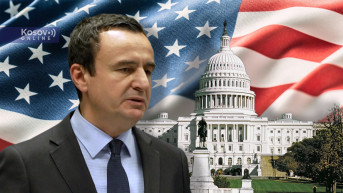
Earlier this month, they spoke with all the Albanian leaders from the Western Balkans, followed by meetings with the prime ministers of Albania, North Macedonia, and Montenegro. In Pristina, they also met with Kosovo’s President Vjosa Osmani and opposition leaders. However, the delegation from the Council for Albanian-American Relations from New York was not granted access to the office of Prime Minister Albin Kurti. The director of this organization did not hide his disappointment. Analysts believe that this is an unusual “diplomatic gesture” at a time when Kosovo already has enough problems with lobbying in America. Possible reasons for this include Kurti's tactical decision to wait for the “right call” from the new administration in Washington.
Written by: Djordje Barovic
"Although we are disappointed that we did not have the opportunity to meet with him, especially considering the global changes and those in Washington, we do not interpret this as something negative, given the post-election events," stated Martin Vulaj, director of the Council for Albanian-American Relations from the U.S., in a conciliatory tone at the end of their mini Balkan tour.
Just a month earlier, Vulaj, commenting on the “dispute” between the Kosovo Prime Minister and the new Trump administration’s special envoy for missions, Richard Grenell, emphasized the need for a change of approach – a “course change” in Kosovo's relationship with the U.S.
“Grenell’s comments should be understood not only as a reflection of the current state of relations but also as a warning that a change of approach towards the U.S. is necessary. Moreover, it is concerning that the president's son publicly supported Grenell's statements. Even more alarming is the fact that the 'Friends of Kosovo' on Capitol Hill are repeating an urgent call for Kosovo to change course,” said Vulaj.
According to Radio Free Europe, Kosovo's institutions currently have no active lobbying contracts in the United States, and local and international political experts warn that there is a risk Kosovo may remain in the shadows and “without a seat at the table.”
Previously, media revealed that from February to the end of July last year, Kosovo's Ministry of Foreign Affairs and Diaspora paid two companies $147,000 each for lobbying in the U.S.
According to available documents, the Ministry of Justice paid these companies a total of $351,800 – including additional costs beyond the amounts specified in the original contracts.
However, the problem lies in the fact that, according to an inspection of the cost reports, during the second half of their lobbying efforts in the U.S., the owners of both companies mostly contacted American politicians via email.
Documents show that even while lobbying through email, they reported expenses for flights and hotel stays.
The "Wait-and-See" Strategy
Stefan Surlic, an associate professor at the Faculty of Political Sciences in Belgrade, says that while there has been continuity, the importance of the Albanian lobby in the U.S. should not be overstated.
“Of course, it was much more pronounced in the early 2000s, but we are witnessing a withdrawal, primarily of the American presence, both militarily and in civilian terms, especially after the start of the Brussels Dialogue and the signing of the Brussels Agreement. The policy in which the U.S. ambassador could directly order officials in Kosovo to act has ceased. And here we also see the diminishing importance of the lobby in America that promotes Albanian interests,” emphasizes Surlic in an interview for Kosovo Online.
One explanation is that all key Albanian interests regarding Kosovo have already been achieved.
“Kosovo, with the presence of NATO, has secured its independence, and as a result, this continuous lobby is now more dispersed. Neither Kurti nor any political option in Kosovo can expect that lobby to stand behind them. Therefore, my conclusion is that we in the region place too much importance on a certain lobby that, in recent years, has had an emotional character, especially from senators, congressmen, and other political actors who witnessed the 1990s and, for personal reasons, saw Kosovo as their personal project, supporting it until the last days of their political careers,” emphasizes Surlic.
The reasons for Kosovo's Prime Minister’s refusal to meet with representatives of the Albanian community in the U.S. are seen in a completely different context.
“Kurti wants to be recognized at a much higher level by the American administration and does not see any benefit from such a meeting. Moreover, he probably would not appreciate the messages he might hear in that meeting,” believes Surlic.
He specifies that the U.S. has "concluded" its unchanged stance on the independence of Kosovo, but for Kosovo's Prime Minister, the more important position is that the new American administration does not want him in that position.
“I think this is a time when he is lying low, waiting to receive the right invitation, and perhaps to establish new contacts or agreements with the current administration in Washington,” emphasizes Surlic.
As another, much more important reason, he points to Kurti's current strategy of "waiting."
“The strategy Kurti is now pursuing is, in a way, to ‘play dead,’ waiting for a better political moment—meaning the final agreement on ending the war in Ukraine—and then waiting for the EU's final position in the entire process. And then, at the end, to see what the American position toward Kosovo will be,” Surlic evaluates.
One explanation is that all key Albanian interests regarding Kosovo have already been achieved.
“Kosovo, with the presence of NATO, has secured its independence, and as a result, this continuous lobby is now more dispersed. Neither Kurti nor any political option in Kosovo can expect that lobby to stand behind them. Therefore, my conclusion is that we in the region place too much importance on a certain lobby that, in recent years, has had an emotional character, especially from senators, congressmen, and other political actors who witnessed the 1990s and, for personal reasons, saw Kosovo as their personal project, supporting it until the last days of their political careers,” emphasizes Surlic.
The reasons for Kosovo's Prime Minister’s refusal to meet with representatives of the Albanian community in the U.S. are seen in a completely different context.
“Kurti wants to be recognized at a much higher level by the American administration and does not see any benefit from such a meeting. Moreover, he probably would not appreciate the messages he might hear in that meeting,” believes Surlic.
He specifies that the U.S. has "concluded" its unchanged stance on the independence of Kosovo, but for Kosovo's Prime Minister, the more important position is that the new American administration does not want him in that position.
“I think this is a time when he is lying low, waiting to receive the right invitation, and perhaps to establish new contacts or agreements with the current administration in Washington,” emphasizes Surlic.
As another, much more important reason, he points to Kurti's current strategy of "waiting."
“The strategy Kurti is now pursuing is, in a way, to ‘play dead,’ waiting for a better political moment—meaning the final agreement on ending the war in Ukraine—and then waiting for the EU's final position in the entire process. And then, at the end, to see what the American position toward Kosovo will be,” Surlic evaluates.
Government and Civil Society
Constitutional law professor Mazlum Baraliu doesn't go that far, but insists that Kosovo's authorities must be open to cooperation with civil society organizations and associations, and that this should be a virtue at all levels of governance.
“We should ask Kurti why the meeting did not take place, whether he was busy or had some other reason. But I believe that cooperation between the authorities of any country, including Kosovo, and civil society, especially associations oriented toward the welfare of citizens and supporting positive goals for the community, should be open. That is my firm belief,” Baraliu stated.
Baraliu emphasizes that one of the key virtues, as well as duties, of any leader—regardless of their level, from local authorities to the presidency and government—is to contact, accept requests, and address society's problems, including those related to civil society and organizational models of social communities.
"Leaders must contact and accept requests, resolve and assess the problems of society, of course, including civil society and organizational models of social communities, in this case, Kosovo. This means they have certain demands that should be given attention. This is essentially my position," concluded Baraliu.
The Director of the Albanian-American Relations Council, Martin Vulaj, stated after visiting the region that he was disappointed that Kosovo's Prime Minister, Albin Kurti, had ignored their request for a meeting.
Message to Europe and America
Historian Stefan Radojkovic acknowledges that Kurti’s refusal to meet with the Albanian-American Relations Council delegation is "a very unusual move" that can also be interpreted as a message to the European Union that he is their player, not "America's player" in the Balkans.
"This is a very unusual move, something that doesn't belong to the practice of Albanians, especially in Kosovo, which has, according to some of my research, been actively lobbying in Washington and in the American administration since the 1980s," Radojkovic emphasizes for Kosovo Online.
He suggests two possible explanations.
The first is an ideological approach by the Self-Determination Movement, where Albanians in Kosovo "must decide for themselves about their destiny, both politically and on the international stage."
"On the other hand, Kurti is perceived as someone who has more support from Berlin, at least in the last five or six years, and not so much from the U.S., especially since the new administration under Donald Trump came to Washington. In this sense, Kurti might be sending a message to his European partners that he is their 'player' in the Balkans and that he may believe he will receive better, greater, and more concrete help from European allies rather than from the U.S.," Radojkovic explains.
Another possible reason could be "personal antipathies."
"Certainly, a very unusual event in the political practice of lobbying by the Albanian population in the U.S.," the historian clarifies.
He recalls that the Albanian lobby in the U.S. builds on the "tradition" of the Democratic Party from the 1990s and that this was seen during Joe Biden's administration.
"During Biden's administration, the existing Albanian lobby in the U.S. was certainly stronger because they build on the 'tradition of the Democratic Party' from the 1990s, which was indeed favorable toward the Albanian lobby. However, there have also been some changes within the Democratic Party. Some of the older representatives, like Eliot Engel, have retired and withdrawn from political life. The new ones who have come probably aren't as influential, and especially since the Democratic Party and Democrats are no longer in power in the U.S. They experienced a significant collapse in November 2024," Radojkovic explains.
There is no doubt that the Albanian lobby in the U.S. will continue to operate, but the new U.S. foreign policy does not work in their favor.
"The Albanian lobby exists and will continue to work, there's no doubt about that. What doesn't currently work in their favor is that certain people in Donald Trump's administration are not as pro-Albanian or pro-Serbian, but they certainly have more understanding for us. What particularly doesn't suit the Albanian lobby is that the issue of Kosovo is not high on Trump's administration's agenda. We see that the key issues are the Middle East, Ukraine, and China. In this sense, they do not have as much influence as they used to," Radojkovic concludes.



0 comments