
Radojkovic: Kurti signals to Europe that he is theirs, not a US "player"

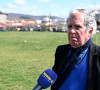
Historian Stefan Radojkovic stated that Kosovo Prime Minister Albin Kurti’s recent refusal to meet with representatives of the Albanian-American Council is a "very unusual move," which can be interpreted as a message to the European Union that he is their ally, rather than an "American player" in the Western Balkans, as he anticipates a potential "reshuffling of the deck" on the international stage.
"A very unusual move, something that does not align with the typical practice of Albanians, particularly in Kosovo, which, according to my research, has been actively lobbying in Washington and within the US administration since at least the 1980s," Radojkovic told Kosovo Online.
He suggests two possible explanations.
The first is tied to the ideological stance of the Self-Determination Movement, which believes that Kosovo Albanians "must make decisions about their own fate, both politically and on the international stage."
"On the other hand, Kurti is perceived as having stronger backing from Berlin, at least over the past five or six years, rather than from the US, especially since the new administration under Donald Trump took over in Washington. In this sense, Kurti may be signaling to his European partners that he is 'their player' in the Western Balkans and that he believes he might secure better, stronger, and more concrete support from European allies rather than from the US in a potential realignment of international relations," Radojkovic explained.
Another possible reason, he suggests, could be personal animosities.
"In any case, this is a highly unusual event in the political lobbying practices of the Albanian population in the US," the historian clarified.
He reminds that the Albanian lobby in the US has been aligned with the Democratic Party since the 1990s, a trend that was evident during Joseph Biden’s administration.
"During Biden’s administration, the existing Albanian lobby in the US was certainly stronger because it followed the 'Democratic Party tradition' from the 1990s, which was notably favorable toward the Albanian lobby. However, even within the Democratic Party, changes have occurred. Some of the old advocates, such as Eliot Engel, have retired or withdrawn from political life. The newcomers are probably not as influential, especially since the Democratic Party and the Democrats in the US are no longer in power. They suffered a significant setback in November 2024," Radojkovic explained.
He has no doubt that the Albanian lobby in the US will continue its work but notes that the new US foreign policy does not favor them.
"The Albanian lobby exists, and it will continue to operate, there is no doubt about that. However, what does not work in their favor is that certain figures in Donald Trump’s administration are not necessarily pro-Albanian or pro-Serbian but are certainly more receptive to our interests. More importantly, what particularly disadvantages the Albanian lobby is that Kosovo is not high on the Trump administration’s agenda at all. The key focus areas are the Middle East, Ukraine, and China. In this sense, they do not currently have the level of influence they once did," Radojkovic concluded.


0 comments