
The Kosovo government's hide-and-seek game regarding expropriations in the north
The saying "Pretend all functions as it should" perhaps best illustrates how Kosovo deals with the expropriation of land in municipalities with a Serbian majority. When it was necessary to gain the favor of members of the Parliamentary Assembly of the Council of Europe for Kosovo to become a member of this organization, top Kosovar officials persuaded the rapporteur Dora Bakoyannis to respect the obligations she had placed before Pristina, which partly related to expropriation. Once the lock in Strasbourg remained locked, this was forgotten.
"We have obliged Kosovo to ensure that the expropriation is carried out in accordance with the law," Bakoyannis stated on April 16 of this year, during a discussion in the PACE about whether Kosovo should be given the green light to join the Council of Europe.
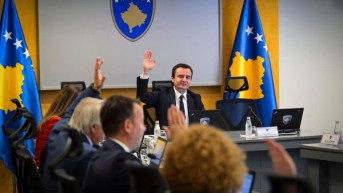
Bakoyannis repeatedly emphasized that Kosovar authorities need to make greater efforts to explain the reasons for expropriation both directly to the affected parties and to the public at large. This was exactly what was missing on May 31, when the Government of Kosovo adopted the "final decision" on the expropriation of property owners in Leposavic and Zubin Potok, in accordance with, as stated, legally binding court judgments.
Five days later, citizens of these two municipalities still do not know whose parcels the government's decision pertains to.
Lawyer Nebojsa Vlajic, who represents the citizens of Leposavic and Zubin Potok whose properties were targeted by the Government of Kosovo's expropriation decisions last year, told Kosovo Online that he learned about the new government decision, called "final," from the media, that he has not yet seen it, and that the citizens affected by this decision have not been informed either.
"This morning I called both the municipalities of Leposavic and Zubin Potok to see if anyone whose property is in question had received any resolution, and nobody has received anything. They would have certainly contacted their municipalities immediately and decided what to do. The legal deadline is very short, it's just a few days and it should have already been delivered, I believe it will be soon," said Vlajic.
He adds that it is possible that the decision will be published today in the Official Gazette, and then it will be known whether it also includes parcels of owners who have initiated legal proceedings against the expropriation and in which cases the Basic Court has annulled the preliminary government decision.
"We need to see the table to view the numbers of the cadastral parcels and conclude which ones are involved. However, knowing that the facilities and bases that the government wanted to build are already constructed, it can be concluded that it concerns the same parcels," Vlajic states.
He also points out that there is a possibility of appealing this latest government decision.
"This is just one of the solutions that the government in Pristina, in my opinion, under pressure, adopted to put the procedure in some semblance of respect for rights and objectivity, but I think that is absent. This is also a signal to all of us that anyone's property can be targeted by the government. If the government wanted to conduct any procedures, there is enough municipal or communal land in all those places where these bases could have been built, but it was not necessary for private property to be affected. I think it's a big mistake and that everyone from the outside sees it," concludes Vlajic.
The Kosovo government, remember, began expropriation in the municipalities of Leposavic and Zubin Potok in January last year, when it declared part of the land in these municipalities as "real property of special public interest necessary for the realization of infrastructure projects of public interest," and on May 10, 2023, it retroactively made a decision on the expropriation of land. Meanwhile, the Kosovo police confirmed that some of these "infrastructure projects of public interest" actually relate to the construction of police stations.
The new decision by the Kosovo government on expropriation in two northern municipalities, according to Dusko Celic, associate professor at the Faculty of Law at the University of Kosovska Mitrovica, sent an identical message to the Serbs and the international community—that there is no rule of law in Kosovo in any segment, including property rights.
Given the lack of sufficient information about the latest decision, Celic indicates that it seems to be final decisions about expropriation of those parcels about which the court has not yet made decisions, but which are located in a single unit.
"We can conclude that this so-called final decision probably relates to parts of the complex that were previously usurped and now there is a desire to legalize this situation with this decision. However, since on these parcels, facilities of the so-called Kosovo police are already built or under construction, there can be no talk of any legalization of expropriation, or previous usurpation, but this is literally about usurpation. Any action before things are restored to their original state, as we lawyers say—before 'restitutio in integrum' is carried out, or before all facilities or parts of facilities that have been built there are demolished, any other action that would follow would mean practically a continuation of usurpation," explains Celic.
He reminds that one of Kosovo's obligations, related to its membership in the Council of Europe, was to bring all actions related to the expropriation of Serbian real estate in northern Kosovo into a somewhat lawful state.
"They obviously did not act according to this and this is now an additional challenge to all those countries that wholeheartedly voted for the proposal to admit so-called Kosovo to the Council of Europe, even though it does not meet the formal condition because Kosovo is not a state. A special message to the Serbian population is that after the failed saga regarding the admission of so-called Kosovo to the Council of Europe, Pristina will continue to, conditionally speaking, take revenge on the Serbs by continuing to systematically endanger their human rights, including the right to peaceful enjoyment of property, as well as other rights," says Celic.
Aleksandar Rapajic, Program Director of the NGO Center for the Advocacy of Democratic Culture from North Mitrovica, says that the final decision of the Kosovo government on the expropriation of real estate in the municipalities of Leposavic and Zubin Potok can be seen as a continuation of the pressure on the Serbian community but also as a way in which Albin Kurti shows that he does not want to meet any conditions of the international community.
"Further steps will be the continuation of expropriation and the continuation of building bases and police centers. We have an announcement that a police center will be built in the northern part of Mitrovica, and as we can see, the bases are still there. The points that were only control have slowly turned into bases, so I think the message to the Serbian community is very clear and that is that the pressure will continue," says Rapajic for Kosovo Online.
As for the international community, our interlocutor states that Kurti has a negative attitude towards it and that such shows a kind of arrogance.
"One of the unofficial demands of the EU was also to resolve the problem of expropriation in the north. As it was said that the unsuccessful elections fulfilled the condition for the dismissal of the mayor, so with this decision he says that the condition regarding expropriation has been met. He shows that he does not want to meet any conditions of the international community and shows some pride towards them," says Rapajic.
The decision of the Kosovo government, as he believes, is not a response to the fact that Kosovo's request to become a member of the Council of Europe was not on the agenda of the Committee of Ministers of the CoE, because Kurti, he says, did not make decisions in accordance with the international community even before this decision.
"This is a continuity of several years that this government makes decisions without consultations with the representatives of the Quint," says Rapajic.
About how the latest government decision will affect the cases in which a court ruling annulled the original decision on expropriation, our interlocutor says that this will only be seen.
“We see that the police station in Zubin Potok still exists. We will see if there will be a removal of these facilities and a halt to construction at these places about which the court has spoken,” says Rapajic.



comments