
Celic: The attempt of the government in Pristina to legalize expropriation is a continuation of usurpation
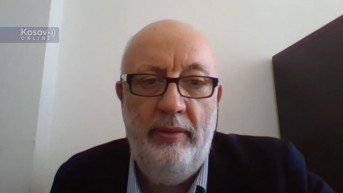
With the new decision by the Kosovo government on expropriation of properties in the municipalities of Leposavic and Zubin Potok, according to Dusko Celic, an assistant professor at the Faculty of Law at the University of Kosovska Mitrovica, the same message has been sent to both the Serbs and the international community – that there is no rule of law in Kosovo in any segment, including property rights.
He states that the decision of the Court of Appeals on the appeals in cases related to expropriation has not been delivered to the landowners, nor has this latest decision by the Kosovo government, which was learned about from the media.
"And this again, in a way, speaks about the rule of law, or rather the rule of unlawfulness, when it comes to the rights of Serbs in Kosovo and Metohija," he emphasizes.
Given that there is not enough information about the latest decision, Celic notes that it appears to be the final decision on the expropriation of those parcels that the court has not ruled on but are located in a contiguous area.
"We can conclude that this so-called final decision probably relates to parts of the complex that were previously usurped, and now the intention is to somehow legalize this state with this decision. However, since bases for the so-called Kosovo police have already been built or are under construction on these parcels, there can be no talk of legalizing expropriation, i.e., previous usurpation. This is literally about usurpation. Any action before the situation is restored to its original state, as we lawyers say – before 'restitutio in integrum' is implemented, i.e., before all structures or parts of structures built there are demolished, any further action would practically mean the continuation of usurpation," Celic explains.
He reminds that one of Kosovo's obligations related to membership in the Council of Europe was to bring all actions regarding the expropriation of Serbian properties in northern Kosovo into a somewhat lawful state.
"They clearly did not comply with this, and this is now an additional challenge for all those countries that wholeheartedly voted for the proposal to admit so-called Kosovo to the Council of Europe, even though it does not meet the formal requirement as Kosovo is not a state. A special message to the Serbian population is that after the failed saga regarding the admission of so-called Kosovo to the Council of Europe, Pristina will continue, conditionally speaking, to take revenge on the Serbs by continuing to systematically endanger their human rights, including this right to peaceful enjoyment of property, as well as other rights," Celic says.
In this context, he also mentions the cessation of operations of the only bank in the Serbian system, the Postal Savings Bank, the raid on the Treasury, random and arbitrary arrests, and the imposition of long-term detention measures that almost replace punishment.
"During this period leading up to the elections in Kosovo and Metohija, unfortunately, I do not expect anything other than further escalation when it comes to the endangerment of the human rights of Serbs," Celic concludes.


0 comments