
Kosovo imported €2.9 billion worth of goods in the first five months of 2026, while exports reached only €419 million
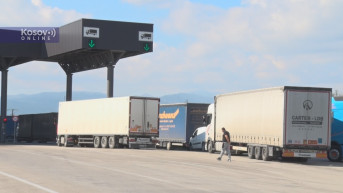
Kosovo continues to purchase significantly more goods from abroad than it sells on foreign markets. According to data from Kosovo Customs, during the first five months of 2026, Kosovo imported goods worth €2.9 billion, while exports amounted to only €419.2 million, Kosovo Press reports.
This means that Kosovo spent approximately €2.5 billion more on imports than it earned from the sale of its products abroad.
Compared to the same period last year, imports increased by around €150 million. Relative to 2024, Kosovo imported more than half a billion euros’ worth of additional goods.
Economist Ismet Mulaj believes that the increase in imports is the result of a lack of structural economic reforms, rising consumption, and weaknesses in domestic production.
“There are many factors. The first is the long-standing absence of structural economic reforms. The second is increased consumption, driven by the funds distributed by the Government of Kosovo through higher pensions, wages, and social benefits, particularly during the last two election cycles. In addition, remittances from the diaspora have significantly boosted consumption. As a consequence of higher consumption, inflation has naturally increased, while domestic production remains insufficiently competitive compared to imported products,” Mulaj said.
Economist Lulzim Beqiri considers 2026 to be one of the most concerning years in terms of Kosovo’s dependence on imports.
He stated that heavy reliance on imports makes Kosovo vulnerable to any global crisis due to insufficient investment in expanding domestic production.
“As an economist, I believe that a state without adequate production capacity also enters the sphere of national security concerns. Therefore, the institutions of the Republic of Kosovo should invest in production, not merely at the declarative level, as reflected in Prime Minister Kurti’s recent statements, but through real investments aimed at reducing the need for purchasing, importing, and allowing money to flow out of the country without justified reason. Imports are seven times higher than exports,” Beqiri said.
Noting that Kosovo’s exports cover only 15 to 20 percent of imports, Beqiri described the situation as highly concerning.
“Kosovo has not managed to find the right path for exporting its products, apart from a number of companies already established and highly successful on international markets, such as Frutex and other companies engaged in vegetable processing and production. Therefore, I believe it is crucial for institutions to increase the export capacity of Kosovo products in international markets through economic diplomacy, which has been almost non-existent over the past five years,” he said.
Acting Minister of Industry Mimoza Kusari-Lila, while presenting a report on the first one hundred days of work, acknowledged several weeks ago that the trade deficit had increased, noting that this places additional pressure on institutions to do more to promote domestic production and enhance its competitiveness.
“It is very important for us to increase the substitution of imported products with domestic products, while also focusing on reducing the trade deficit, which we agree remains high. This creates both pressure and motivation for us to work harder on promoting domestic production and replacing imported goods,” Kusari-Lila said.
According to the information available to her, Serbia is not among the top ten countries in terms of total exports to Kosovo.
“In the overall imports of the Republic of Kosovo, Serbia, if I am not mistaken, is not even among the top ten. Compared with the same period last year, there has been a slight increase, but this is linked to certain specific circumstances, particularly regarding construction materials and issues that emerged within Kosovo and which we are addressing intensively in relation to certain industries. Generally speaking, overall consumption of goods originating from Serbia is not increasing, and that is positive news,” she said.
Economist Mulaj argues that a portion of businesses, as well as citizens, continue to obtain supplies from Serbia.
“This primarily concerns citizens of Serbian ethnicity who source products directly from Serbia, but also products manufactured in Serbia and intended for the Kosovo market, which are subsidised in order to enter the market. A third factor is that Serbia invests heavily in maintaining the presence of its products in Kosovo. It allocates substantial budgetary resources to support domestic businesses and strongly promotes companies to export to Kosovo,” Mulaj said.
He believes that the Government of Kosovo must adopt a strategic approach to increase domestic production capacity in sectors where Serbia has a strong competitive advantage and significant access to the Kosovo market.
According to him, this particularly applies to the construction sector, which accounts for the largest volume of imports and where Serbia is especially competitive compared to other countries and domestic producers.
“First and foremost, an in-depth analysis is needed—not only by government institutions and ministries, but also by business associations, chambers of commerce, and various experts—to identify the economic challenges posed by Serbia. Which products currently imported from Serbia can be replaced? Which grants, and in which sectors, should be directed toward increasing domestic production and substituting those products? Therefore, the approach must be multidimensional. There is no magic wand. What is needed is a long-term strategy accompanied by concrete steps—one step today, another tomorrow, and so on,” Mulaj concluded.



comments