
Kosovo’s EU membership application stuck in a drawer for three years: In an indefinite waiting room
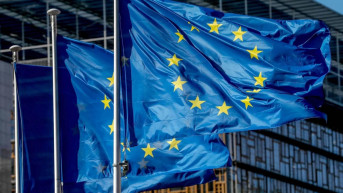
Kosovo Prime Minister Albin Kurti submitted Kosovo’s official application for membership in the European Union on 15 December 2022, but three years on it has still not reached the table of the EU Council. As the main obstacles, interlocutors for Kosovo Online cite the fact that five EU member states do not recognize Kosovo as a state, as well as Kosovo’s failure to meet criteria related to the protection of minority rights and to fulfill the international legal obligations it undertook in the process of normalizing relations with Belgrade.
Written by: Dusica Radeka Djordjevic
Kosovo’s First Deputy Prime Minister and Minister for European Integration in a technical mandate, Besnik Bislimi, recently stated at an informal EU–Western Balkans ministerial dinner that Kosovo deserves to be granted EU candidate status.
According to him, Kosovo has made progress in implementing reforms, achieved full alignment of its foreign policy with the EU, manages migration well following visa liberalization, and has positive indicators in the fight against corruption and the rule of law.
Similar statements have been made in recent years by other Kosovo officials, and at the beginning of November the President of the European Council, António Costa, said that Kosovo should receive a positive signal regarding its request for candidate status.
Analysts, however, do not believe this will happen any time soon.
No Consensus
This view is shared by Aleksandar Rapajic, Program Director of the NGO Center for Advocacy of Democratic Culture from North Mitrovica.
According to him, there are several reasons why Kosovo’s EU accession process is stalled.
“The first and main reason is that not all EU countries recognize Kosovo. We saw during the visa liberalization process that the positions of certain states were quite strict when it came to Kosovo. In the end, those countries accepted visa liberalization for Kosovo with some exceptions they requested to be noted. Spain is most opposed, and to some extent Cyprus as well, and of course they do this mainly because they fear that the Kosovo issue could spill over into their own internal problems,” Rapajic told Kosovo Online.
The fact that five EU countries do not recognize Kosovo as an independent state, he adds, represents a problem for European integration because decisions are taken by consensus.
Since Kosovo submitted its application three years ago, he notes, there have been quite a few controversial decisions by the central authorities, and the EU has also imposed certain sanctions on Pristina.
“However, as the situation in Europe regarding European integration develops, we see that Europe has abandoned all the principles it previously had for the integration process. Now it is entering accelerated processes with certain countries, and the standards that previously existed are no longer required. For a country to move closer to the EU today, only a political decision and alignment with EU decisions are required,” Rapajic says.
Conditions and Functioning According to EU Standards
Analyst Azem Vllasi told Kosovo Online that it is good that Kosovo submitted its application for EU membership in 2022, but he also says that in Kosovo’s case the problem is that five EU member states have not recognized it, and decisions on candidate status and membership are made with the consent of all EU members.
“In addition, Kosovo still needs to meet further conditions in terms of practical functioning according to EU standards. Therefore, it is good that the application was submitted in 2022, but it will still take time to obtain candidate status, and even longer to reach membership. When all conditions are met, those five states will also give their consent,” Vllasi says.
Generally speaking, according to him, Kosovo meets the conditions for EU membership because under its Constitution it is organized as a democratic state according to the standards of EU member states.
“But first it needs to obtain EU candidate status, as four countries from our region have done and are now in accession negotiations. When that will happen is unknown, and Albania and Montenegro are closest to membership. Only Kosovo and Bosnia still do not have candidate status,” Vllasi notes.
He believes it is also important for Serbia to make progress toward the EU, since a condition for its membership will be the formal recognition of Kosovo.
“The basic condition for EU membership is that a member state has no open issues with another state, especially not border disputes,” Vllasi emphasizes.
Analyst Alma Lama believes it is time to move from words to deeds. “It is true,” Lama tells Kosovo Online, that five states have not recognized Kosovo, “but I think the EU should have a different approach to Kosovo’s integration.” She says that a clear path toward EU integration would help Albanians in Kosovo, Serbs, other communities, as well as institutions.
“I don’t know why Kosovo’s application has not been understood and seriously considered in the EU,” Lama adds.
Researcher at the Belgrade-based Center for European Policy Marko Todorovic also assesses that the main reason Kosovo has not reached candidate status is that it was known that the five EU member states that do not recognize it would a priori oppose any progress in that process. He also notes that even those states that recognize Kosovo’s independence and are leading players in the EU, such as Germany or France, have not really tried to place this issue high on the agenda.
“There was no real search for a political way to perhaps persuade even these non-recognizing states to relent and, regardless of their national positions, not block this technical accession process,” Todorovic told Kosovo Online.
As a third reason, he cites the reversible EU measures currently in force against the Kosovo government.
“In that sense, what is now on the agenda is whether, how, and at what point those sanctions will be lifted. That is the first step toward some potential future discussion on candidate status. And of course, both the lifting of sanctions and everything that may follow in the relationship between Kosovo and the European Union are conditioned on the normalization of relations with Belgrade.
“It is necessary for Kosovo to demonstrate absolute readiness to fulfill all the obligations it has undertaken in agreements stemming from the dialogue with Belgrade, and one of the prerequisites in that regard is the formation of the Association of Serb-majority Municipalities,” Todorovic stresses.
Even then, he adds, it is not entirely certain that candidate status would be easily accessible to Kosovo, given the states that do not recognize it.
No Positive Response in Sight
How much longer Kosovo can wait for a positive response from the EU regarding its membership application, according to Rapajic, no one knows.
“The main path toward the EU will be determined by the new government that will be formed after the elections on 28 December. I think that one of the main conditions for moving closer to the EU will be the position of non-majority communities, especially the position of the Serbian community in Kosovo. If the new government formed after the elections begins implementing the Brussels agreements, particularly if it moves forward with forming the Association of Serb-majority Municipalities and improves the position of the Serbian community in Kosovo, I think that might slightly open the door toward the EU—but we don’t know what the results of 28 December will be,” he concludes.
Asked whether pressure from EU recognizing states on the five non-recognizing members could be expected in the coming year to find some modus operandi to grant Kosovo candidate status, Todorovic says he does not expect such a solution.
“I do not expect pressure from recognizing states toward those that do not recognize Kosovo for the simple reason that Kosovo first needs to show that it meets the basic criteria, which means respecting minority rights and assuming all the international legal obligations it has committed to—above all the process of normalizing relations with Belgrade,” he says.
What Is the Procedure?
Explaining the procedure for applying for EU membership, Todorovic says it is described in Article 42 of the EU Treaty, which states that any European country that meets the minimum political and economic conditions may submit an application for membership to the EU Council, i.e., to the country holding the presidency at the time.
“The Council then unanimously decides whether the issue will even be considered, or it may request an opinion from the European Commission on whether that country essentially meets the minimum conditions. The European Commission then draws up a very extensive questionnaire, often containing several thousand questions, and based on the applicant government’s answers, the Commission recommends to the Council whether or not to grant candidate status. The Council then again unanimously decides whether to grant candidate status, and only then does the screening process and the opening of negotiations follow,” Todorovic emphasizes.
Although Kosovo submitted its EU membership application three years ago, he points out, the Council has to date never requested an opinion from the European Commission.



0 comments