
Kurti between compromise and new elections: Presidential election a stumbling block
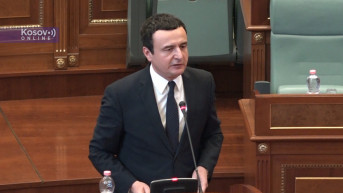
The process of forming institutions in Kosovo is entering a decisive phase in which the willingness of political actors to compromise will play a key role, interlocutors of Kosovo Online agree. Although the Self-Determination Movement (Self-Determination) won the largest number of votes in the parliamentary elections, analysts point out that without an agreement with one of the opposition parties or a broader political consensus, it will not be possible to overcome the institutional deadlock.
Written by: Jovana Jovanovic
The election of the President of Kosovo and the distribution of the most important state positions are seen as the most likely obstacles, while possible outcomes include an agreement between Self-Determination and certain opposition parties, the formation of an alternative majority, or new snap parliamentary elections.
Kosovo Online's interlocutors assess that Albin Kurti’s next moves will show whether he is prepared to make concessions or whether the political crisis will be prolonged through another trip to the polls as early as this autumn.
Security studies researcher Nikola Vujinovic believes that the most realistic scenario following the elections held on June 7 is the holding of new snap parliamentary elections. He argues that Self-Determination seeks to consolidate all key positions of power and currently has the greatest room for political maneuvering in the institution-building process.
“They want to take everything – to have the president, the prime minister, and the speaker of parliament. They won the largest number of votes and believe those positions belong to them. As things stand, it appears that the diaspora will provide them with the necessary mandates to form a government on their own,” Vujinovic told Kosovo Online.
According to him, Self-Determination will once again try to implement the scenario from December by delaying the constitution of parliament in order to trigger new elections at a moment when its core electorate is present in Kosovo.
“If any concessions were to be considered, I believe the only interlocutor would be the Alliance. Together with the mandates of MPs representing non-Serb minority communities, that would constitute a parliamentary majority. However, the issue of the presidency would still remain, as a president cannot be elected without the support of either the PDK or the LDK, that is, without them providing the quorum necessary for the election,” Vujinovic said.
He explains that Kurti does not want the PDK as a partner because he fears the return of Hashim Thaçi, which could undermine his popularity. At the same time, he appears to harbor negative feelings toward Vjosa Osmani and the LDK, which endorsed her, and therefore has no intention of supporting her in any way.
“He said on election night, at least indirectly, that the idea of her becoming president again does not even cross his mind. Yet that seems to be precisely what the LDK expects,” Vujinovic noted.
Speaking about the possibility of opposition parties forming a government without Self-Determination, he said that such an outcome would be the best solution but is not realistic, primarily because of Albanian parties’ attitude toward the Serbian List.
“The best option would be the formation of a broad coalition against Albin Kurti, one that would also include the Serbian community and the Serbian List, but that is not possible. There are two very clear reasons for this. First, the Serbian community is a taboo subject within the Albanian political sphere, and anyone entering into any form of coalition with the Serbian List would be politically finished. Second, we again come back to the issue of electing the president. Therefore, any attempt to form a government without Self-Determination is unrealistic unless there is external influence, namely from the international community, which could compel political actors to act contrary to what would otherwise be considered rational and logical,” Vujinovic stressed.
For that reason, he considers new snap parliamentary elections to be the most realistic scenario, although he does not rule out the possibility of an agreement between Self-Determination and either the Alliance or the Democratic League of Kosovo. In his view, the least likely option is the formation of a grand coalition between Self-Determination and the PDK.
Journalist Lazar Stevic from North Mitrovica also agrees that Kosovo could face new snap elections as early as this autumn.
He points out that the reaction of the international community following the elections should encourage Self-Determination leader Albin Kurti to accept certain compromises and form institutions as soon as possible.
“Whether Self-Determination will heed the international community and invite one of the opposition parties, one of the stronger Albanian political parties, to jointly form a government and whether it will make certain concessions remains to be seen,” Stevic told Kosovo Online.
He is convinced that, after the announcement of the final election results, Self-Determination will be unable to form a government on its own, even with the support of its previous partners, and will require the backing of at least one additional political actor.
“What we know from the previous period is that Albin Kurti is not a man who likes making concessions or giving anything away. He is someone who prefers to have everything under his control and to hold all the power. We saw this in the case of Vjosa Osmani, when he refused to nominate her for another presidential term. In my opinion, unless the international community exerts additional pressure on political actors in Kosovo, new elections will most likely be held in the autumn,” Stevic stated.
According to him, another possibility is that the opposition parties that won the most votes after Self-Determination form a government, but they would also require the support of the Serbian List.
“A major obstacle is also the Constitution of Kosovo, which stipulates that parliament must first be constituted, then the president elected, and only afterwards can the president entrust the mandate to form a government to the candidate representing the party with the largest number of votes, which is Self-Determination. It will be crucial to see whether the Albanian parties can agree on the name of a candidate for President of Kosovo and whether all of them will vote for that candidate,” Stevic said.
If a new president is not elected, he reiterated, new elections will most likely follow in the autumn.
Political analyst Blerim Canaj likewise believes that the election of the president could become the key obstacle to the formation of new institutions, warning that the absence of compromise between the government and the opposition could lead to a new political and institutional crisis.
“It should be borne in mind that electing a president requires 80 votes and that negotiations are always conducted with the aim of reaching a compromise. Compromise means that both sides present their demands, after which a decision is made. Therefore, I am rather skeptical about the prime minister’s true intentions – whether he genuinely wants to resolve the issue of the presidency and enable the continuation of political processes, or whether he wants us to end up once again in the same crisis we experienced in the recent past. Judging by the language he has used, I am very skeptical,” Canaj said.
Political analyst Arbnor Sadiku believes that Kurti is attempting to pressure the opposition into yielding on the issue of the presidency.
“It appears that he has not changed, even though the election result is not the same as it was in December and differs by five to six percentage points. Nevertheless, there is a clear tendency to intimidate the opposition into making concessions regarding the presidency. I believe the opposition has its own political objectives and that the office of the president is one of its key demands, and therefore it should not give up on that,” Sadiku said.
In his opinion, for the sake of political balance and the formation of institutions, the Self-Determination leader should leave the presidency to the opposition.
“The idea is for democracy to function and for there to be a certain balance between the government and the opposition with regard to the three main branches of power in Kosovo. Therefore, I believe the only way for Kurti and Self-Determination to demonstrate that the state is more important to them than power is to sit down as soon as possible at the negotiating table with one of the political parties, offer it the presidency and perhaps a share of other responsibilities, thereby completing the process of institution-building,” Sadiku concluded.

0 comments