
Kurti lost a quarter of his support: Why do citizens trust him less and less?
Citizens' support for Prime Minister Albin Kurti dropped by 15 percent, according to UNDP research, so from 59.5 percent of support in May 2021; it fell to 44.9 percent in November 2022. Interlocutors of Kosovo Online cited the change of course in the dialogue with Serbia and the high rate of inflation as some of the reasons why Kurti was left without the support of a quarter of the citizens.
In the extraordinary parliamentary elections in February 2021, the Self-Determination Movement, under the leadership of the current Prime Minister Albin Kurti, won 48 percent of the votes, which was characterized as the biggest victory in the Kosovo elections, considering that until then the ruling LDK had won only 13 percent of the votes.
The leader of the Self-Determination Movement, Albin Kurti, who held the post of prime minister for less than two months before the election, promised to fight against widespread corruption and advocated the position that there must be no compromises in the dialogue with Serbia.
"This was a referendum for justice, against state capture and corruption. This is unprecedented in post-war Kosovo. A new day begins tomorrow. We have a lot of work and obligations ahead of us because the country is in crisis," Kurti said at a press conference from the headquarters of his party in Pristina, declaring the election victory.
After the announcement of the final results, Kurti's Self-Determination Movement, in coalition with Guxo List, won a stable majority in the Assembly of Kosovo, which is deserved considering the outcome of the election.
Kurti returned to the post of prime minister, and when he took office again, he made many promises. From economic progress, stable Kosovo, suppression of corruption, and admission of Kosovo to international institutions, all the way to the fact that he would not accept compromises in the dialogue with Serbia and that this process was in the sixth or seventh place of his priorities.
A survey conducted by UNDP in May 2021 showed that Kurti had a lot of support from citizens. At that time, the level of citizen satisfaction with his performance was 59.5 percent.
However, in November 2021 it dropped to 53.2 percent, while in April 2022 it was 52.6 percent.
The latest UNDP survey shows the lowest satisfaction rating for Kurti's performance since he took power. In November, 44.9 percent of surveyed citizens were satisfied with his performance.
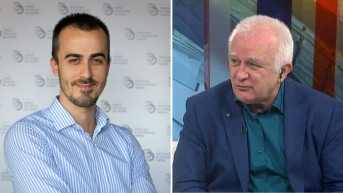
Political analyst Allen Meta states for Kosovo Online that Kurti's change of course in the dialogue with Serbia, the acceptance of the European proposal, as well as the inflation that has increased in Kosovo in the past year, influence an increasing number of citizens to be dissatisfied with the performance of the Prime Minister of Kosovo.
He adds that citizens made it clear in the UNDP survey that they are dissatisfied with the executive, legislative and judicial institutions.
"Based on the latest Public Pulse, it is clearly seen that there has been a decrease in citizens' satisfaction with the key executive, legislative and judicial institutions in Kosovo. The biggest decline in these institutions is seen in the executive cabinet and the prime minister, one with a decrease of 18 percent, and the other with a decrease of 15 percent compared to the Public Pulse conducted in May 2021," Meta said.
According to him, there were several reasons why Kurti had lost even a quarter of his support, and one of them was the way he acted in the dialogue with Serbia.
"The research can be viewed hypothetically, but there are some aspects that may have influenced the reduction of citizens' satisfaction with the Prime Minister. One of the points could be a change in the government's priorities with a focus on dialogue. The government promised that dialogue would not be one of the priorities, but we have seen the opposite during this period," Meta said.
As he stated, the decrease in Kurti's support had also been influenced by the opposition, which opposed the agreement on the normalization of relations with the CSM.
"Undoubtedly, the agreements made during the last year, as well as discussions about possible agreements, reduced the satisfaction of the citizens, for two reasons, one due to the previously given promises of Prime Minister Kurti, and the other due to the raising of the voice of the opposition on the European proposal, with a focus on the Community of Serb-majority Municipalities, and as a result, the citizens changed their opinion about Kurti," Meta emphasized.
He pointed out that the economic situation and inflation in Kosovo were another reason, given that Kurti had promised economic prosperity upon coming to power.
"Another thing that may have influenced the decrease in citizens' satisfaction with Kurti could be inflation. Economic issues are always more tangible for citizens, and in this particular case, we are witnessing an increase in basic prices, which citizens are certainly not satisfied with. We can also see how dissatisfaction has grown in the Index of satisfaction with the economic direction of Kosovo, but also in the Index of perception of the main problems that Kosovo is currently facing," Meta concluded.
Political analyst Dusan Janjic believes that Kurti is losing support primarily because of his policy, adding that the essence of his policy is reciprocity.
"This has been seen since the local elections in 2021, and as the main reason in that policy is that he started on the path of reciprocity, which is the essence of his policy, and that means measuring strength or confrontation, which, in July and August 2021 and November and December 2022 caused a wave of fear, violence, and mistrust among the Albanians. Then he came into conflict with American support, which can be felt even today and which the opposition uses and the citizens feel," Janjic said.
Janjic added that the opposition in Kosovo was now much better organized than two years ago.
"One of the reasons is that the opposition is much better organized than it was two years ago. The PDK survived Hashim Thaci's departure, the LDK recovered, so those two parties returned to the political scene. As for the supporters of the Self-Determination Movement, they have actually scattered, which they showed at the protest where it was seen that Kurti is no longer able to raise the crowd, which is the essence of his policy," Janjic states, adding that the result of all of that is new elections that will probably be held in September.
According to him, Kurti did not opt for a policy of normalization but for reciprocity, which led to this situation, which is "ridiculous" even for Albanians.
As he added, Kurti, instead of talking with the representatives of the Serbs in Kosovo, had focused on measuring strength with the President of Serbia, which, according to him, had also affected Kurti's reputation.
"He put his entire focus on measuring strength with Vucic instead of holding a meeting with the Serb List, with whom he has not met since they left the government. He thinks he is strengthening the country by changing the Serbs in Parliament, which is not an attitude towards minorities. He focused on Vucic and this is a negative consequence of that," Janjic emphasized.
Janjic agrees with Meta that the economic situation favored such a research outcome.
"The economic situation in Kosovo is desperate. Haradinaj's taxes contributed first, then the continuation of reciprocity sanctions in the economy, and many companies and businessmen lived off that kind of exchange with Serbia. Also, bringing in foreign companies by force turned out to be an increase in prices, also there was no organized response to the Covid pandemic, especially in the field of the economy because there is no recovery policy. We have what is a fact, which is the outflow of citizens from Kosovo," Janjic concluded.
0 comments