
Kurti's Greater Albanian attack on North Macedonia is an alarm for the entire region; will the West react?
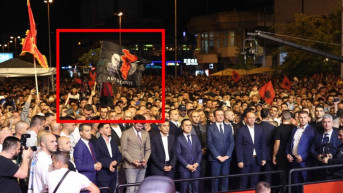
The promotion of Albin Kurti as the leader of all Albanians and the reference to a "Greater Albania" during his stay in North Macedonia should sound the alarm not only in Skopje but also in the entire Western Balkans, according to interlocutors of Kosovo Online. They point out that after the messages sent from the meetings in Tetovo and Skopje, there is no longer any doubt that the Prime Minister of Kosovo wants to set the whole region on fire with the "Greater Albania" program.
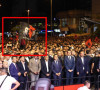
The emphasis on the Greater Albanian nationalist iconography during the meetings in Tetovo and Chair was assessed by the President of North Macedonia, Stevo Pendarovski, as the promotion of hatred and inter-ethnic intolerance, which was why he had called for the organizers of these gatherings to be legally sanctioned. Serbian President Aleksandar Vucic also responded, calling the events during Kurti's visit a "scandal of scandals" and pointing out that the promotion of a "Greater Albania" threatened to cause wider-scale destabilization in these areas.
Political analyst Dejan Vuk Stankovic believes that Kurti's messages and Greater Albanian iconography during his visit to North Macedonia indicate that the Kosovo Prime Minister is not only a threat to the Serbs and Serbia but also to the entire region.
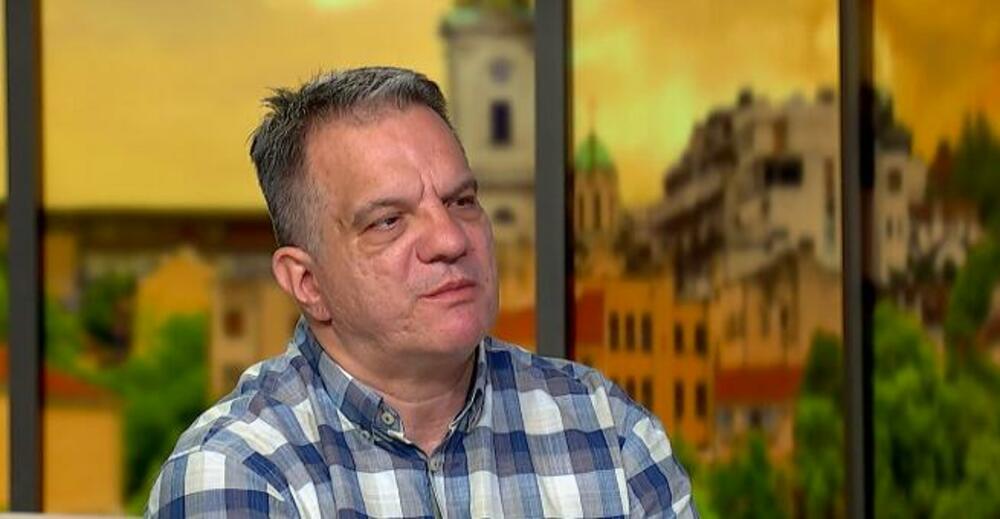
He reminds that Kurti was committed to the Greater Albanian idea before and that now he just "consistently continues on that track".
"I think that, on the one hand, it is Kurti's personal campaign, and on the other, the ideology to which he is attached. We should not forget that he was a follower of Adem Demaci, who, as the spokesman of the KLA, was also an advocate of the 'Greater Albania'. Kurti is someone who consistently follows that trail. It's a chauvinist Albanian program that needs attention; it's a speech that raises the level of security risk and somehow shows that Kurti is not only a threat to the Serbs in Kosovo, but a threat to the entire region," Vuk Stankovic said.
He believes that Kurti's visit to Tetovo and Skopje is a direct blow to the integrity of North Macedonia and the Open Balkan as an initiative dedicated to regional cooperation and strengthening ties, but also an indirect threat to neighboring countries where the Albanian minority lives.
"Here, above all, I am thinking of Montenegro and Greece. With this kind of rhetoric, Kurti is becoming a serious regional problem, not only a problem for the Serbs and Serbia but also for other nations," the analyst warns.
Commenting on what should be the reaction of other countries in the region and the international community to the messages coming from the Prime Minister of Kosovo, Stankovic says that the question is whether they will see a "red flag", given that Kurti has not yet been criticized too much for his actions.
Nevertheless, he points out that Serbia and the countries in the region should use their diplomacy to prevent Kurti's Greater Albanian dreams, which threaten to become a "nightmare" for other nations as well.
"Whether the others in the region will see the red flag, the NATO and the EU, remains an open question. I doubt that Kurti will be convicted for such statements; he is tolerated too much, and the West calculates that there are different geopolitical scenarios. So that is a matter of active diplomacy in the region and Serbia's diplomacy, to oppose Kurti and to prevent Greater Albanian dreams and that they do not become a nightmare for other nations," he said.
When asked whether this was an introduction and announcement of a political and security crisis in North Macedonia and whether the scenario from the north of Kosovo could be expected in that country as well, Stankovic expressed his fear that this was exactly what it was all about.
"I think it is an introduction, and I am afraid that this introduction is in several sequels, in the end and independent Kosovo is a long-term project," Vuk Stankovic concludes.
The foreign political editor of the American monthly "Chronicles" Srdjan Trifkovic told Kosovo Online that the messages sent at the meetings in Tetovo and Chair during Kurti's visit were actually proof that the Government in North Macedonia did not have the power to oppose Albanian nationalism and defend its sovereignty and territorial integrity.
On the other hand, as he points out, Albanians allow such behavior because they are aware that no one from the West "will slap them on the wrist and say - shame on you".
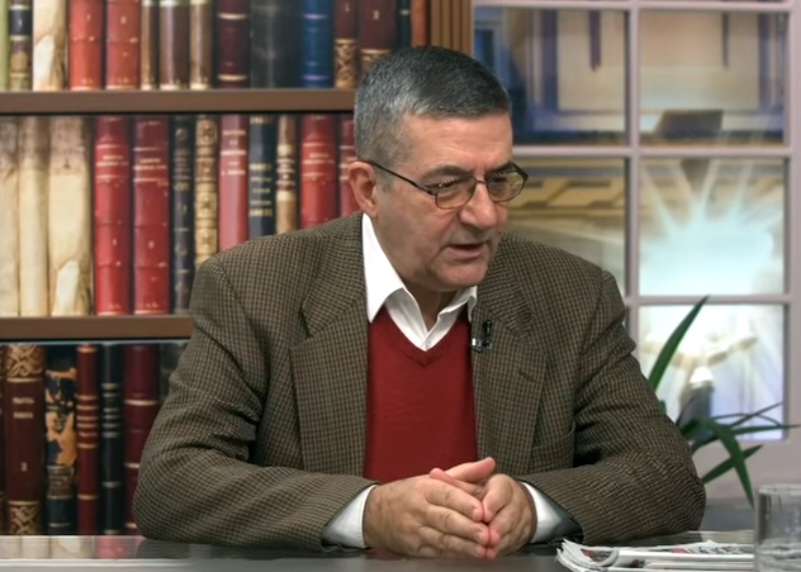
"First of all, I think that the fact that North Macedonia is de facto a broken state, the so-called "failed state", was omitted from the media comments, or was not highlighted enough. We saw as far back as 2001 that the West was on the "uprising" of the Albanians in Macedonia reacted extremely ambivalently. Then it was shown that Western Macedonia is a 'state within a state', and that due to the necessary participation of the Western Macedonian Albanians in the Government structures in Skopje, there is a paralysis of the Government, that is, there is no political readiness, or even the ability of the Government in Skopje to establish control over Tetovo, Gostivar," Trifkovic said.
He believes that the goal of "such insolence and impudence" that Kurti showed during his visit to North Macedonia was apparently not so much to provoke Serbia, which the Albanians, as he says, do non-stop, but also to highlight the extent to which they are truly on their own land, not only in Tetovo but also in Skopje itself.
He also adds that the idea of the Albanians is to show everyone that they can afford the luxury of propagating a 'Greater Albania', and that the Government of North Macedonia cannot adequately react to that.
The main message from the meeting in Tetovo, according to Trifunovic, is that Skopje has absolutely no power to defend sovereignty and territorial integrity, or to establish control over Albanians, who are no longer a minority population in this country.
"De facto Albanians have proven that North Macedonia is a bi-national state and that this is no longer a question of their aspirations based on some kind of minority rights, which would be legitimate and in accordance with the Constitution of North Macedonia, but, on the contrary, they are now escalating it to the point where no decent and self-respecting country would tolerate such a challenge," Trifunovic assesses.
He does not expect any sharper reactions in the region and from the West to the behavior of the Albanians and the promotion of a 'Greater Albania', especially not in Montenegro, where, he explains, they are occupied with internal issues and the formation of the Government "according to the taste of the US Embassy".
"There probably won't be any alarm in Montenegro because of what happened in Tetovo and Skopje, because in order to form a new Government in Podgorica, from which the Serbian parties will be excluded, the support of the Albanian parties is needed so that they, considering that now the North Macedonia is the first to be hit, they think that the problem in Ulcinj will not be in the foreground. And making a strategic mistake, they will not react, because now their primary concern is to form a Government according to the taste of the US Embassy," Trifunovic said.
He indicates that the international community has always been tolerant of the behavior of Albanians.
"Is anyone surprised by the absence of reaction from the West, bearing in mind that there was no reaction to all the previous manifestations of aspirations for a 'Greater Albania', so why should there be now? Whenever there are provocations from the Albanian side, the West calls for restraint on both sides - both the aggressive Albanian parties and any other damaged one, regardless of whether it is Serbia or Montenegro, Greece or North Macedonia. In a geopolitical sense, the US sees Albanians everywhere, not only in Albania and Kosovo but also in Montenegro and North Macedonia, as their key strategic partners in the Balkans. On the other hand, Albanians believe that they are authorized by Washington to do what they are doing and that no one from the West will slap them on the wrist and say shame on you," Trifunovic points out.
Historian Predrag Markovic also told Kosovo Online that Albin Kurti did not hide his Greater Albanian appetites and that everything he did, including the visit to Tetovo, where messages about the unification of all Albanians and "Greater Albanian decor" dominated, were the best denials of anti-Serbian propaganda. He also stated that the events in North Macedonia during Kurti's visit showed that the region was not threatened by the "Serbian world", which was the narrative was trying to be imposed, but by the obvious Greater Albanian aspirations.


comments