
Kurti's "withdrawal" from the north: Is the reduction of police presence by 25 percent a prelude to calming tensions?
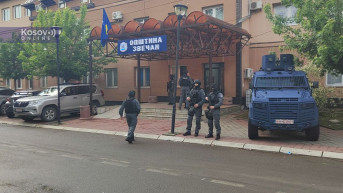
The agreement of Prime Minister Albin Kurti's government to start calming tensions in the north by reducing the police presence in and around municipal buildings in Leposavic, Zubin Potok and Zvecan by 25 percent, and to enable new local elections after the summer, is only an apparent step towards de-escalation and it still does not guarantee anything, according to Kosovo online's interlocutors.
For analyst Ognjen Karanovic and former head of Yugoslav diplomacy Vladislav Jovanovic, the only way to normalization in the north is the complete withdrawal of Kosovo forces and a return to the fulfillment of the agreement from the Brussels Agreement, namely the key point - the formation of the Coomunity of Serbian Municipalities. Veroljub Petronic, a security expert from North Mitrovica, points out that what Kurti is "offering" is not what the Serbian community is looking for from Kosovo's institutions and that it is a political maneuver.
After the meeting held in Bratislava on Monday by the EU's special representative for dialogue, Miroslav Lajcak, and the head of the Kosovo negotiation team, Besnik Bislimi, from which a message was sent that steps for de-escalation were agreed upon, the Government of Kosovo announced last night that it is ready to "25 percent reduce police presence in and around municipal buildings" in four municipalities in the north.
They also stated that the Kosovo Police, together with EULEX and KFOR, will assess the security situation as necessary and will especially consider the possibility of further reducing the police presence in and around municipal buildings. In addition, the Government of Kosovo supports the holding of early elections in four municipalities in the north after the summer season.
According to the Albanian media, which refer to unnamed sources, Lajcak has prepared a plan for the implementation of three points that lead to the de-escalation of the situation in the north of Kosovo, and according to this plan the first step should be taken by Pristina, and it refers to the withdrawal of the police from the buildings in four municipalities in the north, while the mayors should temporarily perform their duties outside the municipal buildings. What Serbia has to do, according to these findings, is to ensure that the demonstrators who are in front of the municipal buildings withdraw simultaneously with the departure of the Kosovo police.
The president of the Center for Social Stability, Ognjen Karanovic, tells for Kosovo Online that, whatever plan for de-escalation is devised and agreed upon, there is no doubt that Kurti is on the move. He adds that this "offer" to withdraw the police by 25 percent is not enough to calm the situation.
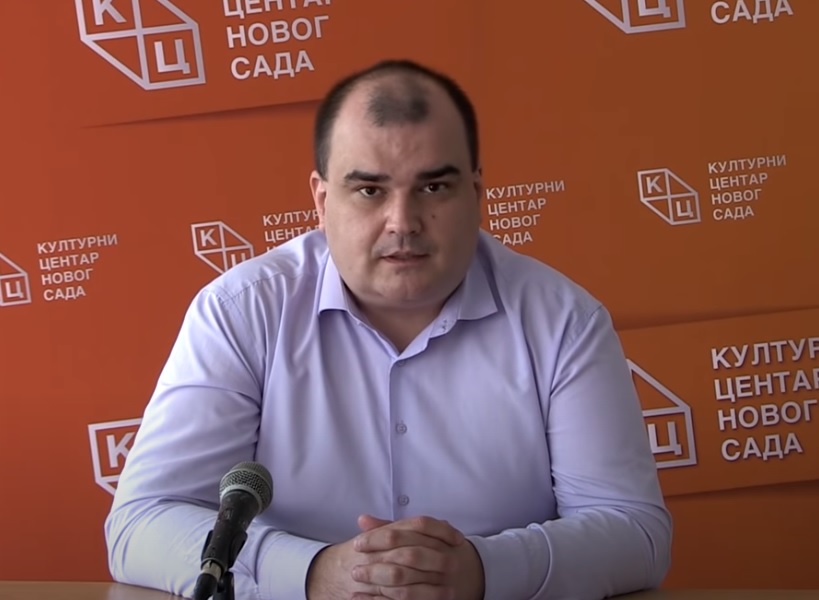
"That means nothing. When you withdraw 25 percent, there still remains a significant force that has only one task in the north of Kosovo, and that is to implement terror and fear among the Serbs so that they finally move out. That is the goal of Albin Kurti. 100 percent of the members of the Kosovo security forces must be withdrawn, they have nothing to look for in the north. In the north, ordinary, unfortunate people live, whose only fault before Kurti and those who support him is that they are Serbs," warns Karanovic.
He points out that Kurti has been on the move for a long time because, as he states, "he is personally the generator of the crisis that has been happening since he assumed the position of prime minister for the second time."
"Since he clearly does not give up on creating crises, the simplest solution or at least the beginning to calm the current tensions and escalations would be to remove Kurti. However, it is clear that in the political West, regardless of their limited sanctions imposed on Pristina for refusing to de-escalate the situation in the north, towards Pristina, there is obviously no will for that," says Karanovic.
He indicates that in recent weeks, a number of proposals for de-escalating the situation have arrived from various addresses and that it is becoming complicated to follow.
"Proposals or segments of some kind of possible agreement on de-escalation in the north were presented by the high representative of the EU, Josep Borrell, Lajcak, the US emissary, Gabriel Escobar, and Kurti himself. And, in my opinion, it would be best to return to the existing documents, which have the character of international agreements, because have been concluded with the EU or the USA in the past 10 years. We also have documents that have been legalized by Serbia as well as by the United Nations. Therefore, the simplest thing would be to first return to Resolution 1244 of the UN Security Council, and then to the Brussels Agreement which clearly states Pristina's obligation to establish a Serbian administration in the north of Kosovo that would be framed by the Community of Serbian Municipalities. This is something that at this moment is the optimal solution not only for the de-escalation of the current situation, but also for long-term stability," says our interlocutor.
He points out that, therefore, no new proposals are needed, but it is necessary for Pristina to fulfill what it has committed to in the past decade.
"It is a good path for de-escalation. If we were to implement the Brussels Agreement, we would not have any escalation of opportunities. Because there are four municipalities in the north and six with a Serb majority in other parts of Kosovo and Metohija, which would be part of the CSM. And the Serbian population of Kosovo and Metohija would get "a high level of protection of life and property. And the CSM would also be an institutional link between the Serbs in Kosovo and the state of Serbia," Karanovic points out.
When it comes to the status of Kosovo, he indicates that the issue has been resolved for Serbia, "they will not recognize illegal independence, they can forget about that in Pristina and in the West."
"The Quinte countries are putting pressure on Serbia to resolve the Kosovo issue with recognition. If they are going to start from that point, from that maximalist approach, then I am afraid that any agreement is not possible there. It would be a good way for both Lajcak and Borrell to give up from maximalist demands towards Belgrade and to have reasonable demands towards Pristina. And that is to pressure them to stop terrorizing the bare-handed people, to stop sending special forces to the north, to release the captured Serbs who have become hostages of the terrorist regime. And then no escalation it won't be and it will be possible to discuss all open issues", concludes Karanovic.
When it comes to repeating the local elections in the north, he believes that it should be done, but only when all Kosovo forces withdraw.
"Elections cannot be held under the threat of the repressive force of some kind of special forces that no one knows why they are in the north. Elections, yes, but when everyone withdraws and when the arrested Serbs are released. That is de-escalation," he points out.
Retired diplomat Vladislav Jovanovic tells for Kosovo Online that the first and real step towards de-escalation would be the complete withdrawal of the special Kosovo police from the north, and as he points out, they should not even have been allowed to be there.
"What Kurti is offering now is not enough, in my opinion it is palliative. What creates an atmosphere of insecurity and fear and produces occasional incidents is the unauthorized presence of Pristina's special forces in the north. This is not within the competence of any parallel authority except Kfor, which is responsible for security," says Jovanovic.

He reminds that Resolution 1244 gives full authority to KFOR, which according to that Resolution is solely responsible for preserving peace and security and for guaranteeing that nothing bad will happen there, but points out that KFOR is under the influence of the USA, which is its originator, and has allowed the local police to and some kind of armed forces appeared in the north.
"And not only do they start moving in the north, but they create bases there and harass the Serbs with guns at point blank range without any need, wounding someone, arresting someone, and all this creates a heated atmosphere of insecurity, mistrust and fear among the Serbs. This is part of the strategy ethnic cleansing intended to end like a 'Storm' in Croatia, but without the necessary use of military force as there, because it is enough to boil everything and create a situation where the Serbs realize that they 'do not belong' there and leave Kosovo, so the matter will be 'okay'", says Jovanovic.
He adds that the West looks at all this disinterestedly because its goal is for Kosovo to be a completely "independent jewel in their hands" and that there are no "disturbing elements that for them can only be Serbs".
Jovanovic says that if there is an emergency session of the Security Council, which, as announced, would be requested by Belgrade, KFOR must be at least partially "in the dock" because it did not fulfill its obligations under Resolution 1244.
"The resolution had to be fulfilled to the last letter, and it was fulfilled only in the part in which it corresponds to the Albanians", Jovanovic believes.
He believes that the only real way to de-escalation is to completely free the north of Kosovo from any "serious armed presence of Pristina".
"Police should eventually be there, and exclusively in agreement with the Serbs. And then elections should be called in that atmosphere. Everything else is partially and includes being sabotaged during execution. Partial withdrawals announced by Kurti can always be hot and cold, a little withdrawal, a little return. On the other hand, it is not enough to reassure the Serbs in the north that a normal atmosphere and conditions for talking about further degrees of normalization will really return. I think that in this way Kurti is avoiding what he needs to do" concludes Jovanovic.
Security expert Veroljub Petronic from North Mitrovica points out that Kurti's "withdrawal" from the north is not an introduction to de-escalation, but only an act to show that he supposedly has good will.
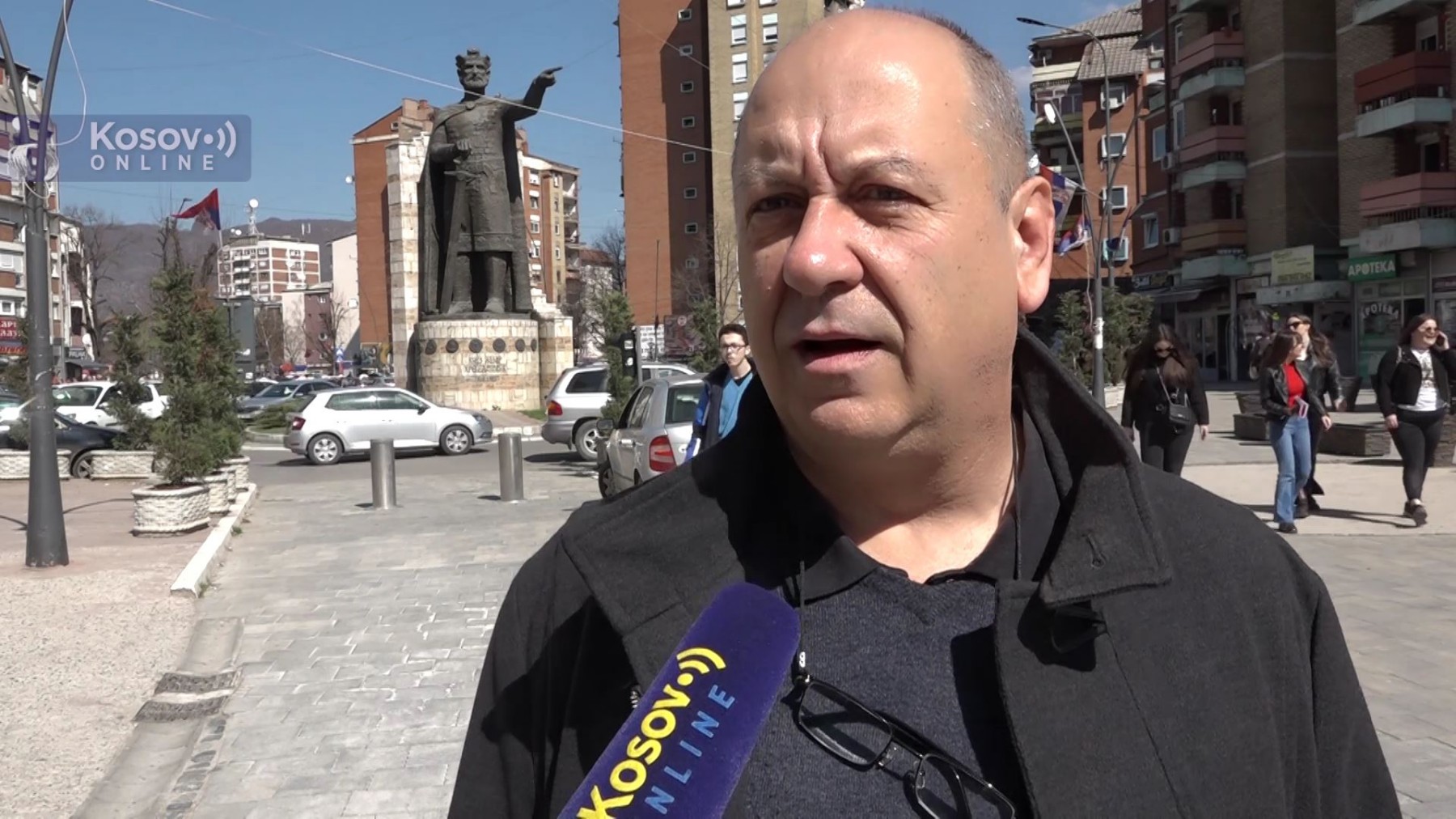
"The withdrawal of 25 percent of the police from the north does not mean anything. It is not a small part of what the Serbian community demands from the Kosovo institutions. Just as 25 percent of the police can be withdrawn quickly, 50 percent can be returned even faster. I think this is Kurti's political maneuver to show only declaratively that it has the will to de-escalate," he states.
When asked whether the Serbian community will agree to Kurti's moves and whether that is enough, Petronic says that no one has asked the Serbian community anything for a long time.
"Although the Kosovo institutions claim that the opinion of the Serbian community is important to them, I think it is only declarative. If they were really interested in what the Serbs think, they would behave differently and would respect the many demands that the Serbian community has. When it comes to new elections in the north, it was known that they had to be maintained, so Kurti only used it as a way to buy time so that in the end it turned out that he was the one who contributed to the positive resolution of the whole crisis," says Petronic.

0 comments