
Lament over Brussels: Talks without Dialogue
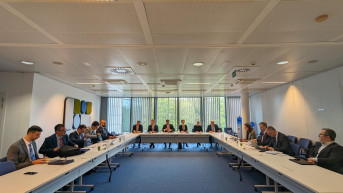
"Another long and painful day in Brussels," said the head of the Serbian delegation, Petar Petkovic, after the seventh round of talks concluded. This sentiment is likely the only point of agreement between both sides. Petkovic stated that Pristina rejected all of Belgrade's proposals, while Kosovo's chief negotiator, Besnik Bislimi, claimed the Serbian side brought new proposals without answers, leading to the talks' failure. The EU's message also reflected frustration, indicating a lack of readiness from both sides to find a compromise solution. Researcher Milos Pavkovic noted that both Belgrade and Pristina demonstrated unconstructiveness and the EU lacks mechanisms to enforce agreement.
When asked to comment on Lajcak's proposal for forming a new financial entity, Pavkovic noted that it was a compromise and a step forward. The proposal suggested creating a new bank licensed by Kosovo's Central Bank that could accept Serbian dinars and convert them to euros. Despite this, both sides failed to reach a final agreement, leaving the issue unresolved and potentially escalating tensions as payments in dinars are now banned in Kosovo. Pavkovic highlighted the necessity for Belgrade and Pristina to urgently find common ground on this matter.
As Miroslav Lajcak nears the end of his tenure as the EU's Special Envoy for Dialogue, Pavkovic describes his mandate as turbulent. Lajcak, nominated in August 2020, oversaw many unsuccessful dialogue rounds, with the notable exception of the Ohrid Agreement on normalization. However, the implementation of this agreement is also in question, casting doubt on the overall progress during his tenure. Pavkovic suggests that instead of progress, the past few years have seen regression in the dialogue process.
Slobodan Stosic, program manager at the Advocacy Center for Democratic Culture (ACDC), told Kosovo Online that the failure of the talks yesterday reflects the broader failure of the negotiation process. He expressed concern that, despite seven meetings focused on the dinar issue, no sustainable solution acceptable to both sides has been found. Stosic noted Bislimi's statement that such meetings will no longer occur, which he believes is more for domestic audiences in Kosovo. He doubts the EU will allow the issue to remain unresolved without a sustainable solution.
Stosic believes the EU will likely intensify meeting formats and offer more solutions but cannot take significant action on the ground.
Sociologist Vladimir Vuletic noted that the latest round of talks in Brussels is fundamentally similar to previous ones, highlighting Pristina's clear intent to do nothing regarding the dinar issue. He explained that the decision to ban the dinar in Kosovo has never been seriously questioned, and any proposal not involving its complete abandonment is unacceptable to Pristina, leaving little room for compromise.
He added that no matter how long these rounds of dialogue last, there will be no progress until Pristina considers the interests of Serbs who do not want to abandon the dinar.
"It seems that all these rounds are more a form of ritual until a political decision is made, which will be hard to realize. The frustration in Pristina has increased, especially after the delay or removal of the topic from the agenda, leading to actions such as denying the Patriarch's visit to Pec and other measures, which are also marked by a certain nervousness," he added.
Vuletic emphasized that the proposal by special envoy Miroslav Lajcak is a compromise. He noted that Belgrade is consistent in supporting what Serbs in Kosovo want, while Pristina is determined to ensure the full functionality of its system as a symbol of Kosovo's independence. Lajcak's proposal aims to satisfy his diplomatic ambitions rather than fundamentally resolve the dispute. Both sides are wary, fearing the other might exploit the compromise, and while not outright rejecting it, they are not fully accepting it either.
Vuletic added that Lajcak was supposed to use his diplomatic skills to facilitate political solutions. However, the main problem has been the strategy of "Recognize Kosovo as an independent state, and we'll discuss technical details," which has hindered progress over the last four years. The refusal to establish the Community of Serb Municipalities (CSM) has further complicated matters. Without a political framework like the CSM, Lajcak's mandate was limited to implementing agreements that were never fully reached.
Political analyst Artan Muhaxhiri remarked that neither Kosovo nor Serbia is motivated to find a solution. He noted that both sides have politicized the issue of the dinar, diverting energy from more important matters in the dialogue. He does not expect a resolution soon due to the lack of readiness and motivation from both parties.


0 comments