
Law on Specialist Chambers on hold: Is Pristina buying time following EU warnings?
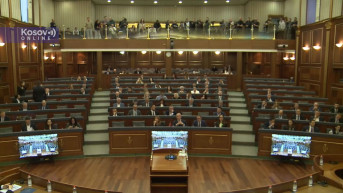
The Law on the Kosovo Specialist Chambers is still awaiting a quorum in the Kosovo Assembly for its readoption, and Kosovo Online’s interlocutors view the delay as an attempt to buy time in the face of strong warnings from Brussels. While diplomat Albert Prenkaj argues that a solution can only be found through dialogue between Pristina and the EU, security studies researcher Nikola Vujinovic warns that any further insistence on unilateral amendments could bring new sanctions against Kosovo and pave the way for a new parliamentary crisis and early elections in the spring.
Written by: Milena Miladinovic
Following the first-instance judgment sentencing former KLA leaders to lengthy prison terms for war crimes, amendments to the Law on the Specialist Chambers were adopted under an expedited procedure by the Kosovo Assembly on October 6 at the initiative of the Democratic Party of Kosovo (PDK), as part of an agreement between the PDK and Self-Determination concerning the election of the President of Kosovo.
Namely, the PDK made its votes in the Assembly for the election of Justina Shiroka-Pula as President of Kosovo conditional on the adoption of the Law Amending and Supplementing the Law on the Specialist Chambers and Specialist Prosecutor’s Office.
Following the constitution of the Kosovo Assembly and Government, the law was, in accordance with procedure, sent to President Shiroka-Pula for consideration.
However, to the surprise of many, the PDK subsequently asked the President to return the law to the Assembly for reconsideration. In a statement at the time, the PDK said that it believed reconsideration of the law would make it possible to clarify certain provisions and strengthen its legal certainty, which, in the party’s assessment, would be in the national interest and ensure full protection of the constitutional rights of former KLA leaders.
The move prompted strong reactions from the public in Kosovo, as well as from the European Union, which told Kosovo Online the day after the amendments were adopted that it was deeply concerned about the changes to the Law on the Kosovo Specialist Chambers, which Brussels officials said were inconsistent with Kosovo’s international obligations toward the EU.
On November 12, the European Union Office in Kosovo stressed the need for consultations before any adoption of the amendments by the Assembly, in accordance with Kosovo’s international obligations.
Consideration of the Law Amending and Supplementing the Law on the Specialist Chambers and Specialist Prosecutor’s Office was on the agenda of today’s Kosovo Assembly session, but the session was postponed indefinitely.
Kosovo Online’s interlocutors believe that the EU’s reactions were precisely the reason why the PDK asked for the law to be returned and why there has so far been no quorum in the Kosovo Assembly for its readoption.
They also view the return of the law to the Assembly for reconsideration as an attempt to buy time for consultations with official Brussels. At the same time, they believe that the EU will not allow the amendments to proceed and that the law will ultimately remain as it was before October 6.
Agreement through dialogue
Diplomat Albert Prenkaj believes that dialogue should lead to an agreement on coordinating joint activities between Pristina and Brussels so that amendments to the Law on the Specialist Chambers are consistent with the principle of establishing close ties of solidarity and forms of cooperation between the parties.
Prenkaj views the European Union’s official statements, particularly the statement by Enlargement Commissioner Marta Kos describing the amendments to the Law on the Specialist Chambers as unacceptable, as a form of diplomatic rebuke which, he says, official Brussels is directing at an aspirant that has not yet even opened a dialogue on the European integration process.
“In the recent past, we have witnessed how a lack of coordination with Brussels resulted in Kosovo being penalized through sanctions and financial restrictions,” Prenkaj told Kosovo Online.
He added that, in Brussels diplomatic circles, it is acknowledged that the Specialist Court, in the absence of facts and evidence, failed to pursue the key issue for which it was established.
“This concerns ‘organ trafficking,’ an issue raised by Senator Dick Marty, which ultimately proved to be unfounded,” the diplomat said.
According to Prenkaj, given that the EU is the principal financier of this judicial structure, established on the basis of an exchange of letters and a law which, following its adoption by the Kosovo Assembly, assumed the form of an international agreement, the EU’s strong reaction to the amendments to the Law on the Specialist Chambers is the result of the Kosovo side’s insistence that the matter be treated in public discourse as an international agreement.
“By contrast, the EU views this structure in the context of relocated judicial proceedings conducted on the territory of a member state, namely the Netherlands, which has recognized Kosovo,” Prenkaj said.
Prenkaj noted that dialogue is one of the EU’s essential instruments for building consensus among member states, social partners and international actors. Therefore, instead of what he described as disproportionately harsh diplomatic language coming from the highest levels of official Brussels, he believes the discourse should return to dialogue with Kosovo.
“Dialogue, or negotiations, should lead to an agreement on coordinating the joint activities of official Pristina and Brussels so that amendments to the Law on the Specialist Chambers are consistent with the principle of ‘establishing close ties of solidarity and forms of cooperation between the parties,’” Prenkaj said.
According to him, the EU should not draw conclusions or adopt positions on the basis of the reverberations of public, populist statements coming from Kosovo, but rather on the basis of the substance and legal effects of the law in question.
“In my assessment, this law does not affect the first-instance judgment, nor does it prejudge the outcome of the proceedings before the Court of Appeals. Its purpose is to preserve the judicial structure within Kosovo’s own institutions, that is, its state institutions. Let us recall the letter that EU High Representative Catherine Ashton sent to Kosovo President Atifete Jahjaga in 2014 in response to a letter previously sent to her by the President, which stated, among other things: This approach shaped a political and social consensus in Kosovo, of which the law in question was also a result,” Prenkaj said.
In his view, the amendments to the law do not undermine EU standards concerning alignment with the European Union acquis, one of the key elements of the European integration process.
He is convinced that Kosovo President Shiroka-Pula’s decision to return the law, at the PDK’s insistence, amounts to buying the time needed for consultations and negotiations between official Brussels and Pristina.
“Pacta sunt servanda in international law means that agreements must be respected and implemented in good faith. At the same time, however, international agreements may be amended in the forms and in accordance with the procedures provided for under the Vienna Convention on the Law of Treaties,” Prenkaj said.
He added that the key provision states: “A treaty may be amended by agreement between the parties.”
“This means that amendments to the Law on the Specialist Chambers are subject to agreement or coordination between Pristina and Brussels. At present, the law, which was passed by a majority of votes in conjunction with the election of the new President, Justina Shiroka-Pula, remains stalled in the Assembly in the hope that it will be reconsidered,” Prenkaj said.
No amendments without EU approval
Security studies researcher Nikola Vujinovic believes that the European Union will not allow amendments to the Law on the Specialist Chambers and that politicians in Kosovo are aware of this, which is why there was no quorum to vote on the law after it was returned to the Assembly for reconsideration.
Vujinovic told Kosovo Online that the EU’s main criticism regarding the issue was the lack of consultations.
“That is why there is now a problem with the quorum. It seems to me that everyone is now delaying the matter to see what the situation in the European Union will be and whether they will receive some indication that everything is fine and that they can continue down this path. However, it seems to me that the European Union has this time, much to my surprise, decided not to allow this to happen,” Vujinovic said.
Vujinovic expects the amendments to the law not to survive. If Pristina persists with the amendments, he believes that some form of EU sanctions could follow.
“I do not think Kosovo Albanians will be able to amend the law on their own initiative without consulting the European Union, or Kosovo will suffer further consequences, whether through the Growth Plan or some form of individual sanctions. I believe they made a serious mistake in this case,” Vujinovic said.
He stressed that politicians in Kosovo had also recognized the risk of sanctions.
“The statements by all leaders of the parliamentary parties show that they have realized they made a mistake. And they made that mistake because they did this in the same way they have done many times before, when they were allowed to do so. This time, apparently, they are not,” Vujinovic said.
Nevertheless, he believes that the EU will not take action because, he added, the amendments will not be passed by the Kosovo Assembly.
“It is no coincidence that the PDK asked the President to return the law, nor is it a coincidence that there is no quorum to vote on these amendments. I think we can expect the law to revert to its original text without any changes,” Vujinovic said.
According to him, the “culprit” in this case has already been identified. He said that Bedri Hamza had not resigned as PDK leader by coincidence, while Kosovo Prime Minister Albin Kurti was attempting to shift the blame onto Justice Minister Donika Gervalla.
“I think we will very soon have a scapegoat, and I fear that this scapegoat will herald a new parliamentary crisis. With the 61 MPs that Self-Determination now has, this suggests that we will most likely head to new elections in the spring. In that campaign, this situation will be one of the key issues under discussion, because the amendments to the law came about following major protests, and the political parties became concerned that they could escalate into something resembling what is happening in Albania,” Vujinovic concluded.


comments