
LDK and PDK against Kurti and Haradinaj: Tactics or real disagreement on the European proposal?
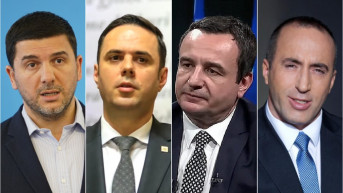
From the moment the European proposal was officially announced, the two largest opposition parties in Kosovo, the Democratic Party of Kosovo and the Democratic League of Kosovo, declared against it. Only the Alliance for the Future of Kosovo supported the proposal. Political affairs expert Shkelzen Maliqi assessed for Kosovo Online that LDK and PDK had switched roles with Self-Determination Movement, while analyst Ljubomir Stanojkovic states that opposition parties are using crucial topics to improve their political rating.
At the end of last week, the leaders of the opposition met with the EU Special Envoy for dialogue between Kosovo and Serbia, Miroslav Lajcak, and judging by their statements after the meeting, they did not change their position on the European proposal.
After the meeting with Lajcak, the President of the Democratic League of Kosovo, Lumir Abdixhiku, said that the LDK supported the dialogue process, with the mediation of the EU and with the direct participation of the US, as well as the implementation of all the agreements reached in this process, however, he emphasized that Kosovo needed an agreement focused on mutual recognition.
"No other agreement guarantees the normalization of relations between Kosovo and Serbia. Renunciation of recognition is the direct responsibility of Prime Minister Albin Kurti and other constitutional institutions of Kosovo," Abdixhiku said and added that he had asked Lajcak for clarification regarding the text of the proposed agreement, specifically regarding the preamble, Article 7, Article 10 and the implementation plan of the current agreement.
And while the main objection of the LDK to the European proposal is mutual recognition, for the Democratic Party of Kosovo an additional problem is that, as they state, the Community of Serb-majority Municipalities is the main topic of the proposal.
The PDK President, Memli Krasniqi, after the meeting with Lajcak, stated that Kosovo Prime Minister Albin Kurti was "the main culprit" and that there was no mutual recognition in the proposal.
"Unfortunately, what we have on the table today is an agreement without recognition and with the CSM as the main topic. It is directly Kurti's responsibility that he did not convince our partners to achieve mutual recognition for two years. Today we do not have a comprehensive agreement. Our positions do not surprise our international partners. The position of the PDK since 2018 is that mutual recognition is necessary. The European proposal creates a new status quo," Krasniqi said.
The only opposition member who supports the European proposal is AAK leader, Ramush Haradinaj, who pointed out that the plan was "a great achievement of Kosovo's allies", but he also criticized Kurti and the way he conducted the dialogue process.
Stanojkovic: An opportunity to improve the party's rating
According to the interlocutors of Kosovo Online, the opposition has the right to disagree with the government's decisions and thus use the opportunity to improve its rating.
Analyst Ljubomir Stanojkovc, who lives in Silovo, believes that it is legitimate for the opposition to take an opposite position on issues of crucial importance to the policy pursued by the ruling party.
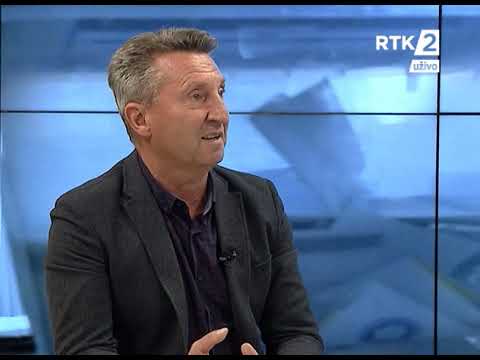
"First of all, the opposition everywhere in the world, including in Kosovo, tries to challenge, diminish, or criticize every move of the government, believing that it can always do better, differently, this is especially evident when it comes to some important, crucial topics, such as this finalization of relations between Pristina and Belgrade. And the Franco-German plan is, one can say, the most important part of that finalization. It is quite normal and legitimate that the opposition has a different position. In Kosovo, in addition to the ruling Self-Determination Movement, we also have three parties that are in the opposition and have a strong influence on public opinion. Ramush Haradinaj's Alliance for the Future of Kosovo fully accepts the proposed plan and even suggests that it be accepted without hesitation. On the other hand, Abdixhiku's Democratic Alliance has some disagreements, which mainly relate to the non-transparency of conducting dialogue, and some complaints about certain items of the plan, while the Democratic Party of Krasniqi is strongly in favor of rejecting this plan because it does not envisage the de jure recognition of Kosovo's independence by Belgrade," Stanojkovic said.
He added that he did not see it as a tactic of the opposition, but as an opportunity to improve the party's rating through his position, because, he states, it is not excluded that the European plan could lead to new elections.
"What can be influential in some way is, first of all, different forms of lobbying with world power centers, and the protests in Kosovo, and throughout the West, are a type of tactic to gain a better position in conducting dialogue. Of course, every government aspires to win over the opposition for its moves, and in such a difficult situation, this is especially pronounced, but above all, more attention is paid to the party's interests, trying to explain them at the same time as national interests," Stanojkovic said.
Maliqi: Switching the roles of Self-determination Movement with LDK and PDK
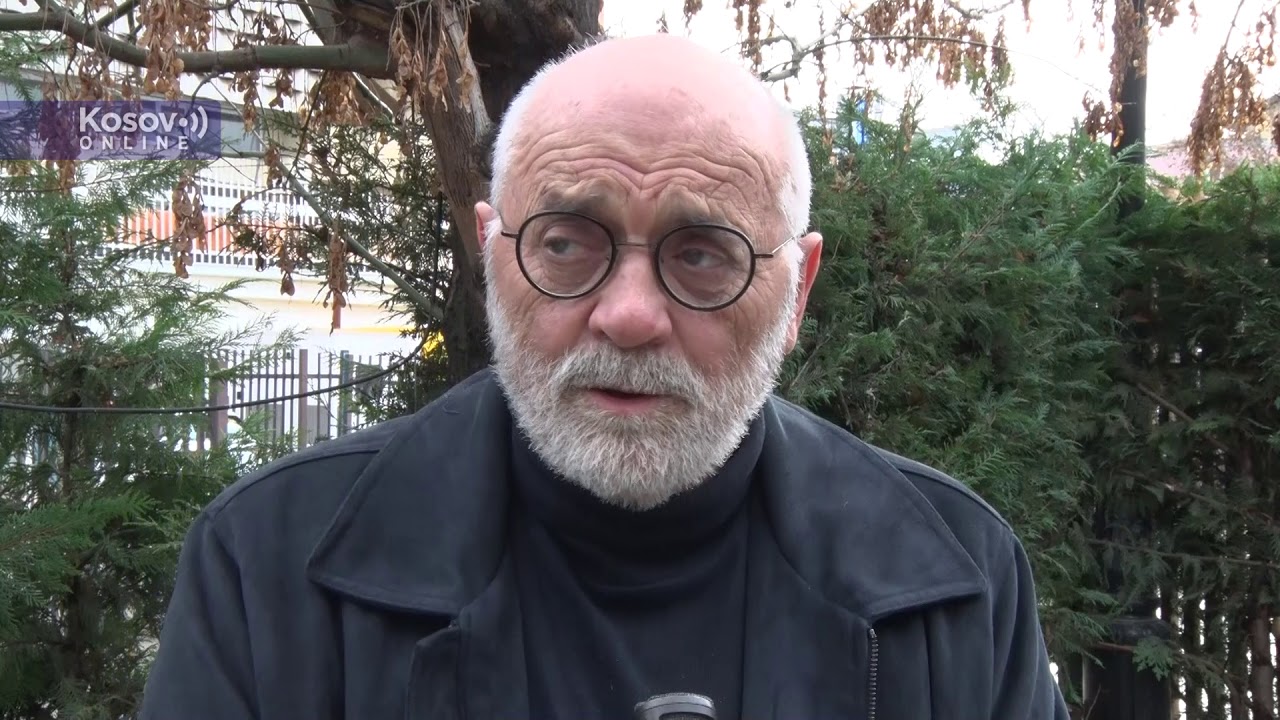
Political affairs expert Shkelzen Maliqi sees the opposition's refusal to accept the European proposal as a tactic.
As he said, the European plan contained previous agreements that the opposition, while in power, had accepted and ratified in the Assembly of Kosovo.
"I think it is more about a tactical declaration, the opposition cannot disagree, because the essence of the European proposal is the realization of those agreements that those two parties signed as an obligation of Kosovo when they were in power, and which passed through the Kosovo parliament. It was expected that there would be mutual recognition as the essence of the process, we had such objections with the Self-Determination Movement, but this is not possible at the moment. This is a tactic of the opposition more for internal use, than as a position that can block the proposal because Kurti in the parliament has a majority and can probably secure support," Maliqi says.
Maliqi believes that the opposition is playing the game that Kurti played when he was in the opposition when he was against everything that the parties in power were doing.
He notes that such an attitude of the opposition is also a signal to foreign factors that Kosovo's ambitions are greater, and that, according to him, is to reach a final agreement that implies mutual recognition.
As he emphasized, in this situation the LDK and the PDK had switched roles with Self-Determination Movement.
"I expected them to say that they are constructive and support the proposal because it is in the interest of Kosovo, but we do not agree with the fact that it is a temporary project," Maliqi added, stressing that he believed that the opposition would eventually support the proposal.
According to him, the opposition is using this tactic in order to collect political points on the internal level, so that it can defeat Kurti and Self-Determination Movement in the next elections.
"I assume that Lajcak also reminded them that the proposal was based on previously signed agreements. The dialogue process has been going on for a long time, and it has also produced good results, and those two parties have also contributed to that. I don't believe that now they want to erase history, but they want to point out that, if it comes to the signing in Ohrid, that is not what Kosovo is striving for as a country," Maliqi pointed out.

0 comments