
Macron, Scholz, and Borrell's proposal for a solution to the crisis in the north: New pressure on Pristina or a "trap" for Belgrade?
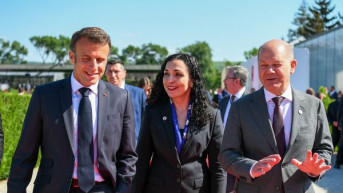
After a week of tension in the north of Kosovo, the head of EU diplomacy, Josep Borrell, presented a three-point European plan for Kosovo - to hold new elections, to have the Serbs participate in them, and to start work on establishing the Community of Serb-majority Municipalities.
The interlocutors of Kosovo Online welcome the initiative to calm tensions, which is behind French President Emmanuel Macron and German Chancellor Olaf Scholz, but they also point out that the proposal does not solve the essential problem that caused the crisis, which is that Kosovo Prime Minister Albin Kurti persistently refuses to form the CSM.
They add that after seven months, the whole thing actually returned to the starting point, which is why the representatives of the Serbs left the institutions last November, demanding that after 10 years from the signing of the Brussels Agreement, Pristina fulfills the obligation to form the CSM and to stop the violence against the Serbs.
Borrell, after the separate meetings he had together with Macron and Scholz yesterday in Moldova, on the sidelines of the European Political Community Summit, with Serbian President Aleksandar Vucic and Kosovo President Vjosa Osmani, stated that if these demands were not met, "serious consequences" would follow.
Historian and analyst of the Center for Social Stability Srdjan Graovac tells Kosovo Online that the new European proposal calls for an exit strategy for Kurti, who is not giving up on the imposition of illegal Albanian mayors, elected in four municipalities in the north where the turnout was 3.4 percent and which the Serbs boycotted.
"In a way, the proposal moves the ball to the court of Belgrade, which now needs to accept what caused the Serbs to leave the institutions last November, demanding an end to the unilateral actions of Pristina, to finally form the CSM and stop the violence against them. Since November, we are persistently returning to the starting point. It all started with the CSM and the failure to fulfill it, and now we are returning to it again. Everything that happened after that, happened because the CSM was not implemented," Graovac points out.
He says that the demands presented by Borrell do not necessarily have to go in the order in which he announced - elections, the participation of Serbs in them, and the formation of the CSM.
"The Serbs left the institutions and refused to participate in the elections precisely because of the non-formation of the CSM and the violence they suffered. So it's just a matter of prioritizing. On the one hand, the European proposal for a solution to the crisis is a definite step forward, because Macron, Scholz, and Borrell certainly made it clear that it was completely clear that this situation was unsustainable and that some solution had to be found. But that order of priorities should be changed," Graovac says.
He adds that in this way they are trying to ease the pressure under which Kurti found himself and to give him space to get out of this crisis so that it does not escalate and permanently damage Kosovo's relations with its allies.
"After everything that happened, it was clear that they see him as the main culprit for the escalation of the situation, and this is a kind of creation of a corridor to return to the negotiation process, in such a way that new elections would be organized in the north, in which the Serbs would participate, and then somehow they would work on the CSM. I wouldn't be surprised if they insisted that the Serbs participate in the elections, precisely because Kurti would somehow be given a wind at his back to accept the CSM.
Although, in my opinion, that again speaks in favor of the fact that they are not realistically looking at the essential situation, because Albin Kurti fundamentally does not want to form the CSM. That is the key to the problem. After all, the Serbs can go to those elections, despite everything, and make that concession, and immediately after those elections submit their resignations collectively. It all boils down to the fact that the CSM is the key and that Albin Kurti does not want to fulfill that," Graovac points out.
Senior researcher of the NGO Aktiv Igor Markovic believes that the proposal of Macron, Scholz, and Borrell for the solution of the crisis in the north is to some extent a pressure on Belgrade and the Kosovo Serbs to make some decisions, but it is also a pressure on Pristina.
"Every mention of the CSM is pressure on Pristina and the Kosovo authorities, and they perceive it as pressure. Organizing elections will also put pressure on Kurti and the Self-Determination Movement because the opposition will have enough arguments to criticize him for abandoning his policy again; that he caused a crisis unnecessarily. And that, at the end of the day, if the European proposal is implemented, it will turn out that this entire action in the north was absolutely unnecessary and that it brought nothing except injured citizens and KFOR soldiers," Markovic says.
When it comes to putting pressure on Belgrade and the Kosovo Serbs, Markovic says that he will probably go in the direction of insisting that the Serb List participate in the elections.
"The return of the Serbs to the institutions will be very complicated because, for example, participation in police work has already been announced that new recruits will have to go through certain procedures, so I expect that there could be many problems. Unfortunately, not only have we returned to our positions from last November, but we went back to April 2013, because there is talk again about the integration of the Serbs into institutions in the north, the formation of the CSM, and the organization of elections.
These were all topics ten years ago, we are starting from scratch again," Markovic says.
He believes that after all the pressure he is exposed to and the US sanctions, Kurti will not be able to refuse to start the formation of the CSM, the only question, he adds, is how much room for maneuver Pristina will have to reduce the powers and responsibilities of the Community provided for in the Brussels Agreement from 2013.
"They constantly refer to the decision of the Constitutional Court on the CSM, but that decision did not declare the entire concept of the Community unconstitutional, but only some points. And I believe that there will be room for maneuver to finally start forming the CSM," Markovic says.
He points out that it is currently difficult to predict Kurti's next moves and how he will respond to the European proposal for exiting the crisis.
"He persistently repeats that the new mayors have a place of work in municipal buildings, and to the criticism of Hovenier from both the US and the EU, he replies that he was elected by the people, not the ambassadors. There, he once again slapped the international community and there is little chance that it will remain without their reactions. I am afraid that this time they will go all the way, that they will make statements about how the international community supports them, how the policy of the Kosovo government is aligned with the US and the EU, and on the ground, they will do the opposite," Markovic points out.
On the other hand, the Serbs point out that there is no return to Kosovo institutions until their demands are met, first of all, the formation of the CSM and the cessation of violence, and to that, the conditions for illegal Albanian mayors and Kosovo Special Forces to leave the municipalities in the north are added.
0 comments