
The measures of Belgrade against unilateral decisions of Pristina: a legal or political struggle?
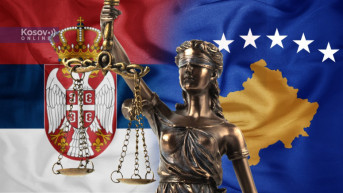
President of Serbia Aleksandar Vucic announced on September 13 a set of measures to be taken after a series of actions by Pristina in northern Kosovo. One of these measures involves rejecting and nullifying all decisions that are not in line with the signed documents in Brussels. According to Kosovo Online interlocutors, this is a clear political message that will be very difficult to implement without significant engagement from the EU.
Written by: Arsenije Vuckovic
"We demand a return to the 'status quo ante' by removing the key consequences of unilateral and uncoordinated actions by Kurti's regime, which is a necessary prerequisite for meaningful progress in the dialogue process. We are asking to go back to everything that has been achieved and reached in the dialogue process. This shows that we are more responsible than both the Pristina side and those who are guarantors of this relationship," Vucic stated.
He also announced that a global diplomatic campaign would be launched, where it would be communicated that seven essential conditions for progress in the dialogue must be met in the shortest period possible.
Kosovo’s Minister of Foreign Affairs, Donika Gërvalla, immediately responded, calling it a "desperate attempt to sabotage Kosovo's independence."
Serbian Foreign Minister Marko Djuric countered, saying that the proposed measures were not a threat to anyone but rather a "lifeline for people whose rights have been trampled by Albin Kurti's regime."
Undermining the Dialogue
Political scientist Ognjen Gogic told Kosovo Online that Belgrade's measures, particularly the refusal to recognize decisions contrary to agreements, are a response to Pristina’s undermining of the Brussels Agreement.
"This measure likely refers to some unilateral acts that Pristina has undertaken to undermine the Brussels Agreement. The message here is that these unilateral acts and measures are not acceptable. One example could be the decision by the Central Bank of Kosovo to abolish the use of the Serbian dinar. That was made outside the Brussels framework, and the message is that such actions are not valid for Serbia," said Gogic.
However, he warns that Belgrade's measures are, in a sense, redundant because Serbia never ratified the Brussels Agreement, viewing it as a political arrangement.
"These measures, in practical terms, don't mean much for Kosovo itself, since Serbia doesn’t recognize it, but Kosovo's institutions will continue to implement them as long as they can. So, from a legal standpoint, the procedure is somewhat complicated. But I primarily see this as a message that all the measures and decisions affecting the Serbian community in Kosovo must be made exclusively in line with the Brussels agreements for them to carry weight and significance. Anything decided outside of that framework is not valid for Serbia, although Serbia cannot directly prevent these measures and legal acts from being enforced in practice in Kosovo," Gogic stated.
The Cadastre Agreement
Assistant Professor at the Faculty of Law at the University of North Mitrovica, Dusko Celic, takes a much more concrete stance.
He claims that one of the drastic examples of the non-implementation of what was agreed upon in Brussels is the Cadastre Agreement, which could have disastrous consequences for the property rights of Serbs in Kosovo.
"Pristina signed it but then unilaterally implemented it by forming some kind of verification commission composed only of representatives from Pristina, even though the body was supposed to be tripartite: formed by representatives from Pristina, Belgrade, and the European Union. Pristina is unilaterally making decisions in that commission, and these could have catastrophic effects on property rights, especially those of Serbs, regarding real estate," Celic warned in an interview with Kosovo Online.
He explains that the failure to implement this agreement could cause significant damage, especially concerning the property of displaced and refugee Serbs from Kosovo.
“The Verification Commission can, in a manner of speaking, re-register, let's put it simply, the property of Kosovo Serbs to any Albanian. I'm afraid this could happen in the future. We've warned about this before, particularly regarding the property of displaced and refugee individuals, as they do not have access to data in the so-called Kosovo cadastre or to changes within that cadastre. And the Verification Commission can make changes without the knowledge of the owners, obviously to their detriment,” Celic states.
Commenting on Belgrade's announcement that it will challenge all decisions from Pristina that are not in line with the agreements, Celic believes this is primarily a political message.
“I see this measure primarily as a political message from Belgrade, signaling that no deviation from the agreements reached is acceptable. Pristina, through its unilateral acts on the ground, has effectively nullified numerous agreements within the Brussels process. The fact that Belgrade considers such acts as non-existent, without legal or factual consequences, and that it will not regard them as valid, represents a kind of political message,” says Celic.
Asked how Belgrade could concretely challenge such decisions, Celic says it is difficult to say at this moment.
“The question is what practical measures or steps Belgrade could take to rectify the situation on the ground. That's the question. However, I believe this is more of a declaratory measure,” Celic concludes.
A Political Declaration
Nevertheless, for former Judge of the Higher Court in North Mitrovica, Nikola Kabasic, this is a form of political declaration.
Kabasic told Kosovo Online that much remains unclear, starting with whether the decision would be enforced by the Assembly, the government, or individual ministries, as Pristina's decisions cannot have legal effects in Serbia.
“This is more of a political declaration and represents a political stance taken by the Serbian government, rather than something that will have concrete consequences, concrete results, or tangible changes on the ground,” Kabasic emphasizes.
He adds that it’s unclear how this could be practically implemented and which specific decisions it pertains to.
Dialogue and Bravery
Constitutional Law Professor at the University of Pristina, Mazlum Baraliu, believes the core problem is the lack of genuine dialogue.
In an interview with Kosovo Online, he stresses that Brussels is the address for all disputes and dilemmas between Belgrade and Pristina, and he emphasizes that “bravery is when you sit down and talk with your opponent.”
“I think both Vucic and Belgrade, as well as Pristina and Kurti, and others involved in these meetings, should resolve their disputes in Brussels. They need to clarify what has been achieved and what hasn’t. According to Pristina’s representatives, everything agreed upon and not yet implemented should be fulfilled. Meanwhile, Belgrade claims the opposite. So, they need to reconcile their positions. That’s what dialogue is for, and it’s the purpose of talks between people, between states, and between politicians. In Brussels, neither side should dilute the process in an inappropriate direction or disorient the public, as it affects people’s mental health, let alone political stability, orientation, and the decision to live in a particular environment,” Baraliu said.
He also highlights that representatives of both Belgrade and Pristina must realize that talking with an adversary is true bravery.
“It takes bravery to engage in dialogue with an opponent and to sit at the negotiating table, rather than disorienting the public for internal political needs. I'm not just speaking about one side, but both sides and their politicians, to avoid misleading the public and the people,” Baraliu says.
He believes Belgrade’s intention to suspend all decisions made by Pristina outside the agreements signed in Brussels is not a viable solution, as it is not appropriate “to interfere with the decisions of even a close relative.”
“You cannot dictate decisions for someone else’s household, even for a brother. You can’t say, 'I’ll resolve this for you; you can’t do it that way.' That’s not how it works if we want to act in a human way, as religion teaches us, let alone according to democratic principles. Therefore, the measures have no effect if there’s no agreement and no consent from both sides. That’s what dialogue is for. But where is that dialogue? It’s actually stalled,” Baraliu concludes.



0 comments