
New approach to the dialogue between Belgrade and Pristina - which model would yield results?
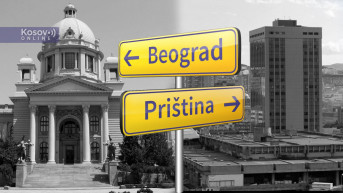
The Belgrade-Pristina dialogue will have a new "conductor" from Brussels starting in September, and with this change, the ruling Self-Determination in Kosovo also hopes for a reform of the negotiation process itself. Although the former President of Slovenia, Borut Pahor, who is expected to formalize his candidacy for the special representative for the dialogue next week, has said that he has a series of ideas on how to revive this mechanism, it currently seems that it is only possible with the help of a magic wand.
Self-Determination MP Arber Rexhaj believes that the dialogue must be revised "because of Serbia's behavior," which, he says, sets barriers for Kosovo's membership in international organizations and "attempted the annexation of the north."
"In such situations, the dialogue cannot continue. So, this process needs to be revised. The approach from the beginning was not good," Rexhaj said recently.
It goes without saying that there is a lengthy list of actions by Pristina with which Belgrade is dissatisfied, and in this atmosphere of mutual distrust, an exit is hard to see.
Political scientist Ognjen Gogic says that after the elections for the European Parliament and the establishment of the new European Commission, it might be expected that it will offer a new platform for dialogue, because, as he emphasizes, the main negotiator, even if it is Borut Pahor, does not mean much.
"The main negotiator needs to have diplomatic skills, but it is the member states and the European Commission that define the format and can influence the parties. Pahor, like any mediator, cannot do that. Another factor is the American elections after which we will see if the new American administration will have a new approach to the dialogue, if they deal with it at all. It seems to me that both Belgrade and Pristina are looking towards November and are watching how those elections will unfold and then position themselves accordingly, whether the Democrats remain or the Republicans come. Before that ends, one should not expect anyone to have greater initiative related to the dialogue," Gogic tells Kosovo online.
Regarding the messages from Self-Determination about the necessity to change the approach in the dialogue, Gogic says they are actually in line with their policy that formal recognition of Kosovo by Serbia should be the starting point of the dialogue.
"When Self-Determination took over the government in 2021, they already promoted the principle of reciprocity as a new basis for the dialogue and they have succeeded in changing the format of the dialogue, or rather, they have completely destroyed the dialogue that was conducted under the auspices of the EU. They wanted the dialogue to lead to de facto or de jure recognition of Kosovo by Serbia, preferably de jure, and to make that the starting point, meaning that Serbia first recognizes Kosovo as an independent state and then the open issues are resolved in a bilateral dialogue between two states that recognize each other's sovereignty and territorial integrity. This has always been the policy of Self-Determination," says Gogic.
As an example where this approach was evident, he points to the crisis over the dinar, during which Kosovo's Prime Minister Albin Kurti said it could be resolved by the National Bank of Serbia recognizing the Central Bank of Kosovo and then the banks of "two sovereign states" could regulate the issue. Another example Gogic highlights is the situation around the organization of Serbian elections in Kosovo in Serbian communities, where Kurti said it could be resolved with an inter-state agreement.
"They will not return to this dialogue which makes no sense because Kosovo is making unilateral decisions. The dialogue is dead as a format, or rather, a form without substance. There have been attempts in previous months to reanimate it with meetings convened by Lajcak but this is just persistence on form, as no problem has been resolved in the dialogue," says Gogic. Aleksandar Sljuka from the NGO "New Social Initiative" believes that a change in approach in the dialogue between Belgrade and Pristina can only be brought about by substantial changes in the global arena, specifically in the U.S. administration after the November elections, as well as changes domestically within Kosovo.
"During the previous administration led by Donald Trump, we saw that in 2018 the story of demarcation and territory exchange was emphasized, which ultimately was not realized, but attempts were made to resolve the situation with northern Kosovo, which was seen as the biggest obstacle to finalizing relations between Kosovo and Serbia. If the administration changes again, perhaps we can expect alternative solutions and more creative approaches, and these issues may again be on the table," states Sljuka.
He highlights that the leaders in power in Kosovo have also changed since 2018. Back then, it was Hashim Thaci who was ready for such concessions, whereas now it is Albin Kurti, who does not want any changes in this regard.
"We see that there will probably be elections in Kosovo this year and if Kurti remains and has a majority, it will be very difficult to change the course of the dialogue. For him, even sending the draft statute of the Association of Serb-majority Municipalities (CSM) for a constitutional review, even if the price is entering the Council of Europe, would be a major concession, so I do not believe that his staying in power would change his opinion and that there could potentially be discussions about alternative models and more creative solutions," says Sljuka.
Regarding the new strategy for dialogue announced by Borut Pahor, should he be elected as the new mediator, Sljuka says that a special representative does not have the capability to change the dynamics of the dialogue by themselves, regardless of who it might be, whether Lajcak or Pahor. Instead, it depends on developments in the international arena and the stance of interested parties such as the EU and the USA.
MiloS Pavkovic from the Center for European Policies also notes that Pristina currently has almost no interest in engaging in dialogue with Belgrade or in implementing any agreements, which is why changes in the dialogue are necessary.
"The dialogue has not been high on the agenda of Albin Kurti's two governments. If status issues were introduced into the dialogue, it might raise its importance in Pristina and their engagement. Belgrade has been very constructive in recent years, but there has been a lack of engagement from Pristina and it seems that this will be the first goal of the new European Union representative for the dialogue: how to engage Pristina in implementing the agreements," Pavkovic tells Kosovo online.
As for the innovations that could be introduced into the dialogue in the coming period, Pavkovic mentions one option that was proposed last year by the Prime Minister of Albania, Edi Rama, namely organizing an international conference that would resolve all open issues, something that has been lacking in the dialogue so far. However, he believes this possibility is unlikely.
"The dialogue has so far used a 'salami-slicing technique,' where discussions on technical and political issues have been handled piecemeal rather than addressing the overall status of Kosovo and all open issues comprehensively. Yet, an international conference is unlikely because they are generally organized at moments when there are major security threats or conflicts in order to establish peace. Another option is to change the way the dialogue functions and the topics that enter into it. Perhaps some status issues and more technical and political questions could be opened. These could be some of the ideas of Borut Pahor who is preparing to submit his candidacy for the position of mediator in the dialogue," says Pavkovic.
About Pahor, as a potential new mediator, political scientist from Pristina, Albinot Maloku, tells Kosovo Online that he has had a "distinguished career" and has made decisions of great importance for the relations between Slovenia and Croatia, but that the new mediator should be someone from larger and stronger EU countries.
"I think the mediator should be someone else, from a country with a stronger policy within the EU, not someone from Slovenia," says Maloku.
At the same time, he does not see that either side, whether Serbia or Kosovo, has the capacity and ability to change the course and manner in which the dialogue in Brussels is conducted.
"The European Union as the facilitator of this process has the greatest influence on the dialogue. The parties can obstruct the dialogue or halt it for some period, but they cannot change its course or the needs arising from this dialogue," says Maloku.

comments