
New messages, old dilemmas: What is the Student List’s policy on dialogue with Pristina?
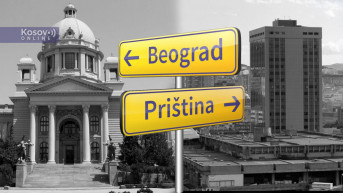
The Student List’s victory in Serbia’s parliamentary elections has also brought one of the country’s most important issues to the forefront—how the dialogue on the normalization of relations with Pristina will be conducted. Kosovo Online’s interlocutors expect Student List representatives to clarify whether their approach to talks with Pristina will bring changes to the methodology and format of the negotiations or a different approach to communication with international mediators. They agree, however, that there will be no shift in Belgrade’s policy on Kosovo’s status.
Written by: Ivana Sanjevic
The section of the Student List’s program entitled “Foreign Affairs and National Interests” includes a part devoted to Kosovo, stating that the List will “fight to preserve Kosovo and Metohija as part of Serbia, in accordance with the Constitution of the Republic of Serbia and Resolution 1244.”
“We will consistently oppose the unilaterally declared independence of the so-called Republic of Kosovo and will not allow its admission to international organizations. We will prosecute all responsible representatives of the regime for any potential criminal offenses related to the conclusion and implementation of unconstitutional agreements to Serbia’s detriment: all agreements must be subject to constitutional review, and the implementation of any unconstitutional provisions of any agreement concluded is unacceptable,” the program states.
The Student List emphasizes that it will preserve educational, healthcare, social and cultural institutions financed from the Serbian budget, with particular emphasis on the University of Pristina with its temporary seat in Kosovska Mitrovica, while also protecting cultural and religious heritage and the property of the Serbian Orthodox Church.
Student List representative Nemanja Karovic believes it would be an excellent idea to re-establish the Ministry for Kosovo and Metohija, which was abolished in 2012 and replaced by the Office for Kosovo and Metohija.
According to him, Belgrade will continue to oppose “the admission of the false state to UNESCO,” with the strongest argument being the fact that the international organization has placed Decani, Gracanica, the Patriarchate of Pec and the Church of the Virgin of Ljevisa on the List of World Heritage in Danger. The only question that needs to be asked, Karovic said, is who is endangering them.
Some members of the public believe that a generation unburdened by the political legacy of the conflicts could introduce greater transparency, more direct dialogue and more pragmatic solutions. The question, however, is how much room for maneuver actually exists within the already established international framework and the obligations undertaken in the dialogue with Pristina.
A change in the dialogue format?
Political analyst Ognjen Gogic told Kosovo Online that the fundamental question for the Student List, and thus for Serbia’s future government, was whether it wanted to return to the format of dialogue with Pristina as it had been conducted for nearly the past 15 years.
He warned, however, that the Serbian community could not be helped by ignoring the situation on the ground and the agreements mediated by the EU.
“It remains an open question whether the Student List, or the new government, will want to return to this process, because the messages conveyed during the campaign, and even after the elections, have been contradictory. On the one hand, there has been talk of respecting the Serbian Constitution and reviewing the agreements accepted through the dialogue, while on the other hand there has also been talk of improving the position of Serbs in Kosovo, which in fact entails working through Kosovo institutions,” he said.
Gogic explained that it was impossible to implement ideas and promises aimed at improving the everyday lives of Serbs in Kosovo without working through the institutions of the Kosovo system that operate on the ground.
“If, at the same time, there is talk of reviewing the agreements—which means reconsidering whether certain new institutions and a new institutional order should have been established and whether Serbs should have been encouraged to participate in those institutions—then that is incompatible with continuing a dialogue that is built upon all those agreements,” he stressed.
According to him, Student List representatives need to clarify whether they will acknowledge the reality on the ground and seek solutions for Serbs within that framework, or pursue a different policy that would further widen the gap between Belgrade and Pristina, as well as between Belgrade and the European Union.
“The European Union also regards the obligations Serbia undertook in the dialogue as obligations Serbia has toward the EU. All of those agreements have therefore become part of the Chapter 35 negotiating framework in Serbia’s negotiations with the European Union. The new government consequently faces major dilemmas, but one thing it will not be able to escape is the reality on the ground,” Gogic reiterated.
No shift in Belgrade’s position on Kosovo’s status
Professor of Criminal and International Law Kolj Krasniqi believes that the Student List’s victory represents a significant change on Serbia’s political scene, but says that, based on its program, he sees no indication of an imminent shift in Belgrade’s position on Kosovo’s status.
In a written statement to Kosovo Online, he referred to sections of the Student List’s published program in which it opposes Kosovo’s independence and membership in international organizations and announces a review of the constitutionality of agreements reached with Pristina.
“The position of the future government will be possible to assess on the basis of the decisions it makes once it is formed. In the interest of the well-being and prosperity of both peoples and both states, the dialogue between Kosovo and Serbia, mediated by the European Union, should continue and conclude with mutual recognition,” Krasniqi stressed.
From Kosovo’s perspective, he said it was reasonable to expect Serbia’s future government to change both the way it communicates with Pristina and its approach toward Kosovo.
“Serbia should implement the existing agreements and cease opposing Kosovo’s membership in international organizations. Both governments should engage in resolving issues that directly affect the interests and rights of citizens, such as clarifying the fate of missing persons, guaranteeing freedom of movement, addressing pensions and social insurance, returning Kosovo citizens’ foreign currency savings held in Serbian banks, and other issues,” Krasniqi stressed.
Dialogue is (not) a priority
Aleksandar Sljuka, an associate of the NGO New Social Initiative, told Kosovo Online that dialogue with Pristina was not a priority for the Student List and that the EU, as mediator, would not insist on the process either, as its main concern was to prevent new tensions between Belgrade and Pristina.
“What we have been able to hear, let us say, behind closed doors is that the European Union’s priority is to prevent new tensions and, at the very least, to allow the Student List to form the institutions and consolidate its position. They know that its priority now is domestic politics in Serbia—namely, the fight against corruption and organized crime, which are also priorities for the European Union,” he stressed.
Sljuka pointed out that the Student List’s precise position on how the dialogue with Pristina should proceed was still unclear, recalling contradictory statements that it wanted talks to continue while also intending to review some of the agreements already reached.
Sljuka believes it is clear that the Student List will not approach the dialogue in the same way as the Serbian Progressive Party and Aleksandar Vucic did, recalling that a similar change in dynamics occurred when Albin Kurti came to power in Pristina.
“He changed that dynamic by saying: ‘We do not want to listen to everything coming from the EU; we will act on our own,’ even when that was sometimes detrimental to Kosovo. I am not saying that the Student List will take the same approach as Albin Kurti, and of course I am not drawing a parallel between the two. What I am saying is that it may bring a new dynamic and change the way the dialogue functions compared with how it has functioned until now,” Sljuka concluded.



comments