
Gogic: Student List has yet to state its position on the format of dialogue with Pristina
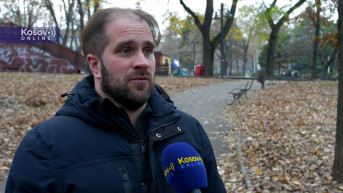
Political analyst Ognjen Gogic told Kosovo Online that the key question for the Student List, and thus for Serbia’s future government, was whether it wanted to return to the format of dialogue with Pristina as it had been conducted for nearly the past 15 years. He warned, however, that the Serbian community could not be helped by ignoring the situation on the ground and the agreements mediated by the EU.
Gogic pointed out that, if the dialogue continued in its current format, he expected Belgrade to appoint chief negotiators to conduct the talks, as well as heads of negotiating teams who would monitor the implementation of obligations at the technical level.
“It remains an open question whether the Student List, or the new government, will want to return to this process, because the messages conveyed during the campaign, and even after the elections, have been contradictory. On the one hand, there has been talk of respecting the Serbian Constitution and reviewing the agreements accepted through the dialogue, while on the other hand there has also been talk of improving the position of Serbs in Kosovo, which in fact entails working through Kosovo institutions,” he said.
Gogic explained that it was impossible to implement ideas and promises aimed at improving the everyday lives of Serbs in Kosovo without working through the institutions of the Kosovo system that operate on the ground.
“If, at the same time, there is talk of reviewing the agreements—which means reconsidering whether certain new institutions and a new institutional order should have been established and whether Serbs should have been encouraged to participate in those institutions—then that is incompatible with continuing a dialogue that is built upon all those agreements,” he stressed.
Gogic pointed out that the reality on the ground was that Kosovo had an established legal and institutional order that functioned and could not be abolished by reviewing previous agreements.
“The government in Belgrade could, for example, review the 2013 Brussels Agreement, but even if it were to reject that agreement, Serbia could not restore its police and judiciary in Kosovo. It cannot change the reality on the ground by reviewing agreements. The new government will therefore have to determine for itself which approach it intends to take,” he added.
According to Gogic, Student List representatives need to clarify whether they will acknowledge the reality on the ground and seek solutions for Serbs within that framework, or pursue a different policy that would further widen the gap between Belgrade and Pristina, as well as between Belgrade and the European Union.
“The European Union also regards the obligations Serbia undertook in the dialogue as obligations Serbia has toward the EU. All of those agreements have therefore become part of the Chapter 35 negotiating framework in Serbia’s negotiations with the European Union. The new government consequently faces major dilemmas, but one thing it will not be able to escape is the reality on the ground,” Gogic reiterated.
He stressed that security in Kosovo was primarily provided by the Kosovo Police and judicial authorities, while basic services were delivered through municipalities and other Kosovo institutions, meaning that Belgrade could not directly assist Serbs to the same extent if it ignored the existence of those institutions.
“The areas where Serbia has the greatest scope to act are education and healthcare, through institutions that remain part of Serbia’s system while providing services in Kosovo. That is where the greatest scope for action actually lies,” Gogic concluded.


comments