
Sljuka: Student List’s messages on dialogue are contradictory; I do not believe the format will change
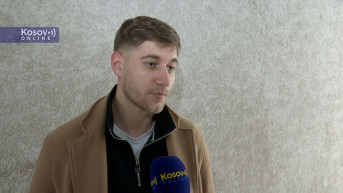
Aleksandar Sljuka, an associate of the NGO New Social Initiative, told Kosovo Online that dialogue with Pristina was not a priority for the Student List and that the EU, as mediator, would not insist on the process either, as its main concern was to prevent new tensions between Belgrade and Pristina. He does not believe that the format of the dialogue between the two sides will change, but expects the Student List to bring a new dynamic to the process.
“What we have been able to hear, let us say, behind closed doors is that the European Union’s priority is to prevent new tensions and, at the very least, to allow the Student List to form the institutions and consolidate its position. They know that its priority now is domestic politics in Serbia—namely, the fight against corruption and organized crime, which are also priorities for the European Union,” he said.
Sljuka pointed out that the Student List’s precise position on how the dialogue with Pristina should proceed was still unclear, recalling contradictory statements that it wanted talks to continue while also intending to review some of the agreements already reached.
“I very much doubt that all the agreements signed so far will be subject to revision. I think that a large part of them will continue to be implemented. On the other hand, even if a review does take place, it would be detrimental to the dialogue and would not fundamentally change the situation on the ground,” he said, expressing his belief that healthcare and education would remain Belgrade’s “red lines.”
Commenting on reports that Kosovo appears in the section of the Student List’s program entitled “Foreign Policy and National Interests,” Sljuka said he could not predict what would happen to the Office for Kosovo and Metohija.
“So, this is not related solely to foreign policy, which is why Kosovo is included there. I do not think that the person—or rather the institution—that will deal with this issue will be the Ministry of Foreign Affairs. It will most likely be the Office for Kosovo and Metohija, although there has also been discussion about elevating it to the level of a ministry, or rather restoring it to ministerial status. In any case, I believe there will be some form of office dedicated to this issue,” he said.
He was not convinced that the format of the dialogue would change, although he noted that time had shown the existing arrangement to be inadequate.
“I believe the EU will remain the mediator, and the current format is now also part of the negotiating process between the EU and the two sides seeking progress in European integration. The framework has already been established, and I do not believe it will change fundamentally,” Sljuka said.
He added that it was clear that the Student List would not approach the dialogue in the same way as the Serbian Progressive Party and Aleksandar Vucic had, recalling that a similar change in dynamics occurred when Albin Kurti came to power in Pristina.
“He changed that dynamic by saying: ‘We do not want to listen to everything coming from the EU; we will act on our own,’ even when that was sometimes detrimental to Kosovo. I am not saying that the Student List will take the same approach as Albin Kurti, and of course I am not drawing a parallel between the two. What I am saying is that it may bring a new dynamic and change the way the dialogue functions compared with how it has functioned until now,” Sljuka concluded.

0 comments